


/file/publisher-c1a3f893382d2b2f8a9aa22a654d9c97/2020/01/ab98507586896da22b4aa49ff8bb61df.jpg)

COMMENT | Use of Sosma sends wrong message to promise of reform
COMMENT | It was reported that a statement by Inspector-General of Police Razarudin Husain indicated a total of 34 people detained in connection with the ongoing investigation into Global Ikhwan Services and Business Holdings (GISB), will be rearrested under the Security Offences (Special Measures) Act 2012 (Sosma) once their remand order expires.
The arrest is in connection with the investigation under Section 12 of the Anti-Trafficking in Persons and Anti-Smuggling of Migrants (Atipsom) Act.
The IGP further stated that investigations showed that GISBH allegedly practised the banned Aurad Muhammadiah doctrine and its members were obsessed with worshipping the group’s leaders until they twisted real Islamic teachings.
I pen this article with this caveat. This article never questions the power of our police to arrest or detain...
COMMENT | It was reported that a statement by Inspector-General of Police Razarudin Husain indicated a total of 34 people detained in connection with the ongoing investigation into Global Ikhwan Services and Business Holdings (GISB), will be rearrested under the Security Offences (Special Measures) Act 2012 (Sosma) once their remand order expires.
The arrest is in connection with the investigation under Section 12 of the Anti-Trafficking in Persons and Anti-Smuggling of Migrants (Atipsom) Act.
The IGP further stated that investigations showed that GISBH allegedly practised the banned Aurad Muhammadiah doctrine and its members were obsessed with worshipping the group’s leaders until they twisted real Islamic teachings.
I pen this article with this caveat. This article never questions the power of our police to arrest or detain anyone including GISBH leaders or followers if they are suspected to have committed any crime. Yes, it is the sole jurisdiction of the police to carry out their investigations without fear and favour.
Nevertheless, when the IGP said that Sosma will be used against GISBH upon the expiry of the remand orders, with due respect, I have some reservations about such a statement.
Lest we forget Pakatan Harapan opposed Sosma when it was in the opposition. As far as I know, there has been no change of policy as regards Harapan’s decision to oppose Sosma. And Sosma remains the same. It still contains a plethora of draconian and oppressive elements therein.

And when the prime minister promises a reform it would be illogical to allow a draconian law such as Sosma to be implemented - at least under its current form.
Sosma incosistent with Constitution
As a trial lawyer, I am fully aware of the oppressiveness of Sosma. In fact, I tried to challenge the constitutionality of Sosma in court though unsuccessful.
Sosma is, no doubt, a police- and prosecution-friendly legislation. Though Article 5 of the apex law does not allow the police to detain a person for more than 24 hours without a court’s order, Sosma says otherwise. It says the police can do that without the need to go to court.
Last time I checked, Malaysia is still adhering to the doctrine of the supremacy of the Constitution. Hence any law that contravenes such an embedded constitutional principle ought to bend to the sovereignty of the Federal Constitution.
And the prime minister and all of his ministers including the members of Parliament have duly taken their oath to protect and defend the supremacy of the Federal Constitution.
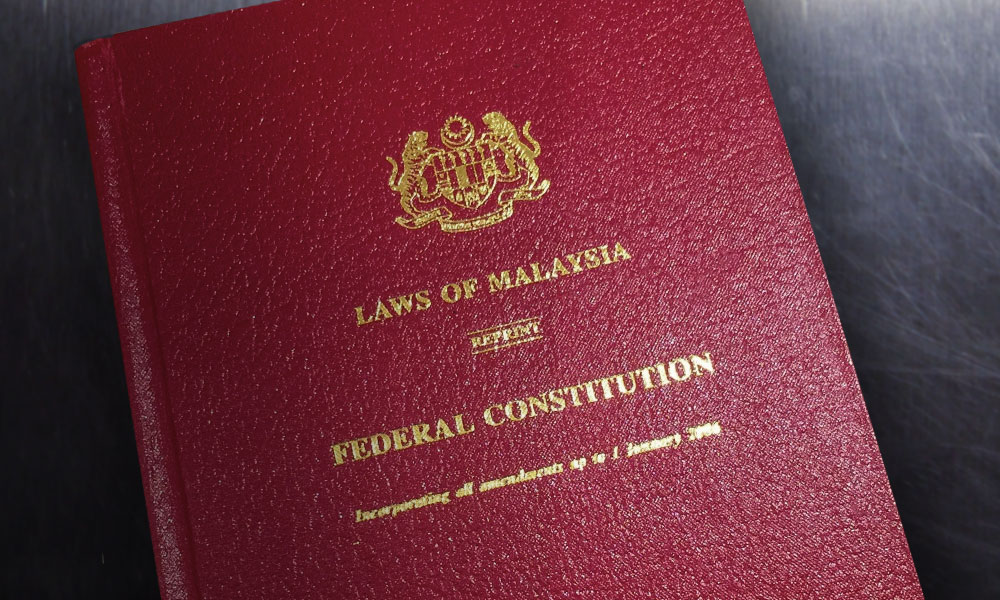
Lawyers argue the supremacy of the constitution is one of the basic structures of our Malaysian Constitution.
To our disappointment, there is a slew of provisions under Sosma which clearly say that any provision that infringes the Federal Constitution will remain valid despite such an infringement.
Section 4(10) of Sosma, for instance, states “…this article shall have effect notwithstanding anything inconsistent with Articles 5 and 9 of the Federal Constitution...” [See also Section 7(9)]
Hence one may fairly ask this question: Which is the superior law in Malaysia - Sosma or the Federal Constitution?
Not only does Sosma allow the law to be inconsistent with the apex law, but it also permits the law to be inconsistent with provisions contained in Section 4(10) of the Criminal Procedure Code (CPC) and Section 17 of the Evidence Act 1950.
CPC provisions are enough
Let me reiterate here that despite the negative perceptions against GISBH, the police should only resort to the exhaustive provisions in the CPC when dealing with the group.
Sosma is extremely friendly to the prosecution. Under Section 30 (1) and (2) of Sosma, when the court finds an accused person tried under Sosma not guilty, the prosecution may make an oral application to the court to further remand the innocent accused. And the best thing is that the court shall allow the oral application by the prosecution. Even the court has no power to disallow the prosecution’s application.
And if the Court of Appeal once again finds the accused innocent, can he or she be released? The answer is a resounding “no”. [See Section 30(5)]
Based on the aforementioned sections in Sosma, it is crystal clear that Sosma is an obnoxious Act.

Criminal law is based on a principle: any crime which is committed by any person signifies a crime against the state. Thus in criminal law, it is the state - with all the state apparatus at its disposal - that prosecutes such a person.
Be that as it may, as rightly pointed out by the distinguished British barrister Helena Kennedy KC, there are certain inherent legal protections enshrined by criminal law that powerful states shall never seek to simply abandon, such as the principles of presumption of innocence, beyond reasonable doubt, fair trial, etc. With due respect, Sosma, unfortunately, allows such principles to be unduly jettisoned!
The decision of the police to invoke Sosma against GISBH is regrettable and worse, it may send a bad signal to the idea of reforms our prime minister has been advocating.
MOHAMED HANIPA MAIDIN is a former legal adviser for PAS and a former deputy minister in the Prime Minister’s Department (Legal Affairs).
The views expressed here are those of the author/contributor and do not necessarily represent the views of Malaysiakini.
/file/publisher-c1a3f893382d2b2f8a9aa22a654d9c97/2024/09/73279cbc583b9ce17f22e667090bb2cf.jpg)
/file/publisher-c1a3f893382d2b2f8a9aa22a654d9c97/2024/09/de83ed4cf953c5e0287f8a9b4c8feebc.jpg)
/file/publisher-c1a3f893382d2b2f8a9aa22a654d9c97/2024/04/fe79d16ac89c2ab05545131e980fbec0.jpg)
/file/publisher-c1a3f893382d2b2f8a9aa22a654d9c97/2022/04/1106d0e313aab212180e41034094285a.png)


Report this comment
Are you sure you want to delete this comment?
This action cannot be undone.