


/file/publisher-c1a3f893382d2b2f8a9aa22a654d9c97/2024/10/cc39746d6ab5e3d5c316334333524aa6.jpg)

COMMENT | FashionValet - buck can't stop with the 2 founders
COMMENT | When the nation was perilously hit by a mega financial scandal - the 1MDB saga - Malaysians could only hope that such a scandal would never recur in the future.
Apparently, that seems to be a forlorn hope. To our chagrin, the financial fiascos keep coming, hitting Malaysia’s economy. At the moment, the nation is being hit by its latest brand of financial hurricane - the FashionValet scandal.
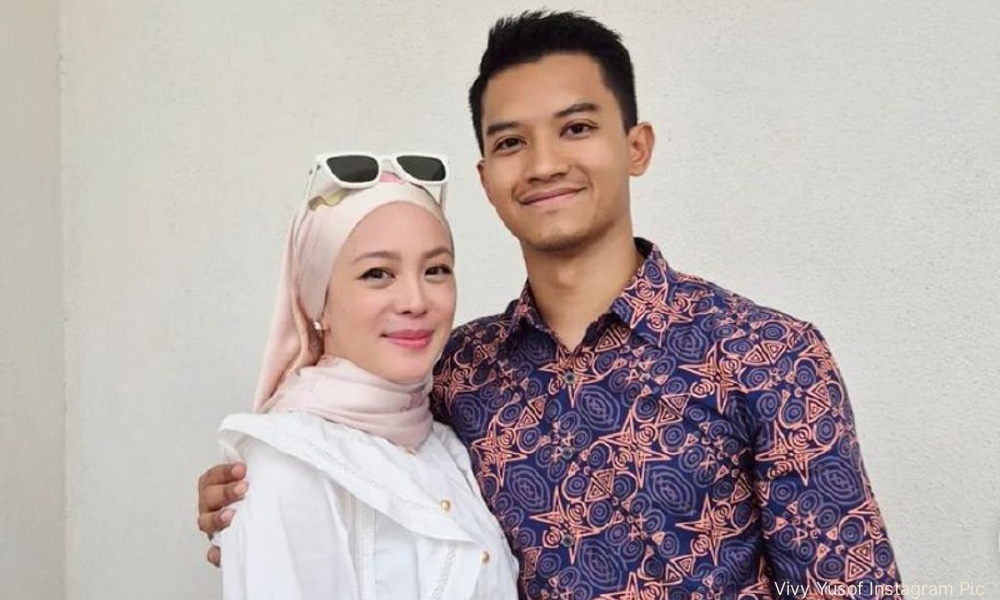
The local e-commerce platform FashionValet Sdn Bhd was founded by entrepreneur and influencer Vivy Sofinas Yusof and her husband.
It is unclear whether these two individuals truly possessed the necessary entrepreneurial skills, vast or sufficient experience, and business acumen before they were allowed to venture into a business with the support of two giant government-linked investment companies...
COMMENT | When the nation was perilously hit by a mega financial scandal - the 1MDB saga - Malaysians could only hope that such a scandal would never recur in the future.
Apparently, that seems to be a forlorn hope. To our chagrin, the financial fiascos keep coming, hitting Malaysia’s economy. At the moment, the nation is being hit by its latest brand of financial hurricane - the FashionValet scandal.
The local e-commerce platform FashionValet Sdn Bhd was founded by entrepreneur and influencer Vivy Sofinas Yusof and her husband.
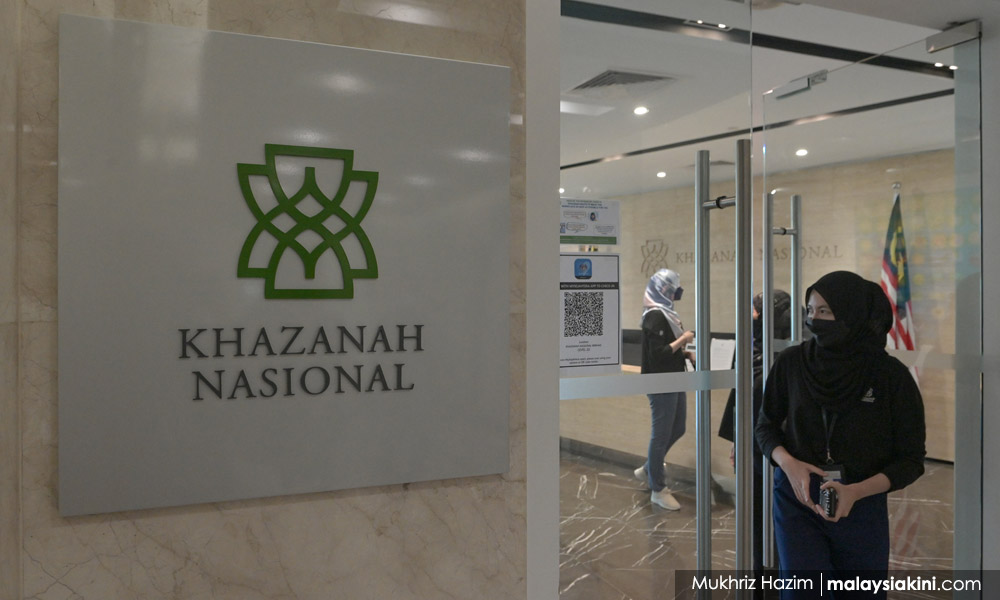
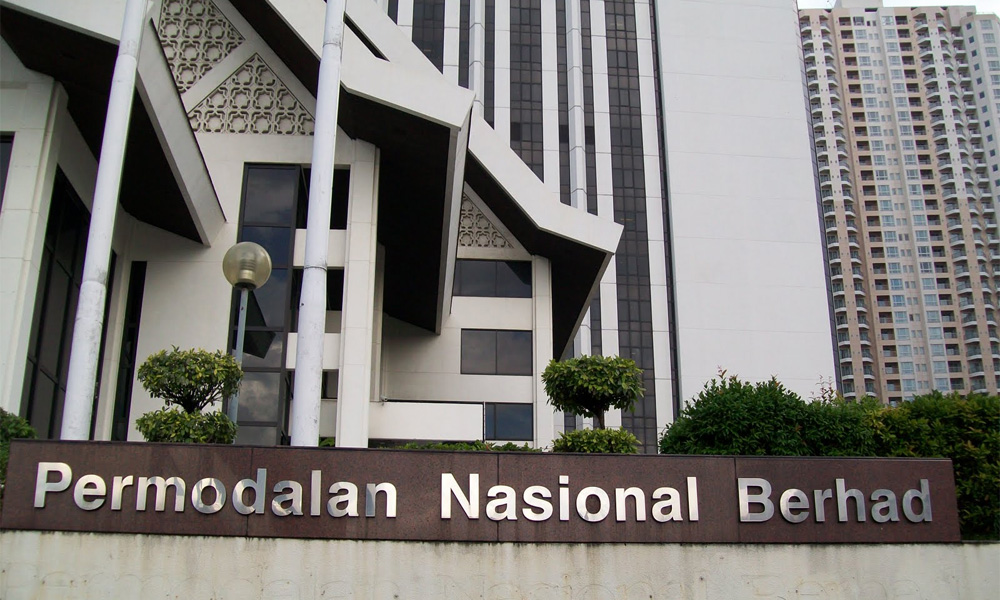
It is unclear whether these two individuals truly possessed the necessary entrepreneurial skills, vast or sufficient experience, and business acumen before they were allowed to venture into a business with the support of two giant government-linked investment companies (GLICs) such as Khazanah Nasional Bhd and Permodalan Nasional Bhd (PNB).
It is equally unclear what truly motivated big players like Khazanah and PNB to invest in FashionValet.
Though both of them said the investment in 2018 was in line with the then government’s call for GLICs to support the growth of high-potential bumiputera companies operating in the new economy, the issue is on what basis they were easily convinced that FashionValet could be termed as a “high-potential bumiputera company”.
Did FashionValet possess a good track record in the e-commerce platform business?
The only logical justification for FashionValet to successfully attract a slew of powerful investors and shareholders to invest in a relatively new business was apparently their high-powered connections.
Ownership breakdown
Thus, one may easily notice that FashionValet’s boardroom has been occupied by a number of corporate bodies that also have a stake in the business.
For instance, there is Zozo Inc - a Japanese company that operates fashion shopping sites, a Brunei company called Reussi, Proven Holding - a company owned by Vivy’s father Yusof Jusoh, and MyEG Capital - a shareholder with 283,246 ordinary shares (5.78 percent stake).
Based on public data extracted from the Companies Commission of Malaysia, FashionValet is now owned by NXBT, which has a 51.25 percent stake. The second largest shareholder is Fadzarudin Shah Anuar with a 17.65 percent stake, followed by MyEG Capital.
It was reported that MyEG Capital had actually given the company its seed funding of RM1 million in 2012.
In 2018, two GLICs, namely Khazanah and PNB, decided to invest a colossal sum of RM47 million in FashionValet, with Khazanah contributing RM27 million and PNB RM20 million in acquiring minority stakes.
How these two giant GLICs were brought in to invest in such a rookie business has remained an enigma to many, especially among established market players.
It is not rocket science for every Tom, Dick, and Harry to easily comprehend that unless the founders of FashionValet had no such powerful business and political connections, it would be next to impossible to drag Khazanah and PNB into the business.
Recently the two GLICs divested their stake for a mere RM3.1 million despite the fact they had poured in RM47 million when they decided to acquire minority shares in FashionValet.
Probe underway
No doubt, such a divestment from the duo reflects a forced sale value involving unwilling sellers. Such a controversial and bewildering divestment could definitely attract the MACC to conduct an investigation.
To its credit, the MACC officially said it has opened an investigation into Khazanah and PNB’s investment losses in FashionValet. It is hoped that MACC will carry out a thorough and transparent investigation without fear or favour.
It also puzzles me to read in a statement: “FashionValet represented a genuine venture capital investment aimed at supporting a high-potential bumiputera company, but their business was unfortunately severely affected by Covid-19 and changes in retail trends”.
A genuine venture capital investment? What is certain is a genuine loss of money!
It seems to me that an alleged subtle attempt to associate such an enormous loss of public funds with Covid-19 and changes in retail trends is, with due respect, just a straw man, at best.
In the meantime, the media also reports that Prime Minister Anwar Ibrahim has instructed Khazanah to conduct an internal audit to investigate issues related to the aforementioned investment loss amounting to RM43.9 million.
It is also hoped a thorough and transparent audit will be conducted by a panel of truly independent and reliable auditors, leaving no stone unturned.
As this fiasco entails public funds, all Malaysians have legitimate expectations for such an auditor’s findings to be disclosed to the public.
Not absolved from liability
Many disappointed Malaysians are now training their guns on Khazanah and PNB despite a statement by Khazanah that its divestment from FashionValet represented a responsible exit to transfer ownership to a party that could help guide the latter to a new growth trajectory.
Such a statement, in my view, fails to convince us that there has not been even an iota of shady or hanky-panky elements in the management or investment decisions contributing to FashionValet’s major losses.
While the two founders of FashionValet have graciously admitted their mistake and taken full responsibility for the failure of the investment, they, with due respect, were absolutely wrong to claim the buck should have stopped with both of them only.
Such a statement reflects a poor understanding of the decision-making process by shareholders under company law.
It is an elementary principle under the law that companies are required to have shareholders who must take part in the management and operation of the company.
It is trite that any decision, let alone any important decision, by a company like FashionValet must have been made and approved by all shareholders.
Ergo, it would be highly illogical and unreasonable to pin any blame only on Vivy and her husband after they confessed their mistake of scaling the company in anticipation of continued growth but were left exposed when the pandemic hit.
Such a damning confession, in my view, has a strong nexus with the abysmal decision-making process carried out by the company.
Being shareholders in FashionValet, Khazanah and PNB shall not be completely absolved from liability when the FashionValet founders revealed that the company had attempted to expand its business “too aggressively, and did not sufficiently plan for a rainy day”, by investing heavily in its technology stack, growing the team too quickly, and adding too many retail stores.
The duo should, with due respect, be vicariously liable for such apparent recklessness.
Finally, it was a bit weird that the scandal only managed to rear its ugly head when the DAP MP from Puchong, Yeo Bee Yin, played the role of the watchdog by asking Parliament about the investment deal.
The question now is, “Where are the opposition MPs?”
MOHAMED HANIPA MAIDIN is a former deputy minister in the Prime Minister’s Department (Legal Affairs).
The views expressed here are those of the author/contributor and do not necessarily represent the views of Malaysiakini.
/file/publisher-c1a3f893382d2b2f8a9aa22a654d9c97/2024/11/64fee758b839bc1bfb8c5841565002aa.jpg)
/file/publisher-c1a3f893382d2b2f8a9aa22a654d9c97/2024/08/ac551c8a2c2b917d6013c0c8e4cd8e08.jpg)
/file/publisher-c1a3f893382d2b2f8a9aa22a654d9c97/2024/10/3b5d533849ec82b5cd9a55ac29d4adf1.jpg)
/file/publisher-c1a3f893382d2b2f8a9aa22a654d9c97/2024/10/976c1f8ab95eec51ccba7e11132f505b.jpg)
/file/publisher-c1a3f893382d2b2f8a9aa22a654d9c97/2024/11/858c125a4f3db272cd5d3cfc24111c17.jpg)
/file/publisher-c1a3f893382d2b2f8a9aa22a654d9c97/2024/10/cc39746d6ab5e3d5c316334333524aa6.jpg)


Report this comment
Are you sure you want to delete this comment?
This action cannot be undone.