


/file/publisher-c1a3f893382d2b2f8a9aa22a654d9c97/2024/11/a776a297aa39672c21cdae33d68e0585.jpg)

COMMENT | No delight in Bersih's midterm grade for coalition govt
COMMENT | Observers of Prime Minister Anwar Ibrahim’s government would hardly be surprised to learn that Bersih gave its mid-term performance a “D”. If anything, it is expected, and I can almost hear the chorus of “of course lah” from uncles on the other side of the globe.
We can’t avoid the fact that there is a section of the chattering class (of an urban and progressive bent) disappointed with Anwar’s government. In many ways, they should be; for many traditional Pakatan Harapan voters, this government does not look, sound, or act like the government they thought they voted for.
But then again, given GE15’s outcome and political realignments thereafter, no one can say that this was a government that anyone really voted for.
COMMENT | Observers of Prime Minister Anwar Ibrahim’s government would hardly be surprised to learn that Bersih gave its mid-term performance a “D”. If anything, it is expected, and I can almost hear the chorus of “of course lah” from uncles on the other side of the globe.
We can’t avoid the fact that there is a section of the chattering class (of an urban and progressive bent) disappointed with Anwar’s government. In many ways, they should be; for many traditional Pakatan Harapan voters, this government does not look, sound, or act like the government they thought they voted for.
But then again, given GE15’s outcome and political realignments thereafter, no one can say that this was a government that anyone really voted for.
In that respect, the notion/excuse that this is a coalition government requiring compromises and negotiations is fair.
With the exception of the few elite political operators, it would be hard to find voters who could ever think the political team-up we have today as realistic. Even in a game of Politiko, collaborations like this would be hard to come by, if not impossible.
But here we are, and PH-BN-GPS is the government of the day. It would be neither helpful nor useful to argue about the would’ve, could’ve, should’ve.
On that same note, today’s opposition needs to act more maturely and try to at least be inspiring if they cannot be useful. With an opposition that continues to fixate almost completely on race-baiting and identity politics, it pushes the government to constantly validate and shore up its Malay support base despite also claiming to hold a more than convincing two-thirds majority.
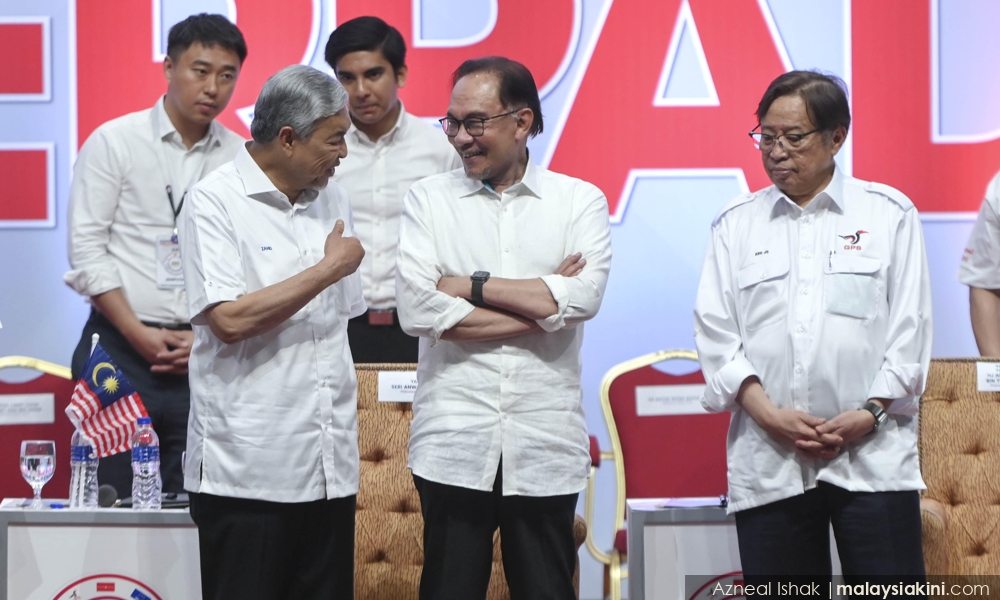
This is a vicious cycle (or spiral) that has been repeating since Dr Mahathir Mohamad’s Harapan government in 2018, and it does not seem that we will be exiting it any time soon.
Institutional reform a political grenade?
With the government’s two-year mark just around the corner (Nov 24), one must wonder what has happened to Anwar and Harapan’s reformist gusto. Bersih’s report card lists down a number of initiatives that are still “in progress” or worse, which Harapan would have emphatically pushed for in past reincarnations.
Institutional reforms are complex and require in-depth study before they are implemented, we are told, but one cannot escape the feeling that some institutional reforms appear to be more complex than others.
In their short time in government, the Anwar-led administration has made substantial progress in resolving MA63-related issues, including those related to Federal Territory relationships. Similarly, the government made the fiscally responsible but politically painful decision to remove universal diesel subsidies, as well as legislating the Public Finance and Fiscal Responsibility Act.
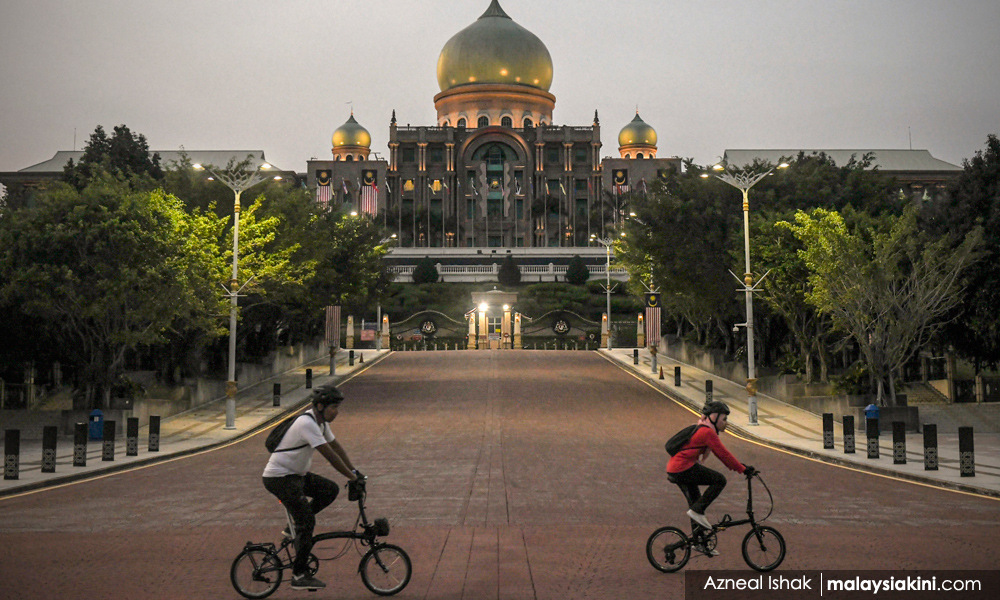
In these respects, the present administration has shown better-than-average performance which we hope to see applied in other areas of institutional reform.
While the types of reforms Bersih highlights may not be as politically or fiscally urgent, it would be a shame if they continue to fall by the wayside.
Many of them, for example, the creation of a public ombudsman, decoupling the powers of the attorney-general and public prosecutor, creating parliamentary committees for public appointments and fixed PM term limits are not that politically exciting but serve to elevate and institutionalise good governance while limiting opportunities for future excesses and misdeeds.
Some, like reintroducing local government elections, are contentious in the current political climate and alignment, calling for an abundance of caution. However, it cannot be that every possible reform is as treacherous, especially since past administrations have started laying down the groundwork. As we have seen, this government can be decisive when it wants to.
Don’t go so slow
Political officials and representatives certainly find no pleasure in the constant reminders of how they come up short. It is made more painful when the strongest criticisms come from supposedly friendly quarters and allies, but the lessons from the previous Harapan administration cannot be ignored.
The effort that went into advocating for democratic and institutional reform were hampered by the executive’s sluggish pace and then completely frozen when the government collapsed, and Parliament suspended for almost a year. If more reforms were achieved, could there have been stronger checks against executive overreach? Perhaps, but that is all academic now.
If we zoom out to see global trends, there is also a growing populist move towards drastically improving government efficiency and throwing caution to the wind.
Argentinian President Javier Milei’s chainsaw approach to reshaping government has found keen students inspired to do the same elsewhere, including Elon Musk, the designated co-head of incoming president Donald Trump’s Department of Government Efficiency (Doge).
What just a short while ago was thought of as reckless and irresponsible may soon become part of the political mainstream. Government efficiency hardly sounds exciting but we are starting to see its ability to galvanise voters dissatisfied with government performance and the status quo.
It might be difficult to picture our present-day political opposition as standard bearers of radical government efficiency but there may be others waiting in the wings who can be credible advocates of that position to the PM’s detriment.
There is perhaps some consolation that this is only Anwar’s mid-term report which hopefully will serve to reorient the government as they enter the second half.
While compromises and concessions will be unavoidable due to the unity government’s composition, Anwar and Harapan as the coalition government’s largest component, if not its compass, must emphasise reforms that improve the country’s democracy and governance in the long term. Solid policy-making should not be limited to fiscal health and political survival.
LUTFI HAKIM ARIFF works at the intersection of media, policy, and politics. Currently on an education sojourn in the US.
The views expressed here are those of the author/contributor and do not necessarily represent the views of Malaysiakini.


Are you sure you want to delete this comment?
This action cannot be undone.