




Japans political flux
The defeat in Japan of the ruling Liberal Democratic Party (LDP) in the recently concluded Upper House elections and the subsequent resignation of Prime Minister Shinzo Abe have caused political uncertainties and flux in the domestic politics of Asia's economic power.
What were the causes of the defeat of the Abe government? What are the implications and repercussions of the struggle for succession between Yasua Fukuda and Taro Aso for the post Abe leadership of Japan and the Liberal Democratic Party?
The defeat in Japan of the ruling Liberal Democratic Party (LDP) in the recently concluded Upper House elections and the subsequent resignation of Prime Minister Shinzo Abe have caused political uncertainties and flux in the domestic politics of Asia's economic power.
What were the causes of the defeat of the Abe government? What are the implications and repercussions of the struggle for succession between Yasua Fukuda and Taro Aso for the post Abe leadership of Japan and the Liberal Democratic Party?
What would be the likely changes and continuities of Japan's foreign policies and its conduct of international relations in the post-Abe era?
Malaysiakini recently interviewed Professor Lee Poh Ping who is a Senior Fellow of the Institute of Malaysian and International Studies (Ikmas) of Universiti Kebangsaan Malaysia (UKM). He is also president of the Malaysian Association of Japanese Studies (Majas).
The full text of the questions and answers are reproduced below:
Q: Why is the Japanese government so scandal-ridden in recent years? Why are its ministers so gaffe-prone?
A: Many of the questionable practices regarding the receipt and spending of funds by Japanese politicians, particularly in the LDP, are quite common. What is surprising is that Abe had not made more stringent checks before appointing his ministers as such checks could have weeded out the corrupt. Gaffes are also not uncommon among Japanese politicians. Many of them think they are speaking before a domestic Japanese audience and the outside world is listening, though sometimes they offend everybody, Japanese and non-Japanese alike, as in Aso's derogatory remarks about people with Alzheimer's disease. But what is truly astonishing is the statement by the former defence minister, Fumio Kyuma, that the nuclear bombs dropped in Japan were unavoidable. This may be mainstream American opinion but it is not the opinion of mainstream Japan, and most certainly not of Nagasaki, one of the Japanese cities that suffered an atomic bomb. To top it all, Kyuma represented Nagasaki!.
Besides the many ministerial scandals and gaffes, what were the other reasons that caused the Japanese voters to support a stronger Opposition in the recent election?
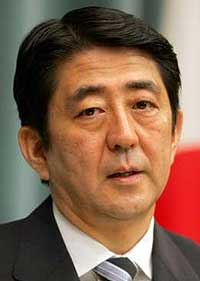 The main reason is that the Abe government is out of touch with what the Japanese people want. Abe calculated that a new generation of Japanese would no longer be as guilt ridden of the war as the older generation was; that this new Japan would be susceptible to a nationalist agenda. You can see this in his tough stance on the North Korean abductee issue, his push for a revision of the constitution and so on. While it may be true that a lot of the younger Japanese no longer want to hold on to the mentality of a defeated nation, the Japanese people as a whole have more pressing issues they want their government to tackle. These are the pension issue where the names of many Japanese who contributed to the pension went missing, the increasing inequality arising from the reforms of Koizumi, health care and jobs. The Abe administration lost because they have been found wanting on these.
There are now two serious contenders to succeed Shinzo Abe, namely Yasuo Fukuda and Taro Aso. What, in your observation, are their similarities and differences in leadership style, ideological outlook and worldviews? Who will win the contest?
Fukuda is the likely winner. There are many reasons for this. Fukuda, at 71 and a seasoned politician at that, will be a safe pair of hands at a time when the Liberal Democratic Party and the Japanese have become cautious about having another man in the mould of the young Abe at the helm. Aso, though 66 years of age,is closely identified with Abe who is in his early 50s, Fukuda will be more of a conciliator than Aso who sometimes shoots from the hip and makes enemies. For example he once said that no burakumin (an outcast in the old feudal Japan) could be a prime minister, thus offending a big wig of the LDP, Hiromu Nonaka who himself is a burakumin . Also, Fukuda's selection is also a sign of the return of the factional politics that Koizumi tried to destroy. Fukuda, and not Aso, is the choice of the major factions of the LDP. Third, it just maybe possible, that the Japanese people may feel that Japan has gone too far in its pro-American alliance and has alienated its Asian neighbours, though how Fukuda can redress this remains to be seen.
Taro Aso is popularly perceived in China and the Korean Peninsula as a rightwing nationalist in his understanding of Japan's modern history vis--vis its neighbours while Yasuo Fukuda, a more moderate and conciliatory figure. Do you think so? Why?
 This is obvious when one compares the statements both have made with regard to internal Japanese affairs and those pertaining to Asia. Apart from many nationalistic statements, Aso has expressed support of visits to the Yasukuni shrine while Fukuda said he himself will not visit the shrine. Aso has also made some statements that could be interpreted as offensive by Japan's Asian neighbours while Fukuda always talks of the need to get along with its Asian neighbours. Also, while both have very good pedigrees (Aso is the grandson of a former prime minister, Shigeru Yoshida and son-in-law of another former prime minister, Zenko Suzuki while Fukuda is the son of former premier Takeo Fukuda), Aso's family is associated with the drafting of labour from Northeast Asia to work in mines owned by his family for which they have not apologized or given any meaningful compensation.
How would the political flux within Japan itself affect its foreign policies and conduct of international relations, especially in the Asia-Pacific region and, in particular, Southeast Asia? What would be the continuities and changes in Japan's foreign policies and conduct of international relations in the post-Abe period?
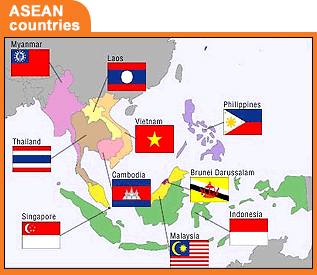
There have been many developments since the Fukuda Doctrine, which marked a high point in Japanese relations with Asean, that have made the Japanese Asean relations lose steam. Among these are the bursting of the Japanese bubble in the 1990s which made Japan too preoccupied with economic recovery to tend to its relations with Asean and the developments within Asean itself, such as the lose of lan arising from the inability to respond to the Asian crisis and the unwieldiness created by the expansion into ten countries. But what has galvanized Japan even during the Koizumi period his been the impact of the rise of China in Southeast Asia. The announcement for example of a Chinese free trade agreement with Asean in 2002 has forced a Japan which had hitherto taken its dominant economic position in Asean for granted, to do something such as offering its own free trade agreement(expected to be signed in November this year).The need to respond to China will continue after Abe.
The strengthened Opposition in Japan is quite critical of many aspects of the US-Japan security alliance, including Japan's support for the US-led war in Afghanistan in term of military logistics. Will the changed balance of political forces within Japan affect the US-Japan security alliance?
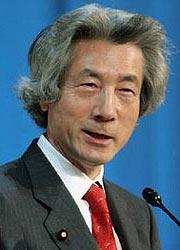 There were two developments under the Koizumi administration that were of dubious constitutionality (ie with regard to article nine of the Japanese constitution.). These were the anti terror laws enacted by the Japanese Diet under Koizumi (and subject to renewal after two years) allowing for the Japanese Self Defence Forces (SDF) to help refuel NATO ships in the Afghanistan War and the dispatch of Japanese troops to Iraq. The accepted interpretation of the role of the SDF overseas had been that they were involved directly in the defence of Japan (normally in the 'surrounding areas of Japan) and for humanitarian purposes where no force was involved.. Afghanistan and Iraq lay outside the 'surrounding areas' of Japan and the humanitarian aims of the SDF in these two countries were doubtful. Koizumi pushed these laws through because he was aware that the US was no longer content with Japan's 'checkbook diplomacy'and wanted Japan to send troops also.
Now, Koizumi's actions have put succeeding politicians in a tight spot.If they were not to renew these laws, they could damage relations with the US. Fukuda recognized this and said he would continue with the Afghan mission. Ozawa, (the opposition DPJ leader ) said he opposed the renewal of the Afghan mission ( the inability of the renewal to go through the opposition dominated upper house was the ostensible reason for the resignation of Abe). Despite this stated opposition, it is not known how Ozawa would react if it was made clear to him by the Americans of the damaging consequences for the alliance if he did not relent. For some guide into the future of US-Japan relations, wait to see how this Afghan issue would be resolved.
JAMES WONG WING ON is chief analyst of Strategic Analysis Malaysia. He is a former DAP member of Parliament for Kampar (1990-1995) and a former columnist for the Sin Chew Jit Poh Chinese daily (now Sin Chew Daily ). He read political science and economics at Monash University in Melbourne, Australia.


