




Japan's direction under Fukuda
With the election of Yasuo Fukuda, 71, as the new chief of Japan's ruling Liberal Democratic Party (LDP) as well as the country's new prime minister, questions on the direction of Japan's foreign, security and economic policies inevitably arises.
With the election of Yasuo Fukuda, 71, as the new chief of Japan's ruling Liberal Democratic Party (LDP) as well as the country's new prime minister, questions on the direction of Japan's foreign, security and economic policies inevitably arises.
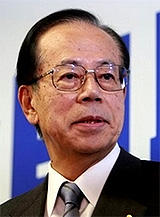 First and foremost, how different would Fukuda's foreign and security policies be from those of his predecessor Shinzo Abe and will Fukuda's apparently more moderate and conciliatory line be acceptable to the Japanese society at large as well as the political elites?
Equally important is the question: given the causes of the recent LDP defeat in Japan's upper house elections, whether Fukuda would prioritise foreign and security policy over domestic politics or will be the other way around?
Malaysiakini spoke to Prof Dr Lee Poh Ping after the election of Fukuda to explore these questions.
 Lee is a Senior Fellow of the Institute of Malaysian and International Studies (Ikmas) of Universiti Kebangsaan Malaysia (UKM) as well as President of the Malaysian Association of Japanese Studies (Majas).
Malaysiakini: Fukuda is widely known for his more moderate and conciliatory approach of managing Japan's relations with China and the two Koreas and he has publicly stated he would not visit the controversial Yasukuni Shrine. What more would and should Fukuda do to repair and improve Japan's bilateral relations with China, the Republic of Korea and the Democratic People's Republic of Korea?
Lee: One has to understand that for the first time in the last century or so of relations between China and Japan. Japan is not, or will not be, the dominant partner. And, as some commentators have pointed out, this is something many Japanese are finding difficult to accept.
This psychological dimension is absent in the analysis of many scholars who argue that Japan's foreign policy had always been one of accommodating to what it perceived to be the dominant order or power of the day. In the early 20th century, the dominant power was Britain and hence, Japan had an accommodation with it. Then later, the fascist powers of Germany and Italy were seen as the rising powers. Japan became part of the Axis with Italy and Germany. And in the postwar period, the dominant power is the United States. And you have the US-Japan alliance.
This maybe a correct reading of Japanese behaviour in the past century. The point here is that all the dominant powers here were Western powers where Japan had no history of superiority. If anything, it felt inferior to the West. In fact, not so long ago, one of Japan's leading thinkers, Fukuzawa Yukichi, urged Japan to leave Asia and join Europe. Even today, many Japanese still see themselves in the same league as Europe and not in the same class as an undeveloped China which many Japanese once (and some still do) despise. Hence Japan can accept junior power status to a Western country.
But to China? It maybe that ultimately Japan will have no choice and accept a dominant China, if it ever comes about, very much like before the modern period when China was the dominant civilization in the East from which Japan borrowed so much. This acceptance will however not be easy.
The second point to note is that many Japanese, especially the younger generation, are weary of holding on to the mentality of a defeated nation. Some feel Japan has apologized enough for the war. Others see Japanese behaviour before the war as being no different from that of the Western colonial powers. And yet others believe that Japan's post war record of peaceful development as one indicator that Japan will not repeat the past. Increasingly many Japanese believe that Chinese and South Korean insistence on Japanese apologies for their past as unjustified and influenced by domestic political considerations in both countries.
One thus has to take into account these two aspects when one considers what Fukuda can do to improve relations with China and the two Koreas. Fukuda, for the present moment, cannot or will not make any moves towards China that will jeopardise Japan's alliance with the US, an alliance he and many Japanese believe is vital to Japan in dealing with a rising China and a threatening North Korea. Nor will he make the kind of apology (many believe genuine) that the socialist prime minister of Japan, Tomiichi Murayama, made in the mid 1990s. Many in his party will not allow that. What Fukuda should, and can realistically, do is to continue not making statements about Japan's past, or not taking actions, that may anger the Chinese and the Koreans
Would Fukuda's foreign policy shift include the deletion or amendment of the Abe-Aso notion of the 'Arc of Freedom and Prosperity' which is perceived by some quarters in China as euphemism for a US-Japan-Australia-India ring of encirclement or 'containment' against China?
I do not know if Fukuda will repudiate the policy of an 'Arc of Freedom and Prosperity'. This policy has support among anti-Chinese conservatives in the LDP and certain forces in the United States. What he will probably do is not push this policy and perhaps let it go away quietly.
Would Fukuda's foreign policy position and shift be opposed by conservatives in LDP? How strong are the conservatives in LDP who still share the Abe-Aso line on Japan's foreign policy? Who are the conservatives?
I do not know how you can define a conservative in LDP or not call Fukuda a conservative. Do not forget that Fukuda comes from a distinguished lineage. His father, Takeo Fukuda was once prime minister whom nobody ever called a radical. He has deep ties with people like Abe. Indeed a major reason he gave for withdrawing his earlier challenge to Abe was the friendship of his family with the Abe family that stretch back two generations! I am not even sure if deep down Fukuda does not share much of the Abe or the so-called conservative view about Japan. Notice he has retained many of the Abe cabinet members in his new cabinet. Where he differs from the Abe-Aso line is a moderate approach towards China and the two Koreas. I think his moderate approach might work, and find favour with the Japanese public.
Taro Aso has been dropped from Fukuda's leadership lineup but he is younger than Fukuda. Will Aso strike back one day?
Aso made a surprisingly strong showing in the recent battle for LDP presidency. This suggests he is not finished as a possible prime minister in the future. Indeed his refusal to take a post in the Fukuda cabinet indicates he is biding his time and waiting to take over should Fukuda not be successful.
Fukuda's pressing priority seems to be domestic politics, especially on how to reform the LDP before its scandal-ridden and gaffe-prone image further strengthens the opposition. Has Fukuda the commitment, energy and time to tackle foreign policy readjustments and domestic reforms simultaneously? If not, which comes first?
I think his domestic policy will come first. This is not to say he will not pay serious attention to foreign policy. I think however that he and his LDP members are only too aware that the recent humiliating defeat of LDP in the upper house elections resulted from LDP not devoting enough time to domestic issues.
What is Fukuda's position and views on the Japanese economy? What would he likely do to the Japanese economy?
Much of the recovery of the Japanese economy in recent years had been due to exports, particularly to China. Fukuda will continue in the path of encouraging economic growth. But again he is aware that the inequality that arose from the Koizumi reforms had led to LDP's electoral disaster. Hence he will probably get the government to spend more to help alleviate the inequality that might arise from economic growth.


