


/file/1360/4261179e72a93ec19935a87784c81ae6.jpeg)

COMMENT | Are we seeing dilution of prosecutorial system in M'sia?
Editor's note: Malaysiakini has obtained permission to republish this article, which first appeared here.
COMMENT | Although the Federal Constitution has established a sound legal system, the machinations of a small group of people compel us to ask important questions.
Is it true that the enforcement of the law is being disrupted by three devices - an attack on the prosecutorial process; an attack on the judiciary; and a modification of the pardon process?
1. Is criminal legal system being undermined in three ways?
The first is to charge one’s political opponent with a moral misconduct, negotiate his release subject to “terms”, and then blame the prosecutors and judges for the outcome.
A former chief justice and his colleague, another retired Federal Court judge, spoke of this just a few days ago. A soon-to-retire judge also ominously alluded to it.
The second is to...
Editor's note: Malaysiakini has obtained permission to republish this article, which first appeared here.
COMMENT | Although the Federal Constitution has established a sound legal system, the machinations of a small group of people compel us to ask important questions.
Is it true that the enforcement of the law is being disrupted by three devices - an attack on the prosecutorial process; an attack on the judiciary; and a modification of the pardon process?
1. Is criminal legal system being undermined in three ways?
The first is to charge one’s political opponent with a moral misconduct, negotiate his release subject to “terms”, and then blame the prosecutors and judges for the outcome.
A former chief justice and his colleague, another retired Federal Court judge, spoke of this just a few days ago. A soon-to-retire judge also ominously alluded to it.
The second is to attack the judiciary; and the third is to modify the application of the rules surrounding the pardon process.
2. First device
The first device seems to be employed in this way: an errant politician (or senior civil servant) is charged with corruption. There is ample proof of it. For instance, the government parades huge amounts of confiscated property before the media.
The government then assembles its finest prosecutorial teams, who get to work in earnest. The cases progress: some go to trial, others fall prey to numerous postponements.
Then, unaccountably, the accused are discharged by the infamous discharge not amounting to acquittal (DNAA) order.

3. In this process, prosecutors unfairly accused of ‘rushing’ into the case ‘without securing proper evidence’
The implication is that the prosecutors (allegedly) “do not know how to do their job”.
No greater disservice has ever been done – or an insult hurled upon – a group of decent, industrious government lawyers.
4. Criticism that prosecutors ‘acted without evidence’ is strange
Let us be clear: a prosecutor’s work is merely to prosecute. Theirs is a life spent assessing evidence and then applying penal laws to the evidence.
If the evidence is adequate, the accused is charged. If the evidence does not pass muster, no charge can be laid: to do so would be a failure of the officer assigned to the case. One cannot charge someone for fun or to intimidate him.
5. So how does a prosecutor obtain adequate evidence?
The duty to investigate, and to obtain evidence lawfully (that being the operational word), is that of the police, the MACC or other similar investigatory bodies.

It is not a prosecutor’s duty, armed with a magnifying glass, to fish for evidence, like Sherlock Holmes.
If it was, he or she would not have the time to attend to the duties of the prosecutor.
6. What is the government’s response to recent DNAA outbreak?
Is it the response that the “investigators and prosecutors were incompetent or had failed in their duties”?
7. Throwing prosecutors and investigative authorities under bus
This shifting of blame is not only unfair to the prosecutors or the professionals in the police or the MACC – it is positively demoralising – unless this is intended by those in power.
8. Politicians constantly brow-beat civil servants to do their bidding is not unknown in Malaysia
Who will deny that at a crucial time when an investigation was ongoing against a serving prime minister, a senior MACC officer was bullied and transferred from his post?
Remember also how then attorney-general Abdul Gani Patail, was suddenly, unconstitutionally, and visibly “walked out” of his chambers on July 27, 2015, by none other than the then chief secretary to the government headed by then premier Najib Abdul Razak?
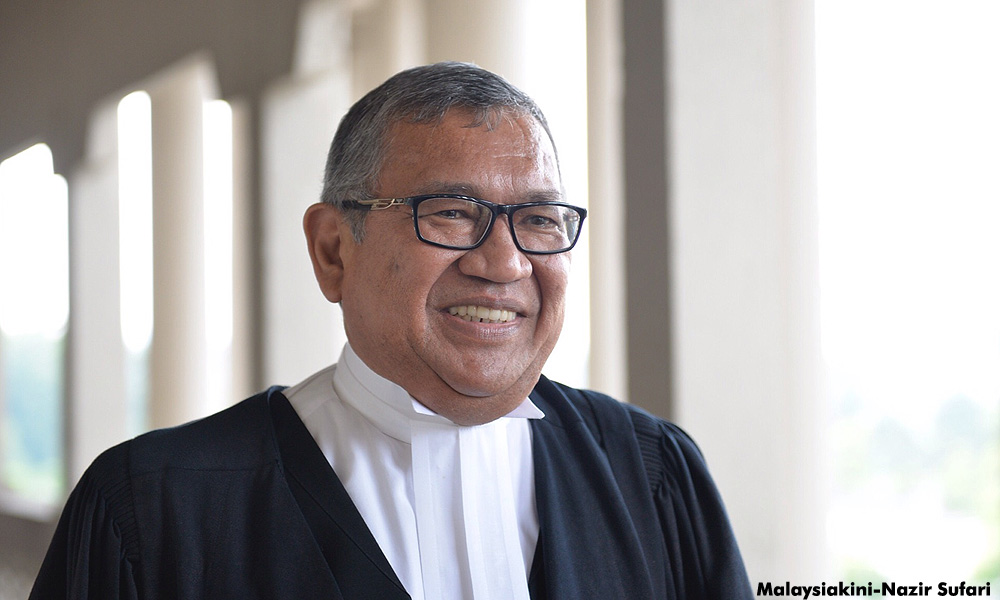
Gani had been leading a task force probing the 1MDB scandal. His abrupt removal led to perceptions of political interference aimed at stifling investigations.
To this day, there is no explanation for these terrible transgressions.
In this atmosphere, how can professional investigators enforce the law without fearing for their livelihood?
9. The second device: Persecution of the judiciary
In 2020, High Court judge Mohd Nazlan Mohd Ghazali convicted Najib of seven charges linked to the misappropriation of RM42 million from SRC International. The backlash against him was immediate, and brutal.
As a serving judge, Nazlan had no means of reply. His office demanded silence. He bore it stoically, suffering in grim silence.
On Dec 7, 2021, the Court of Appeal affirmed the conviction and sentence.
When the final appeal reached the apex court, the detractors shifted their attention to the chief justice but found nothing to attack her with. They then switched their tirades upon her husband. The chief justice said nothing.
This was seen by some as part of a broader strategy to undermine judicial authority amid ongoing public protests by Najib’s supporters.
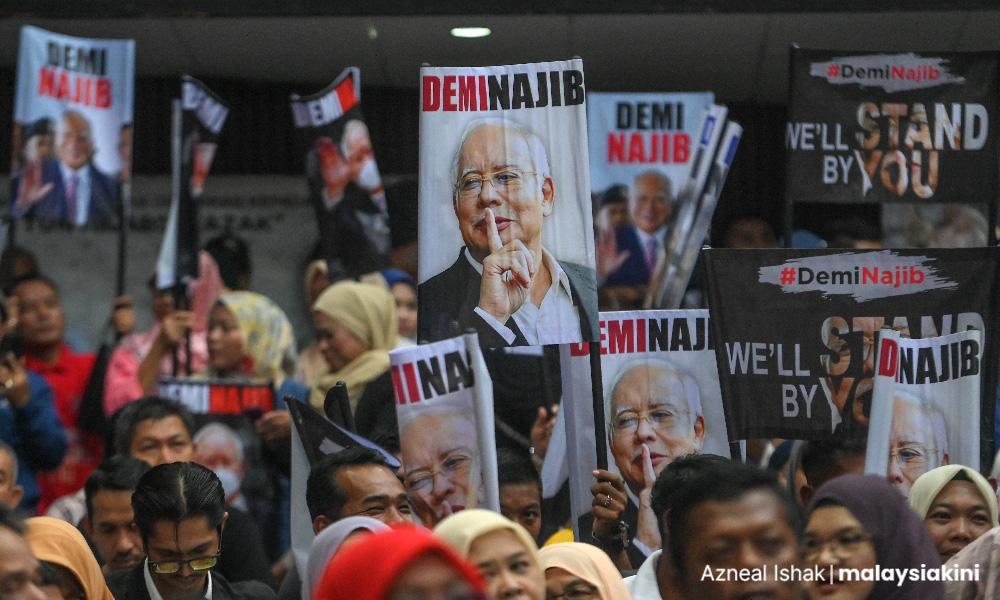
The then Malaysian Bar Council president remarked: “(The judiciary’s) courage and steadfastness is exemplary… (in) the face of the numerous challenges and tactics resorted to by the former prime minister… .”
Unmoved and aloof, in April 2022 the chief justice rebuked the relentless attacks upon the judiciary.
In August 2022, the BBC, comparing Malaysia’s judiciary to those of other Asian countries, hailed the Malaysian judiciary’s firmness in the face of terrible odds. It said:
“(The) resoluteness shown by Malaysia’s courts is in stark contrast to the rest of the region.”
10. Tengku Maimun’s powerful statement
It was no surprise therefore that the same, soon-to-retire chief justice referred to interference with the judicial process and judicial appointments.
11. CJ’s reply to allegations of ‘religious non-compliance’
Because the judiciary had convicted powerful political figures, an attempt was made to smear the judiciary with accusations of transgressing religious principles.
Tengku Maimun retorted: “Who are you to question the faith of others?”
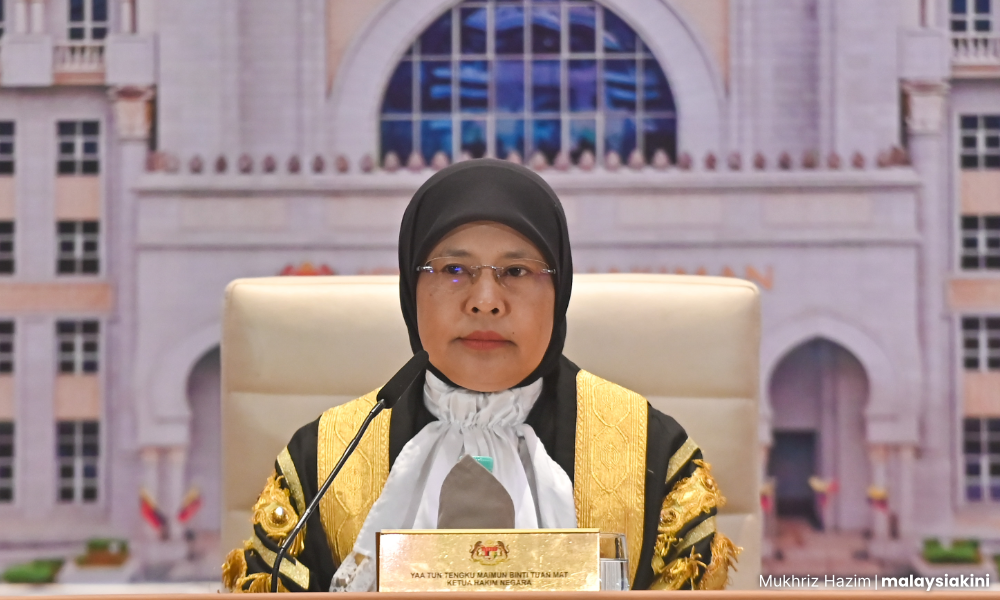
This was no mean feat for two reasons.
By November 2022, the Malaysian Federal Court had a majority of ladies.
“Among apex courts worldwide”, reported East Asia Forum, “only the Canadian Supreme Court has had a female majority”.
Secondly, the last time the head of the Malaysian judiciary questioned the government led to the 1988 judicial crisis.
That the current serving chief justice is saying the same thing now after 36 years means there are segments in our country who think they can ignore the rule of law.
Recently, nine former presidents of the Malaysian Bar remarked that judicial independence had been “better protected under previous three governments”.
12. Yet, Malaysian judiciary has – up to now – proven its independence
At great cost to themselves, our judges have resolutely defended the rule of law.
Those who think that the judiciary will be diminished when some senior judges retire may have to think again.
Which is why it is important that we know how the system functions.
13. Third device: Modification of pardon process
All of those concerns have come down to a single litmus test – how will the courts decide the addendum issue?
The courts’ ability to protect the Constitution and the rule of law is about to be critically tested.
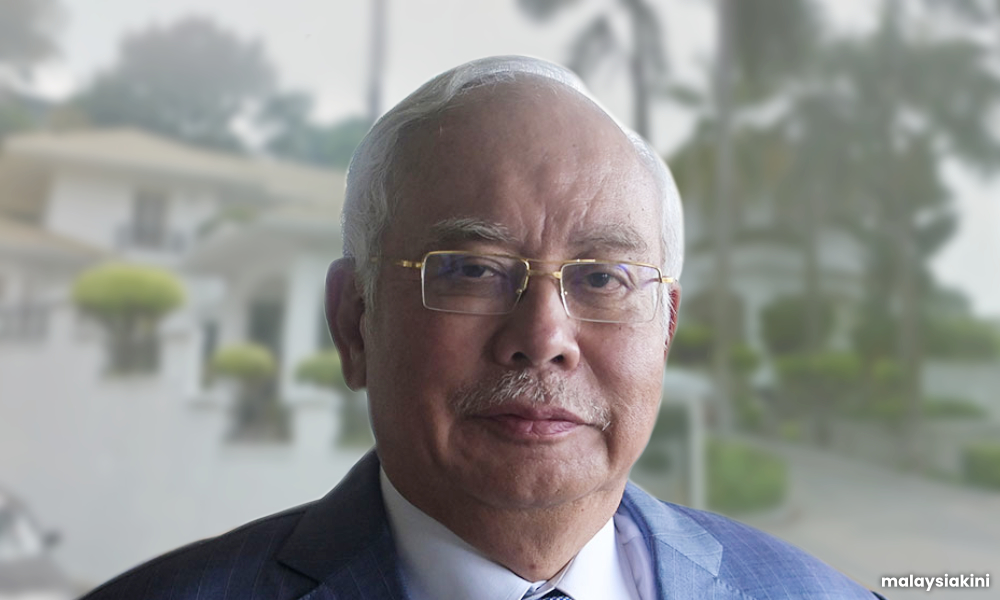
The fate of one felon and his hangers-on, it is said, hangs upon a royal decree. “Everything”, it is said, “depends on the addendum”, and the possibility of a “second request” for a “full pardon”.
Those who clamour on behalf of Najib, who advocate the addendum’s validity, disregard the Rukun Negara’s “Keluhuran perlembagaan” (Supremacy of the Constitution) and “Kedaulatan undang’-undang” (Rule of law).
They abhor the decisions of an honest judiciary; hassled, harried and hounded.
They would abandon these foundational constitutional principles and the tenets of Rukun Negara – upon which the nation is repeatedly promised to be administered.
They would invite disaster to dinner.
GK GANESAN is a lawyer and an international commercial arbitrator.
The author thanks UK Menon for his patient editing; and KN Geetha, TP Vaani, JN Lheela and Lydia Jaynthi for their assistance.
The content is the intellectual property of the author protected by copyright laws. Contact gk@gkganesan.com for permission.
The views expressed here are those of the author/contributor and do not necessarily represent the views of Malaysiakini.
/file/publisher-c1a3f893382d2b2f8a9aa22a654d9c97/2025/01/b4e6fc9527f31491f144552739f8cc26.jpg)
/file/publisher-c1a3f893382d2b2f8a9aa22a654d9c97/2025/01/56181582d686d5edf3cd63416a7e0516.jpg)
/file/publisher-c1a3f893382d2b2f8a9aa22a654d9c97/2025/01/62fbe1cdb3ef443463b9466acbef970b.jpg)
/file/publisher-c1a3f893382d2b2f8a9aa22a654d9c97/2020/10/2bda679309c88e264ef963588bbe46d2.jpg)
/file/publisher-c1a3f893382d2b2f8a9aa22a654d9c97/2023/10/de6846947137ac440ce34889b8b84fb8.jpg)


Report this comment
Are you sure you want to delete this comment?
This action cannot be undone.