


COMMENT | Identity politics: Of Aryan-Dravidian and Bujang Valley
COMMENT | In today’s world, identity politics increasingly plays a central role in shaping how we interpret archaeology and history.
The past is no longer merely a matter of academic curiosity but has become deeply intertwined with contemporary issues of ethnicity, religion, and national identity.
In modern-day India, for example, there is an ongoing debate about whether the Aryans or the Dravidians were the true ancestors of the Indian population.
This debate directly challenges long-standing theories of the Aryan invasion, which posited that Indo-Aryans migrated into the subcontinent and displaced an earlier Dravidian population.
Today, many scholars and political actors dispute this theory, seeing it as a colonial construct with little archaeological or genetic support.
Among communities identifying as descendants of the Dravidians, there has been a renewed focus on deciphering the language used by the Indus Valley Civilisation (IVC).
The IVC, which flourished in what is now Pakistan (notably at Harappa and Mohenjo-daro), has left behind a rich corpus of undeciphered symbols.
In recognition of the importance of this task, the government of Tamil Nadu has offered a prize of US$1 million to anyone who can successfully decipher the IVC script - an indication of how linguistic identity, archaeology, and politics have become intertwined.
Identity vs history
This intersection of identity and history is not unique to India. In Malaysia, particularly in the northern state of Kedah, identity politics is increasingly shaping the discourse around history and archaeology.
The Bujang Valley (Lembah Bujang), with its sprawling archaeological sites, is considered one of the oldest known civilisations in Southeast Asia.

International and domestic research has consistently affirmed its deep historical roots in the Hindu-Buddhist traditions that flourished prior to the advent of Islam.
The valley is often linked to the ancient Sri Vijayan Kingdom, a powerful maritime empire that thrived from the seventh to the 13th century CE.
Historical records and archaeological findings suggest that in the 11th century, the Chola dynasty of South India launched naval expeditions across Southeast Asia, targeting Sri Vijayan territories -including parts of modern-day southern Thailand, Kedah, and even down to Singapore.
The Cholas occupied Kedah and other regions like Beruas (in present-day Perak) for approximately 66 years before retreating back to the Indian subcontinent. Despite such invasions and the eventual rise of Islam, remnants of Hindu-Buddhist influence in the region persisted for centuries.
Recent conferences and academic interest in the Bujang Valley - also referred to as Kedah Tua (Old Kedah) - have begun to explore not only its Hindu-Buddhist legacies but also its prehistoric and animistic roots.
Notably, the discovery of skeletal remains dubbed the “First Penang Woman”, dating back approximately 5,700 years, suggests that the valley’s human history predates organised religion in the region.
Counter-narrative
However, as these historical findings continue to emerge, a counter-narrative has taken shape - one that disputes the significance, or even the existence, of a Hindu-Buddhist past in the Malay Peninsula.
Some proponents of this view argue that the early Malays were never Hindus or Buddhists and that Islam was brought directly by Arab traders, bypassing Indian influence entirely.
This narrative challenges the dominant scholarly view and is often rooted in contemporary ethnic and religious identity politics rather than in new archaeological evidence.
One flashpoint in this debate is the upcoming international conference on the Bujang Valley, scheduled for May 19-20 in Penang. Organised by Universiti Sains Malaysia, the conference aims to showcase recent research on the pre-Islamic aspects of Kedah Tua.
However, it has come under fire from certain Malay-Muslim right-wing groups, who claim the conference promotes a selective reading of history that marginalises the animistic and Islamic elements of early Malay civilisation.
These groups have even called for the cancellation of the conference, staging demonstrations in front of mosques and other public venues. Such actions threaten to undermine the open and rigorous academic discourse that is essential for a healthy democracy.
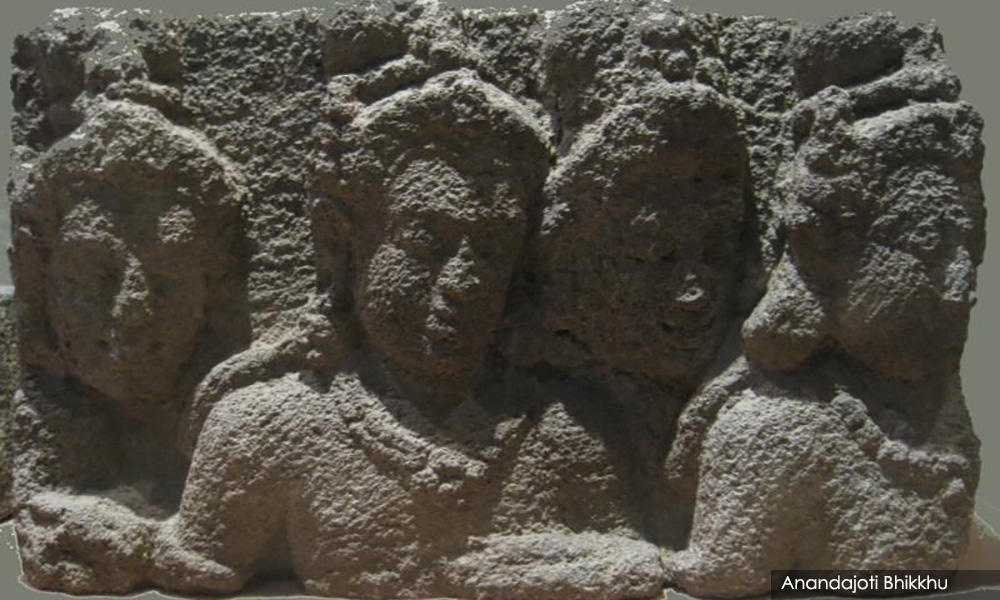
While alternative historical interpretations should be welcomed, they must withstand scholarly scrutiny and be grounded in empirical evidence.
It is especially concerning when trained academics lend credence to revisionist narratives that are not supported by archaeological or historical facts.
To ensure that academic inquiry remains inclusive and balanced, the organisers of the conference should indeed provide a platform for scholars who support the counter-narrative to present their views - provided those views are based on credible research and evidence.
The struggle over history in both India and Malaysia illustrates a broader global phenomenon: the past is being contested not just in the realm of academia, but in the streets, in politics, and in the media.
As such, it is more important than ever to uphold the integrity of historical scholarship and ensure that it remains free from undue ideological influence.
P RAMASAMY is the chairperson of the United for the Rights of Malaysians Party (Urimai) and is a former Penang deputy chief minister II.
The views expressed here are those of the author/contributor and do not necessarily represent the views of Malaysiakini.




Report this comment
Are you sure you want to delete this comment?
This action cannot be undone.