


/file/publisher-c1a3f893382d2b2f8a9aa22a654d9c97/2021/01/28e3a7819cb08fd32673c653399ab96a.jpg)

COMMENT | No room for debate: Quiet crisis of academic freedom
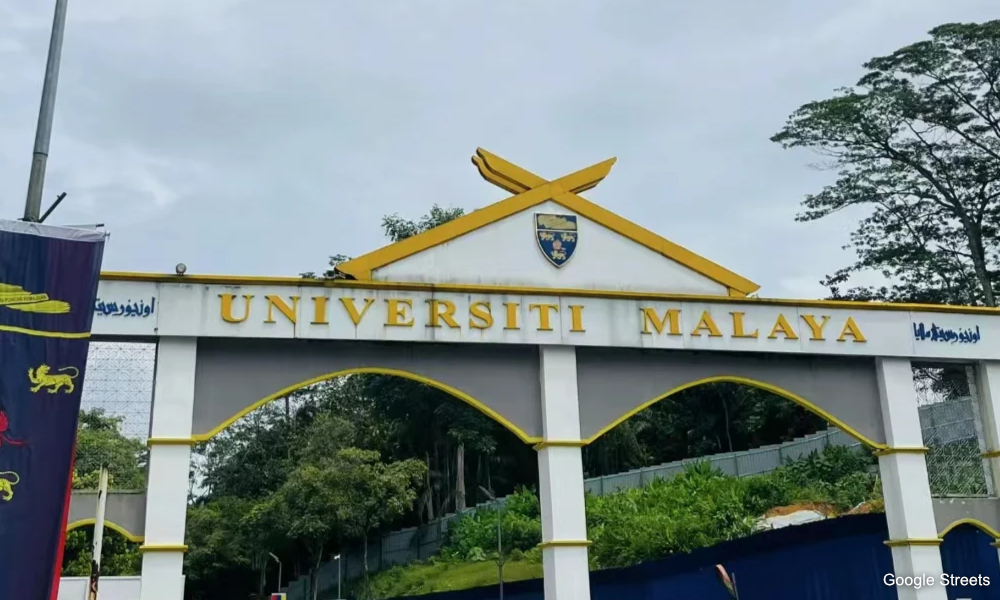
COMMENT | The recent decision by Universiti Malaya (UM), Malaysia’s oldest university, to cancel a student-organised documentary screening and forum on assembly rights illustrates a worrying narrowing of academic space.
When the student collectives Mandiri and Liga Mahasiswa tried to examine the practical and civic significance of the Peaceful Assembly Act, administrators abruptly pulled the plug, citing vague concerns about “security and public order”.
Student organisers framed the move not merely as an isolated act of censorship but as symptomatic of a deeper institutional reluctance to accommodate critical engagement.
Their response was uncompromising. Describing the cancellation as “a blatant violation of academic freedom and freedom of expression,” the students demanded assurances that neither participants nor speakers would face disciplinary repercussions and urged the university to reaffirm its commitment to open dialogue.
The incident quickly drew national attention. PKR Youth called on the Higher Education Ministry to investigate, pointing out that students should not be denied the opportunity to debate public issues in a civil, accountable setting.
Unfortunately, the episode is not unique.
COMMENT | The recent decision by Universiti Malaya (UM), Malaysia’s oldest university, to cancel a student-organised documentary screening and forum on assembly rights illustrates a worrying narrowing of academic space.
When the student collectives Mandiri and Liga Mahasiswa tried to examine the practical and civic significance of the Peaceful Assembly Act, administrators abruptly pulled the plug, citing vague concerns about “security and public order”.
Student organisers framed the move not merely as an isolated act of censorship but as symptomatic of a deeper institutional reluctance to accommodate critical engagement.
Their response was uncompromising. Describing the cancellation as “a blatant violation of academic freedom and freedom of expression,” the students demanded assurances that neither participants nor speakers would face disciplinary repercussions and urged the university to reaffirm its commitment to open dialogue.
The incident quickly drew national attention. PKR Youth called on the Higher Education Ministry to investigate, pointing out that students should not be denied the opportunity to debate public issues in a civil, accountable setting.
Unfortunately, the episode is not unique. Just two months earlier, a campus-based forum exploring Malaysia’s constitutional identity, whether the state is fundamentally secular or religious, was similarly aborted on the grounds that it touched on the sensitive “3R” trifecta of race, religion, and royalty.
Despite official warnings, the organisers moved the discussion off-campus, vowing “no surrender” in their effort to protect student and academic autonomy.
If universities cannot host difficult conversations, what is left of their purpose?
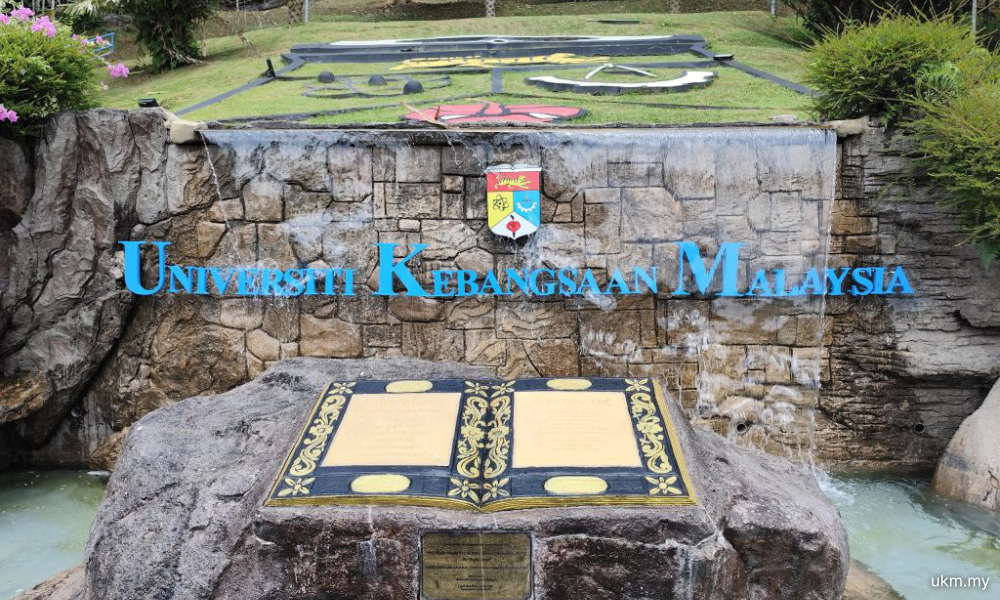
Public universities elsewhere have faced comparable pressures. In 2022, auxiliary police at Universiti Kebangsaan Malaysia (UKM) halted activist Fahmi Reza’s “Kelas Demokrasi” within minutes, forcing students to regroup in a nearby café.
Chilling effect
Malaysia’s legal scaffolding amplifies these tendencies. The Sedition Act, Peaceful Assembly (PAA) Act, and Universities and University Colleges Act (UUCA) still enshrine restrictive norms governing speech, protest, and “political” activity on campus.
The PAA, heralded as a liberalising step when introduced, continues to criminalise unnotified gatherings and impose age restrictions, limiting its value as a conduit for civic engagement.
A university should be more than a credentialing factory or neutral research hub. It ought to be a crucible where students test ideas, challenge orthodoxies, and learn the habits of democratic citizenship.
When spaces for honest debate on assembly rights, secularism, racial politics, and religious pluralism are systematically curtailed, a chilling effect sets in.
Students absorb an unspoken rule when certain subjects are off-limits, and intellectual risk may carry personal cost.
Administrations typically defend cancellations by invoking “harmony”, “public order”, or “security”. Yet such rationales are rarely substantiated with concrete evidence of imminent danger.
The opacity of the process breeds mistrust, leaving organisers and audiences alike with no meaningful avenue to question or appeal the verdict.
Over time, this culture of precaution erodes not only student expression but also faculty autonomy.
Lecturers who might propose sensitive modules or invite provocative guest speakers increasingly self-censor, anticipating institutional push-back.
The resulting homogeneity undermines intellectual pluralism, precisely the quality that ought to distinguish a vibrant university.
Even political actors who are not natural allies of radical speech have begun to notice. MCA Youth criticised the pattern of last-minute revocations, noting the incongruity of preaching freedom of expression while failing to safeguard academic inquiry.
PKR Youth’s call for ministerial oversight likewise suggests that the defence of academic freedom now resonates across partisan lines, even if institutional practice continues to lag behind rhetorical commitments.
It doesn’t have to be this way
Academic freedom, of course, is not the freedom to speak without consequence; it presupposes norms of respect, reason, and scholarly integrity. But it does oblige universities to act as guardians of discourse rather than gatekeepers of orthodoxy.
Malaysia’s aspiration to remain a regional education hub suffers when its flagship institutions stifle dissent.
Graduates who leave believing that fundamental civic questions, such as peaceful assembly, constitutional identity, and ethno-religious pluralism, cannot be safely debated will be poorly equipped to lead a plural society.
Universities can still reverse course. Clear, consistent rules should spell out the narrow circumstances under which an event can be denied, provide a timely and transparent justification, and include an appeals mechanism.
If an event genuinely threatens public safety, the reasons must be articulated and open to scrutiny, not buried under generic anxieties. Such clarity would strengthen institutional credibility and reassure students that universities remain spaces for rigorous, good-faith inquiry.
The forum cancellation and the earlier 3R incident are alarms not merely about student rights but about Malaysia’s democratic health.
When the gate to critical discussion closes under the cloak of order, the casualty is free thought itself.
If students cannot question the architecture of civil liberties or constitutional safeguards, one must ask what kind of leadership the nation is preparing for the future.
Universities are the places where difficult questions meet informed debate and future leaders learn the discipline of disagreement.
To fulfil that mission, they must resist the temptation to silence. Otherwise, conformity will replace curiosity, and deference will stand in for critical thinking.
That, ultimately, would threaten not only campus tranquillity but the democratic promise Malaysia still hopes to realise.
KHOO YING HOOI is an associate professor at Universiti Malaya.
The views expressed here are those of the author/contributor and do not necessarily represent the views of Malaysiakini.
/file/publisher-c1a3f893382d2b2f8a9aa22a654d9c97/2025/01/859a431c3c7a5e03ae9428f6e03e46f1.jpg)
/file/1219/ab3d0edeb44c333e46481c232f472915.jpeg)
/file/publisher-c1a3f893382d2b2f8a9aa22a654d9c97/2025/04/fe8eb4ad7c010e27ee5414ad629cd2dd.jpg)
/file/publisher-c1a3f893382d2b2f8a9aa22a654d9c97/2024/10/08fe83753f5164d5cba2a7b98b84683e.jpg)
/file/publisher-c1a3f893382d2b2f8a9aa22a654d9c97/2025/03/03a5a14ce56160f77d1973fd8a8f1aa2.jpg)


Report this comment
Are you sure you want to delete this comment?
This action cannot be undone.