


/file/publisher-c1a3f893382d2b2f8a9aa22a654d9c97/2020/07/59b54da36eb5e23dd7917eaeed7780a7.jpg)

COMMENT | No one should be silenced for speaking up
COMMENT | The recent Federal Court ruling dismissing Maria Chin Abdullah’s leave application to appeal in respect of the judicial review of a Syariah Court show-cause order for contempt raises serious concerns about the state of freedom of expression in Malaysia.
While the case reflects the complexities of our dual legal system under Article 121(1A) of the Federal Constitution, it raises broader questions about whether Malaysians, particularly women, can engage in legitimate public discourse on issues of justice without fear of legal repercussions.
This case is neither merely about legal procedure, nor is it an attack against the syariah courts.
It highlights the need to continuously safeguard the space for public discussion, critique, and advocate for reform, especially on matters affecting women in the syariah justice system.
Criminalising public comment on judicial decisions risks silencing advocacy, limiting democratic discourse, and undermining the principle of accountability in all branches of the justice system.
COMMENT | The recent Federal Court ruling dismissing Maria Chin Abdullah’s leave application to appeal in respect of the judicial review of a Syariah Court show-cause order for contempt raises serious concerns about the state of freedom of expression in Malaysia.
While the case reflects the complexities of our dual legal system under Article 121(1A) of the Federal Constitution, it raises broader questions about whether Malaysians, particularly women, can engage in legitimate public discourse on issues of justice without fear of legal repercussions.
This case is neither merely about legal procedure, nor is it an attack against the syariah courts.
It highlights the need to continuously safeguard the space for public discussion, critique, and advocate for reform, especially on matters affecting women in the syariah justice system.
Criminalising public comment on judicial decisions risks silencing advocacy, limiting democratic discourse, and undermining the principle of accountability in all branches of the justice system.
The ability to question, advocate and express differing views is fundamental to a democratic and accountable society.
Timeline of events
Sept 5, 2019: Maria (above) made public remarks expressing concern over the proportionality of the syariah court’s sentencing of Emilia Hanafi to seven days’ imprisonment for rescheduling visitation dates with her children.
October 2019: A syariah court show-cause notice was issued against Maria at the request of Emilia’s former husband, SM Faisal SM Nasimuddin.
April 2022: The syariah court found Maria in contempt and sentenced her to seven days’ imprisonment.
August 2022: The civil High Court granted Maria leave to commence judicial review proceedings challenging the contempt order.
November 2024: The Court of Appeal set aside the High Court’s leave decision, relying on Article 121(1A) of the Federal Constitution, on the limits of Civil Court jurisdiction over matters within the syariah court’s purview.
June 26, 2025: The Federal Court dismissed Maria’s application for leave to appeal, holding that the case did not raise new constitutional issues warranting further consideration.
Constitutional context
Malaysia’s Federal Constitution guarantees freedom of speech and expression under Article 10(1)(a).
While this freedom is subject to reasonable restrictions, including considerations of public order and morality, it remains essential that space is preserved for respectful public commentary on judicial outcomes, whether arising from civil or syariah courts.
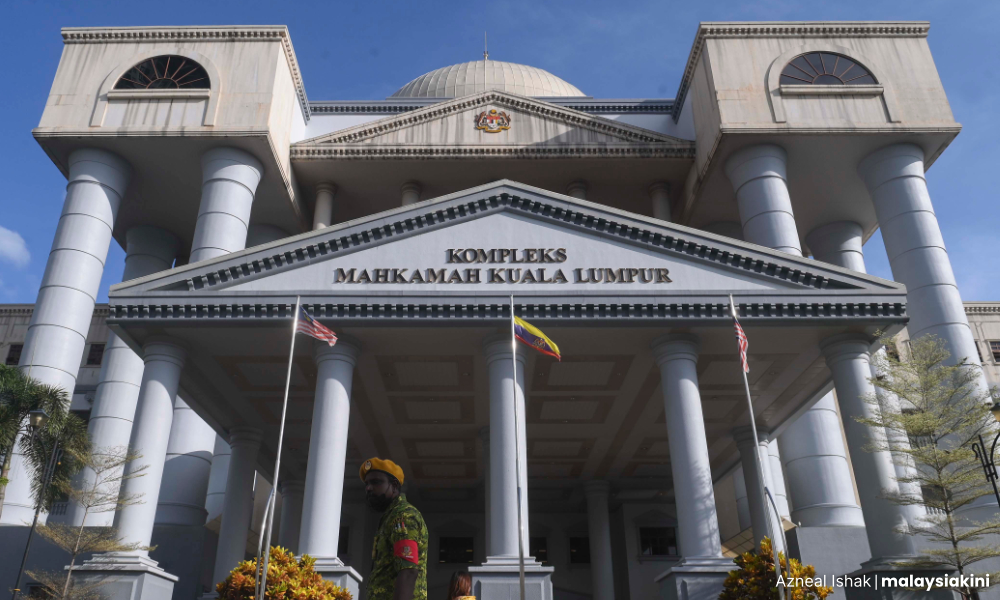
Criminalising legitimate critique risks narrowing civic space and discouraging the public from engaging in discussions that are vital to legal reform and the promotion of gender justice.
It is through open dialogue that lived experiences of women and other marginalised groups can be meaningfully acknowledged and addressed within our justice system.
Syariah court immune from public scrutiny?
This is not an attack on the syariah courts or on the rights of Muslim persons that it is entrusted to uphold.
It is in defence of every Malaysian’s right to engage in reasoned public discussion when they perceive injustices, particularly where decisions affect women’s lives, autonomy, and access to justice.
For decades, women’s groups have documented the gendered impacts of syariah court processes, including delays in divorce proceedings, inconsistent rulings on matters such as custody, maintenance, and the protection of women from domestic violence.
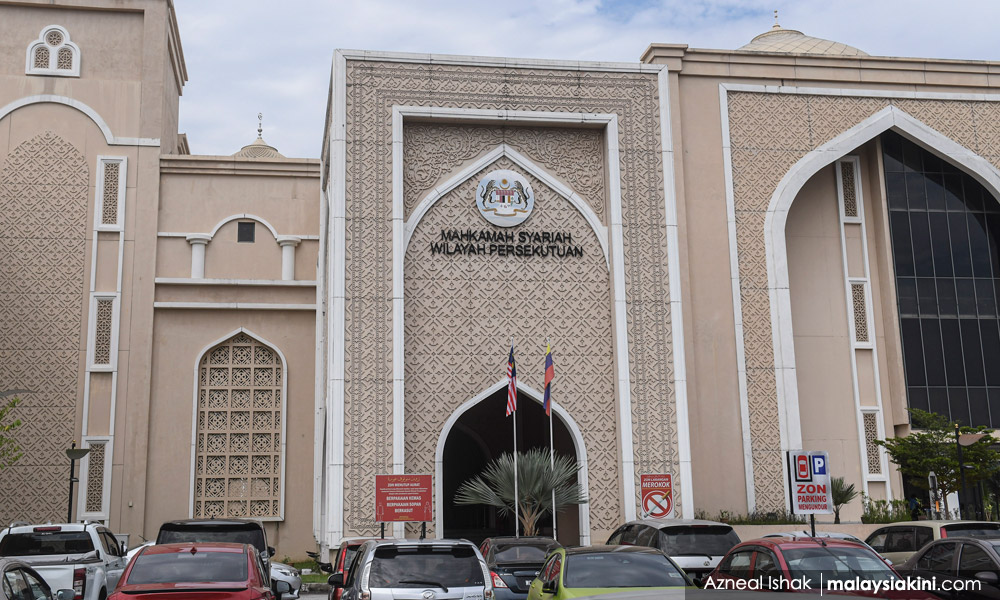
Recognising and discussing these realities is not an act of defiance, but a necessary part of ensuring that the justice system evolves to meet the needs of all, in line with the principles of fairness and accountability.
As organisations committed to justice, equality, and constitutional freedoms, we jointly affirm:
The right to freedom of expression as guaranteed under Article 10 of the Federal Constitution must include the space for respectful public discussion on judicial decisions, including those of the syariah court.
Legal institutions, by their very nature, must remain open to constructive scrutiny and criticism. Public confidence in the justice system is strengthened through transparency and open dialogue.
Members of the public should be able to share their views and experiences regarding the judicial system or legal framework without fear of undue repercussions.
Women’s voices and lived realities must be at the centre of legal reform and public policy discussions.
We stand in solidarity with Maria and all who continue to raise their voices in pursuit of justice. A healthy democracy thrives not by suppressing dissent but by embracing it as a catalyst for reform.
This statement is endorsed by the following Joint Action Group for Gender Equality (JAG) member organisations and other civil society organisations.
1. Association of Women Lawyers (AWL)
2. Justice for Sisters (JFS)
3. Persatuan Kesedaran Komuniti Selangor (Empower)
4. Persatuan Kebajikan Sokongan Keluarga Selangor & KL (Family Frontiers)
5. Autism Inclusiveness Direct Action Group (Aida)
6. Perak Women for Women Society (PWW)
7. Women’s Centre for Change (WCC)
8. Knowledge and Rights with Young people through Safer Spaces Network (Kryss)
9. Tenaganita
10. All Women’s Action Society (Awam)
11. Women’s Aid Organisation (WAO)
12. Sabah Women’s Action Resource Group (Sawo)
13. Centre for Independent Journalism (CIJ)
14. Society for Equality, Respect And Trust for All Sabah (Serata)
15. Life Under Umbrella (LUU)
16. Kemban Kolektif
17. Greater
18. Tijah Yok Chopil - Jaringan Kampung Orang Asli Semenanjung Malaysia.
19. Nasir Ali (individual)
The views expressed here are those of the author/contributor and do not necessarily represent the views of Malaysiakini.
/file/publisher-c1a3f893382d2b2f8a9aa22a654d9c97/2020/07/59b54da36eb5e23dd7917eaeed7780a7.jpg)
/file/publisher-c1a3f893382d2b2f8a9aa22a654d9c97/2024/09/f08fc6aaf9e972335c471a4902ef0dec.jpg)
/file/publisher-c1a3f893382d2b2f8a9aa22a654d9c97/2020/10/2bda679309c88e264ef963588bbe46d2.jpg)
/file/publisher-c1a3f893382d2b2f8a9aa22a654d9c97/2025/06/39f28f13c33417a0c07033764bc70a51.jpg)
/file/publisher-c1a3f893382d2b2f8a9aa22a654d9c97/2025/06/100576f12567e54e98295cee372f5fec.jpg)
/file/publisher-c1a3f893382d2b2f8a9aa22a654d9c97/2025/06/b4699ea2ec9a764cfaed7cb33dd02792.jpg)


Report this comment
Are you sure you want to delete this comment?
This action cannot be undone.