


/file/publisher-c1a3f893382d2b2f8a9aa22a654d9c97/2020/09/ce36450f341c86ff318ba5c58b84b432.jpg)

COMMENT | Can federal govt give away Sabah territory?
But it is also a test of Malaysia’s own federal system and its standing in international law.
Here, we break down the legal issues, the history, and what it all means for Malaysia and the region.
Where did the dispute begin?
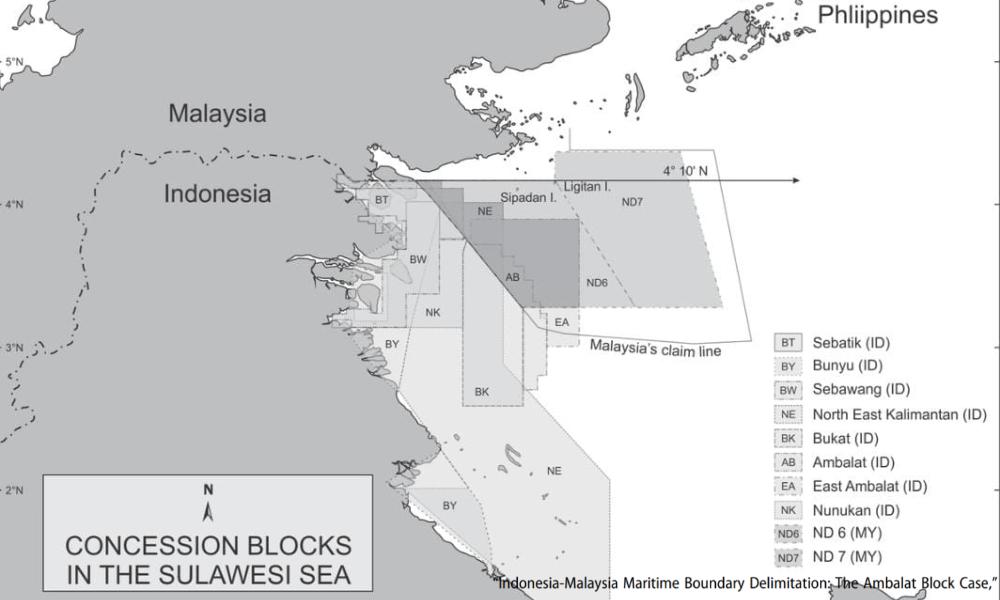
The Ambalat Block spans 15,000 sq km in the Sulawesi Sea, just off Sabah’s coast. It is rich in oil and gas - estimated to hold between 62 million and 764 million barrels of oil, and 348 million to 40 billion cubic meters of natural gas.
In monetary terms, this translates to a range between US$4 billion (RM16.8 billion) to over US$50 billion (RM211 billion).
Which country owns the territories is disputed.
Sabah, formerly “North Borneo”, was claimed by the sultanates of Brunei and Sulu. Later, both sultanates granted concessions to European syndicates, notably to Baron von Overbeck and Alfred Den.
These concessions led, in 1881, to the establishment of the British North Borneo Chartered Company. The company administered the North Borneo territory as a British protectorate. In 1946, after World War II, the company transferred its rights to the British Crown.
North Borneo thereby became a Crown Colony.
The Queen’s gift
Then, something happened that weakened the federation’s claim over the Ambalat Block...
COMMENT | The Ambalat Block dispute is a story of oil, maps, and law. It is a tale of two neighbours - Malaysia and Indonesia - who both claim rights to a rich patch of sea.
But it is also a test of Malaysia’s own federal system and its standing in international law.
Here, we break down the legal issues, the history, and what it all means for Malaysia and the region.
Where did the dispute begin?
The Ambalat Block spans 15,000 sq km in the Sulawesi Sea, just off Sabah’s coast. It is rich in oil and gas - estimated to hold between 62 million and 764 million barrels of oil, and 348 million to 40 billion cubic meters of natural gas.
In monetary terms, this translates to a range between US$4 billion (RM16.8 billion) to over US$50 billion (RM211 billion).
Which country owns the territories is disputed.
Sabah, formerly “North Borneo”, was claimed by the sultanates of Brunei and Sulu. Later, both sultanates granted concessions to European syndicates, notably to Baron von Overbeck and Alfred Den.
These concessions led, in 1881, to the establishment of the British North Borneo Chartered Company. The company administered the North Borneo territory as a British protectorate. In 1946, after World War II, the company transferred its rights to the British Crown.
North Borneo thereby became a Crown Colony.
The Queen’s gift
Then, something happened that weakened the federation’s claim over the Ambalat Block.
On June 24, 1954, the Queen, under the Colonial Boundaries Act, 1895 (a) [58 & 59 Vict. c. 34.] extended “the boundaries of North Borneo so as to include the continental shelf beneath the high seas contiguous to the territorial waters of the Colony.”
That means the Ambalat Block belongs to North Borneo.
In 1963, by agreement, North Borneo became part of the Federation of Malaysia, as “Sabah”.
Thus, all of the British Crown’s rights over the lands and seas of North Borneo were vested to – and continued into – the state of Sabah.
When it joined the Federation of Malaysia, Sabah reserved all its proprietary rights over all its assets.
Malaysia’s 1979 map extended its maritime boundary southeast from Sebatik Island, encompassing much of Ambalat within Malaysian waters. Indonesia objected, citing earlier treaties with Britain and the Netherlands that placed Ambalat within Indonesian territory.
The dispute intensified after Malaysia included the Sipadan and Ligitan islands as “basepoints” in its maritime claims.
Indonesia’s ICJ claim over Ambalat
Indonesia calls the disputed area the “Ambalat Block”. It claims rights over the block by reference to colonial-era agreements between Britain and the Netherlands. It specifically refers to the 1891 Convention, the 1915 Agreement, and subsequent conventions in 1928 and 1930.
Indonesia argued that these treaties support its broader maritime claims.
These claims have been legally tested and were found to be wanting, notably during the International Court of Justice (ICJ) case over the Sipadan and Ligitan islands. Indonesia lost the case.
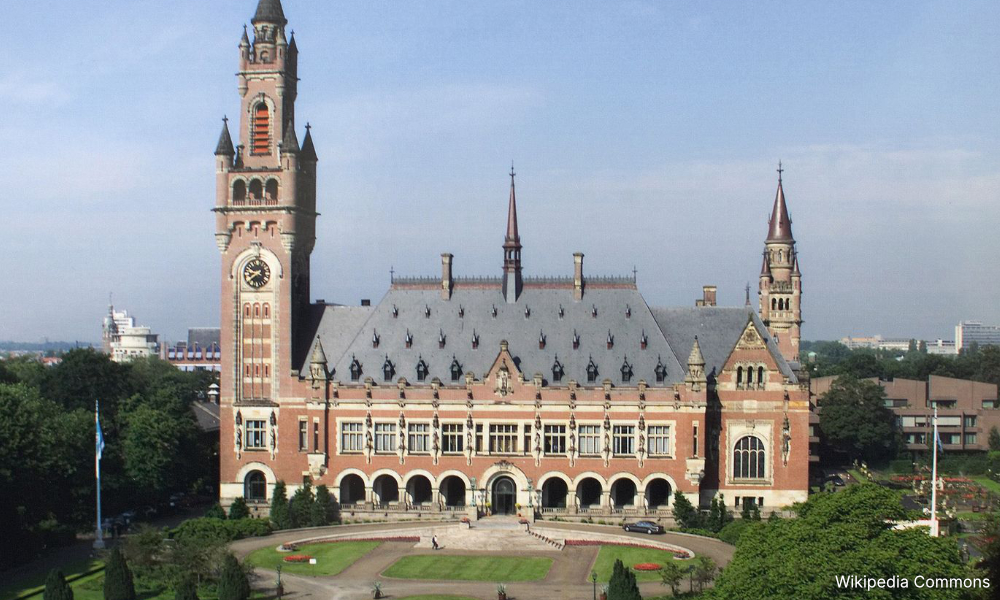
On Dec 17, 2002, the ICJ ruled that the agreements were intended only for land boundaries, not maritime delimitation. The court awarded the islands to Malaysia based on “effective occupation”.
Indonesia subsequently changed its baselines, no longer treating Ambalat as “internal waters”.
Unfortunately, the ICJ ruling did not settle the maritime boundary in the Celebes Sea.
The current status is this: while Indonesia’s claims have not been fully validated in international law, the “ownership” dispute remains unresolved.
Both nations have since submitted claims to the UN, but final ownership hinges on bilateral negotiations and international maritime law.
Two things become important
First, was the Sabah legislature consulted about, and its permission sought, over the fate of the Ambalat Block?
After all, the proprietary rights over the Ambalat Blocks belong to Sabah. The Federal Constitution cannot be interpreted to take away that proprietary right: that would breach the basis of the 1963 agreement.
Second, how did Malaysia trigger the initial dispute?
In 1979, Malaysia published a map that claimed Ambalat as its own (labelled “ND6” and “ND7”).
Indonesia objected immediately.
So did other countries in the region, including the Philippines, Singapore, Thailand, China, Vietnam, and even the UK for Brunei.
They complained Malaysia’s map went “too far”.
Indonesia argues that Malaysia’s map has no legal force because it was drawn up “unilaterally” and has never been accepted by others.
But if “others” objected, should not Sabah’s voice have mattered too?
What laws apply?
Both Malaysia and Indonesia have signed the United Nations Convention on the Law of the Sea (Unclos). This treaty sets out how countries can claim the sea around them - “Territorial sea” (12 nautical miles), “Exclusive Economic Zone” (EEZ, 200 nautical miles), and the “continental shelf”.
When claims overlap, Unclos states that the contending parties must negotiate in good faith and seek a fair solution.
The ICJ ruled that maritime boundaries should be drawn using the “equidistance” method unless there are special reasons to do otherwise.
Malaysia’s claim is complicated by Article 121 of Unclos, which limits maritime rights for small or uninhabited islands.
Federal vs state powers
Malaysia’s Constitution gives states control over land and resources, as set out in the Ninth Schedule.
Sabah says the continental shelf and its resources belong to the state, not the federal government. This is based on the Queen’s Statutory Instruments 1954 No 839, the Malaysia Agreement 1963, the provisions of the Federal Constitution, and the Land Ordinance (Sabah Cap. 68).
But the federal government has jurisdiction over international treaties and certain resources.
This “overlap” is the source of much tension. Although the federation has a limited right over certain national resources, the Constitution does not grant it any proprietary rights over assets belonging to Sabah.
If this difference is understood, half the battle is won.
In June 2025, Prime Minister Anwar Ibrahim and Indonesian President Prabowo Subianto agreed to “jointly develop” Ambalat, even as the legal dispute continues.
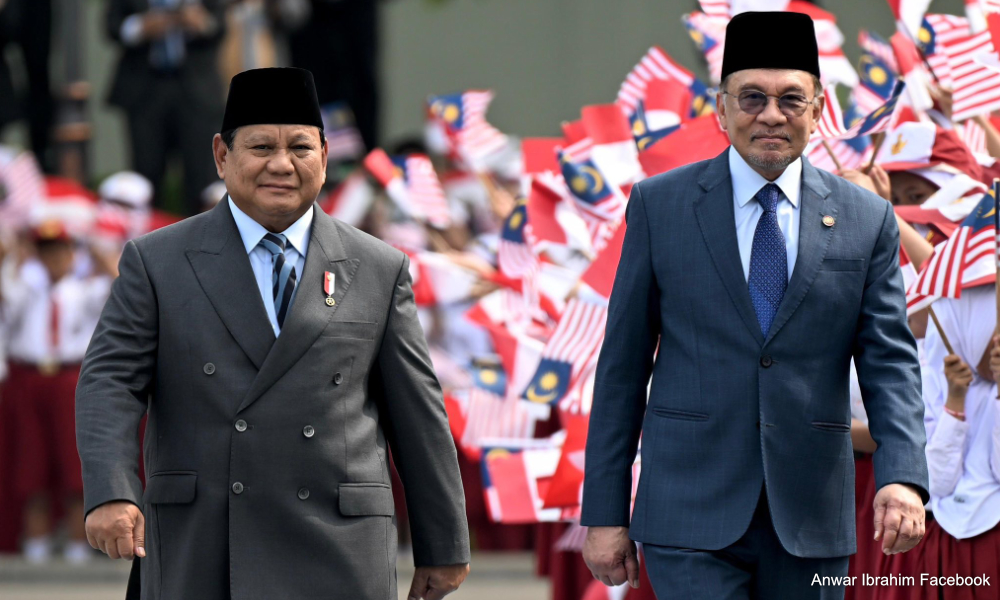
They plan to set up a joint authority to manage the area.
This is not a new idea.
Other countries have used joint development where borders are unclear. But under international law, such deals must not affect the final decision on who owns the area.
Sovereignty and legitimacy
Malaysia’s 1979 map has been rejected by all its neighbours. This weakens its claim under international law.
Under international law, if other countries object, a claim cannot become valid just because it is repeated over time.
ICJ cases like Libya v Malta and the Black Sea case show that mere unilateral actions do not settle borders.
Joint development is allowed as a “temporary fix”, but it does not settle who owns the area.
Sabah’s leaders are (rightly) upset that they were not consulted. They say Sabah’s proprietary rights over the continental shelf are protected by the Land Ordinance and the Malaysia Agreement 1963.
Land and resources, they correctly argue, are “state matters”.
The federal government’s move raises questions about whether it has overstepped its powers.
Opposition leaders want Parliament to debate the deal. They warn that any agreement made without Parliament’s approval could be unconstitutional.
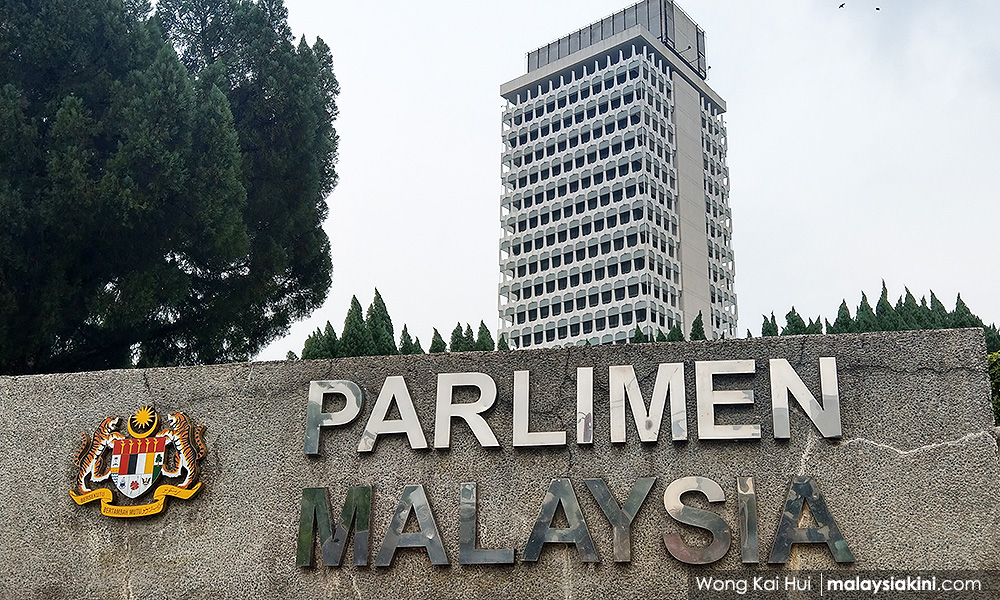
The opposition and MPs from the ruling parties should have asked this additional question: What about Sabah? Did anyone ask her permission?
International and regional effects
Malaysia’s simultaneous claim of sovereignty and agreement to joint development sends mixed signals.
International law states that inconsistent actions can weaken a country’s claim in the future - a principle lawyers will recognise as estoppel.
The ICJ has stressed that consistent actions matter in border disputes, as seen in the Sipadan-Ligitan case.
If talks fail, either side could ask for international arbitration under Unclos.
Past cases, like Guyana/Suriname, show that countries should not exploit resources in disputed areas in a way that harms the other side’s rights.
This deal could also set a model for other Southeast Asian disputes, such as those in the South China Sea.
Yet, any arrangement must follow both domestic and international law.
Malaysia’s Parliament has not yet debated or approved any joint development plan.
The Vienna Convention on the Law of Treaties says international agreements must follow each country’s internal rules on who can make treaties.
If Parliament is left out, the deal could be challenged in court and may not stand scrutiny, whether under Malaysian or international law.
Sabah rights not federal bargaining chips
The Ambalat dispute shows the challenges Malaysia faces in balancing state and federal powers and in upholding international law.
Joint development may be a practical step, but it must respect Sabah’s proprietary rights and Malaysia’s constitutional rules.
The outcome will affect not just Malaysia and Indonesia, but also how future disputes in the region are handled.
The key is transparency, respect for the law, and open debate - at home and abroad.
So, can the federal government give away Sabah’s territory?
The answer, both in law and in spirit, is a resounding “No” - at least, not without Sabah’s consent and Parliament’s scrutiny.
The Federal Constitution and the Malaysia Agreement 1963 safeguard Sabah’s rights over its land and resources, while international law demands clarity and legitimacy in boundary-making.
Any federal move that bypasses these safeguards risks not only legal challenges at home but also undermines Malaysia’s standing abroad.
In the end, the rule of law and the voice of the people must prevail over expedient deals.
The Ambalat episode reminds us that in a true federation, territory is not a bargaining chip, but a trust held for all Malaysians.
In this, the Federation owes a duty of trust to Sabahans.
GK GANESAN is a lawyer and an international commercial arbitrator.
The author thanks UK Menon, Ilango Karuppannan, Remy Majangkim, Lydia Jaynthi, KN Geetha, TP Vaani, and JN Lheela.
Malaysiakini has obtained permission to republish this article, which first appeared here.
The views expressed here are those of the author/contributor and do not necessarily represent the views of Malaysiakini.
/file/publisher-c1a3f893382d2b2f8a9aa22a654d9c97/2023/09/d2f6c40fa7c4024d887b9a676d0ab089.jpg)
/file/publisher-c1a3f893382d2b2f8a9aa22a654d9c97/2024/12/f06c63eb39da3a44e7261292c0200f83.jpg)
/file/publisher-c1a3f893382d2b2f8a9aa22a654d9c97/2024/11/75b09c6df866bf70dc8b71a78c13842c.jpg)
/file/publisher-c1a3f893382d2b2f8a9aa22a654d9c97/2020/12/37b695e08d86c353043cdf9ba7f647df.jpg)
/file/publisher-c1a3f893382d2b2f8a9aa22a654d9c97/2025/06/c21d515fd5200f856a48e19e28ca76a7.jpg)


Report this comment
Are you sure you want to delete this comment?
This action cannot be undone.