


/file/publisher-c1a3f893382d2b2f8a9aa22a654d9c97/2021/10/d8a6251e5f18ea1930e0ec5bc7d6be6f.jpg)

COMMENT | Bank Negara's OPR cut and hidden cost of cheap loans
This decision, portrayed as a pre-emptive move to support Malaysia’s economic growth amid global uncertainty, may at first glance appear to be good news.
Lower interest rates mean cheaper loans, easier credit, and more cash in the rakyat’s pockets, but a deeper look reveals that this policy shift may be less of a relief and more of a red flag.
The question every Malaysian must ask: Where will this extra cash really go? In truth, it’s not going into savings, investment, or economic upliftment. What seems like financial breathing room is, in truth, preparation for Malaysians to weather the sharp rise in living costs triggered by...
COMMENT | Bank Negara Malaysia (BNM) made headlines recently by cutting the Overnight Policy Rate (OPR) to 2.75 percent, the first reduction since the pandemic.
This decision, portrayed as a pre-emptive move to support Malaysia’s economic growth amid global uncertainty, may at first glance appear to be good news.
Lower interest rates mean cheaper loans, easier credit, and more cash in the rakyat’s pockets, but a deeper look reveals that this policy shift may be less of a relief and more of a red flag.
The question every Malaysian must ask: Where will this extra cash really go? In truth, it’s not going into savings, investment, or economic upliftment. What seems like financial breathing room is, in truth, preparation for Malaysians to weather the sharp rise in living costs triggered by upcoming government policies.
Liquidity into a cost crunch
Lower interest rates are designed to spur spending, but what happens when the government, almost in parallel, is raising the cost of everything else?
Starting in July, Malaysia will see the rollout of a slew of fiscal measures that disproportionately hit households and SMEs.
The expanded Sales and Services Tax (SST), for instance, has already introduced taxes on goods and services that were previously exempted, particularly on critical inputs to manufacturing or production of essential goods.

The government will remove all egg subsidies and raise electricity tariffs, and businesses, meanwhile, face steep logistical cost hikes due to higher Port Klang tariffs and must comply with a mandatory e-invoicing regime.
All these measures are being justified as necessary fiscal reforms, but the truth is, the burden is being quietly passed to the rakyat.
While BNM pumps more liquidity into the economy, the government is ready to soak it back up through taxes, tariffs, and the removal of support.
In effect, this is a policy design where the rakyat’s increased cash flow is used to finance the state’s fiscal gaps. The OPR cut, then, isn’t a gift. It is a lubricant for a painful squeeze.
To make matters worse, the international outlook is deteriorating. US President Donald Trump has issued a formal letter to Prime Minister Anwar Ibrahim, threatening to impose a 25 percent reciprocal tariff on Malaysian exports.
This would reinstate a tariff hike that was temporarily paused and comes atop a baseline 10 percent already in place. Worse still, there is growing chatter of an additional 10 percent penalty for Malaysia’s deepening economic ties with Brics nations.

If both measures are enacted, Malaysia could be facing a cumulative 35 percent tariff on key exports to the United States. This is not an abstract geopolitical concern. It directly impacts Malaysian livelihoods, especially in export-driven sectors like electronics, rubber products, and processed food.
Malaysia is attempting to appease everyone and, in doing so, may end up gaining the trust of no one. We cannot expect foreign confidence while sending mixed signals. One week pledging neutrality, the next showcasing Brics cooperation with no clear economic rationale.
We cannot champion food security while taxing imported staples. We cannot claim digital leadership while enforcing poorly executed e-invoicing and data surveillance.
SST is GST without the benefits
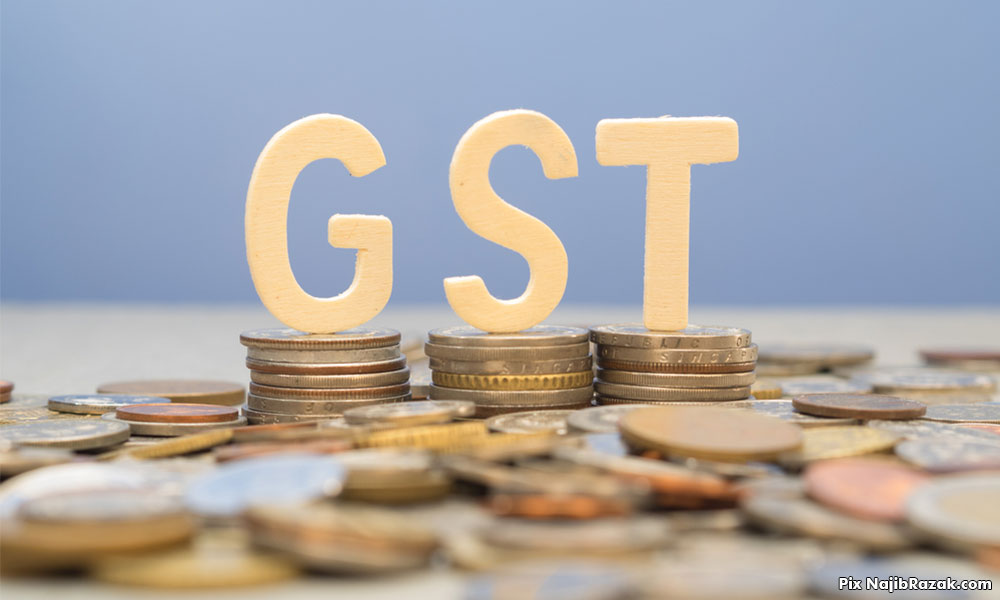
The irony is that much of what the government is now doing mirrors the Goods and Services Tax (GST) regime it scrapped years ago. SST expansion is a watered-down GST. E-invoicing is a GST-era compliance tool. Targeted subsidies and price rationalisation were all part of GST’s original fiscal reform framework.
But unlike GST, these new measures are clumsier, less transparent, and more punitive. SST is levied at multiple stages, creating a tax-on-tax effect that cascades costs down to the consumer. GST, by contrast, is transparent and allows for input tax credits, helping businesses avoid unnecessary mark-ups.
Yes, GST can raise more revenue for the government, and effectively taxes more, but it also taxes more fairly. Those who spend more, pay more. From farm to shelf, essential items are zero-rated under GST, and input tax is claimable throughout, ensuring prices remain controlled at the consumer level.
Households that live frugally are spared the brunt of the burden. That is how a modern, rules-based tax system should work.
Even the International Monetary Fund (IMF) has called for Malaysia to bring back GST, citing its potential to restore fiscal resilience without compromising economic equity.
If the government is serious about reform, then half-measures must give way to structural clarity. The July and August rollout of cost-heavy measures such as the SST expansion, electricity tariff hikes, e-invoicing, and the removal of RON95 fuel and egg subsidies should be postponed.
Malaysia’s trade strategy must be reassessed with clearer, more credible signals to both East and West. Strategic ambiguity is no longer sustainable.
And finally, GST must be reinstated not as a political burden, but as a coherent tax system that promotes transparency, fiscal sustainability, and competitiveness.
We cannot OPR-cut our way out of policy failure. Malaysia’s economic future depends not just on the interest rate set by Bank Negara but on whether the government uses that liquidity to empower or to extract.
If the rakyat is made to pay more, at the very least, let them pay fairly. That is what real reform must mean.
WOON KING CHAI is the director of MCA-linked Institute of Strategic Analysis and Policy Research (Insap). He previously served in senior roles in the federal government and private sector.
The views expressed here are those of the author/contributor and do not necessarily represent the views of Malaysiakini.
/file/publisher-c1a3f893382d2b2f8a9aa22a654d9c97/2019/07/3eb16e45370c53eff358a2b0542218b5.jpg)
/file/publisher-c1a3f893382d2b2f8a9aa22a654d9c97/2023/08/caeb367a6915eb6f97e0115ef207a5a4.jpg)
/file/publisher-c1a3f893382d2b2f8a9aa22a654d9c97/2025/06/1bb7d8758b53498aee47426cddad6480.jpg)
/file/1138/bb862d0bae3236e7bcef2af6a84e175a.jpeg)
/file/publisher-c1a3f893382d2b2f8a9aa22a654d9c97/2023/08/2c1ccb0640d38b572d7ea043286e3c46.jpg)


Report this comment
Are you sure you want to delete this comment?
This action cannot be undone.