


/file/publisher-c1a3f893382d2b2f8a9aa22a654d9c97/2025/07/b916a13eb1aacd3c4faf9947ab378de3.jpg)

COMMENT | Ex-CJ's Malta speech exposes fractures in democracy
COMMENT | Can a judge speak truth about justice without facing the executioner’s axe? This fundamental question lies at the heart of the recent controversy surrounding former chief justice Tengku Maimun Tuan Mat.
Her speech in Malta exposed the deepest fractures in Malaysia’s constitutional democracy. It revealed a constitutional crossroad by asking this question: “Will Malaysians choose constitutional rule, or arbitrary power?”
On April 8, Tengku Maimun delivered a landmark address at the 24th Commonwealth Law Conference in Malta. Her lecture, titled “Judicial Independence and Parliamentary Sovereignty – a crossroad?”, would ignite a firestorm that reverberates through Malaysia’s corridors of power to this day.
The speech was no mere academic exercise. It was a...
COMMENT | Can a judge speak truth about justice without facing the executioner’s axe? This fundamental question lies at the heart of the recent controversy surrounding former chief justice Tengku Maimun Tuan Mat.
Her speech in Malta exposed the deepest fractures in Malaysia’s constitutional democracy. It revealed a constitutional crossroad by asking this question: “Will Malaysians choose constitutional rule, or arbitrary power?”
On April 8, Tengku Maimun delivered a landmark address at the 24th Commonwealth Law Conference in Malta. Her lecture, titled “Judicial Independence and Parliamentary Sovereignty – a crossroad?”, would ignite a firestorm that reverberates through Malaysia’s corridors of power to this day.
The speech was no mere academic exercise. It was a clarion call defending three fundamental constitutional truths that challenge the very foundations of Malaysia’s political establishment.
Three pillars of constitutional check and balance
First, the CJ declared “constitutional supremacy”. She stated unequivocally that in Malaysia, “the Constitution is the supreme law of the land, not Parliament”.
This principle, she reminded her audience, was established in the seminal case led by then-lord president Suffian LP, in Ah Thian v Government of Malaysia (1976).
The Malaysian system fundamentally differs from Westminster parliamentary supremacy. Parliament cannot enact laws that contradict the Federal Constitution without facing judicial nullification.
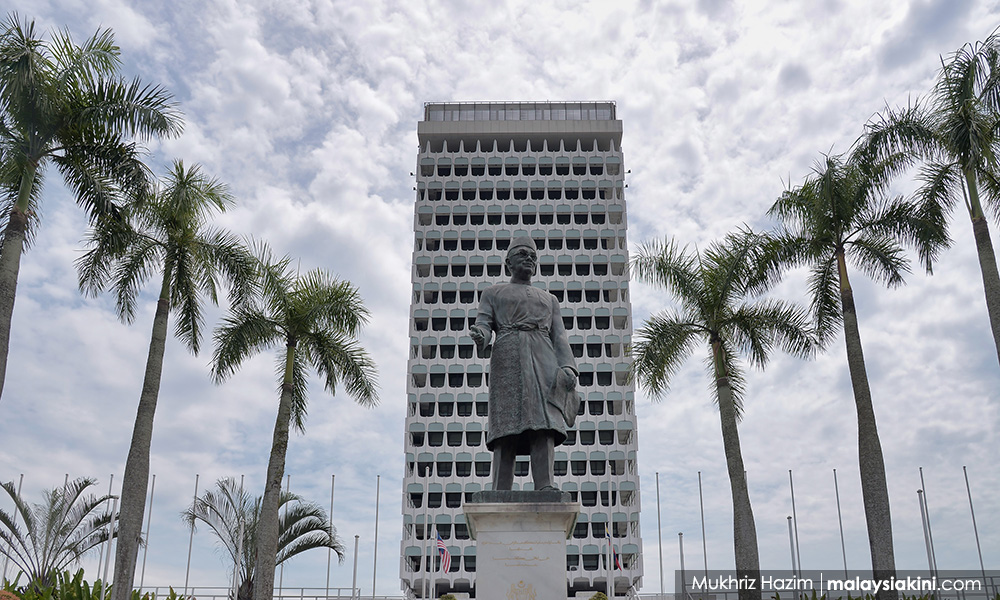
Second, she advocated for reforms in Judicial Appointments.
Tengku Maimun highlighted proposals to remove the prime minister’s role in appointing judges.
She argued such changes would “reinforce the impartiality of the selection process, ensuring that judicial appointments remain firmly grounded on merit and free from any perception of political influence”.
These proposals were profound but nothing revolutionary. They echoed recommendations from the 2009 royal commission on the VK Lingam tape scandal.
It was for this very purpose that the Judicial Appointments Commission Act 2009 had been enacted. The prime minister’s recommendation to the king, under Article 122B on which judge was to be appointed, was therefore no longer unconstrained or arbitrary.
Otherwise, why have a Judicial Appointments Commission? Or have a JAC packed by members pandering to those in power?
Third, she invoked the lessons of history. Tengku Maimun reminded her audience of the “harrowing events of the 1988 judicial crisis”.
She contrasted this dark period with the judiciary’s “proud re-emergence” in recent decades, emphasising the need for mutual respect among the three branches of government.
The backlash
The reaction was swift and savage. Former law minister Nazri Abdul Aziz interpreted her remarks as a “public accusation” that Prime Minister Anwar Ibrahim had “interfered” with judicial appointments.

But this interpretation fundamentally misunderstands the chief justice’s constitutional duty and the legal principles she was defending.
Why the critics are wrong: The legal foundation
A. Judicial independence as basic structure
Malaysian constitutional law recognises that judicial independence is a fundamental part of the Constitution’s “basic structure”.
This concept, inspired by the landmark Indian case Kesavananda Bharati v State of Kerala (1973), means that certain core constitutional elements cannot be altered or removed, even by constitutional amendment.
The Basic Structure Doctrine is not simply an “Indian invention”, but rather an “Indian innovation”; with deep Aristotlean, German and French philosophical roots.
The Indian adaptation came through Dietrich Conrad, a German scholar who transmitted these German constitutional concepts to India.
In 1965, Conrad, influenced by both Carl Schmitt and Maurice Hauriou’s work, delivered lectures at Banaras Hindu University. That had some influence on the Indian Supreme Court’s development of the Basic Structure Doctrine in Kesavananda Bharati (1973).
The basic structure doctrine emerged from the Federal Court’s trilogy of cases: Semenyih Jaya (2017), Indira Gandhi (2018), and Alma Nudo (2019). These cases held that judicial power remains vested in the courts and cannot be diminished by constitutional amendment.
B. The duty to speak
Judges in the Commonwealth system have not merely the right but the duty to speak publicly about matters affecting the judiciary.

This ensures judicial freedom from “fear of removal or other sanction” when addressing issues central to the administration of justice.
The Malaysian Bar emphasised that judges must be free from improper influence and base their decisions solely on evidence and law.
C. Constitutional office, not public service
Critics erroneously described Tengku Maimun as a “public servant”.
However, superior court judges are not mere public servants but constitutional officeholders.
They hold special protections under Article 125 of the Federal Constitution, which shields them from retaliation for properly performing their duties.20
The historical warning
Malaysia’s 1988 judicial crisis serves as a stark reminder of what happens when executive power tramples judicial independence. Then-lord president Salleh Abas and other judges were removed for defending judicial independence against executive interference.
The crisis began when the judiciary made decisions that invalidated government actions. The executive response was to remove the judiciary’s leadership and amend the Constitution to weaken judicial power.
International standards: The global consensus
International law strongly supports judicial freedom of expression. The UN Basic Principles on the Independence of the Judiciary clearly state that judges should have freedom of expression and should not face disciplinary action for comments made while performing their duties.
Tengku Maimun’s speech directly addressed judicial administration and constitutional principles, falling squarely within this protected area.
Governmental legitimacy
The controversy reveals a deeper truth about governmental legitimacy. As judge Christopher Chin wisely observed in Harris Salleh v Chief Secretary, Government of Malaysia (2023).
“Legitimacy of the government in the eyes of the populace is critical as the public must recognise the law and the government as legitimate, failing which, the public will not believe in, and follow, the rule of law.”
The pillars of constitutional democracy
The controversy illuminates four fundamental principles essential to any democratic society:
The rule of law means that everyone, including government officials, must obey the law. It represents a “higher law” that guides the Constitution’s spirit. As Thomas Fuller’s maxim declares: “Be you never so high, the law is above you.”
Separation of powers divides government into three independent branches: Legislature, Executive, and Judiciary. This prevents any single branch from becoming tyrannical and ensures checks and balances.
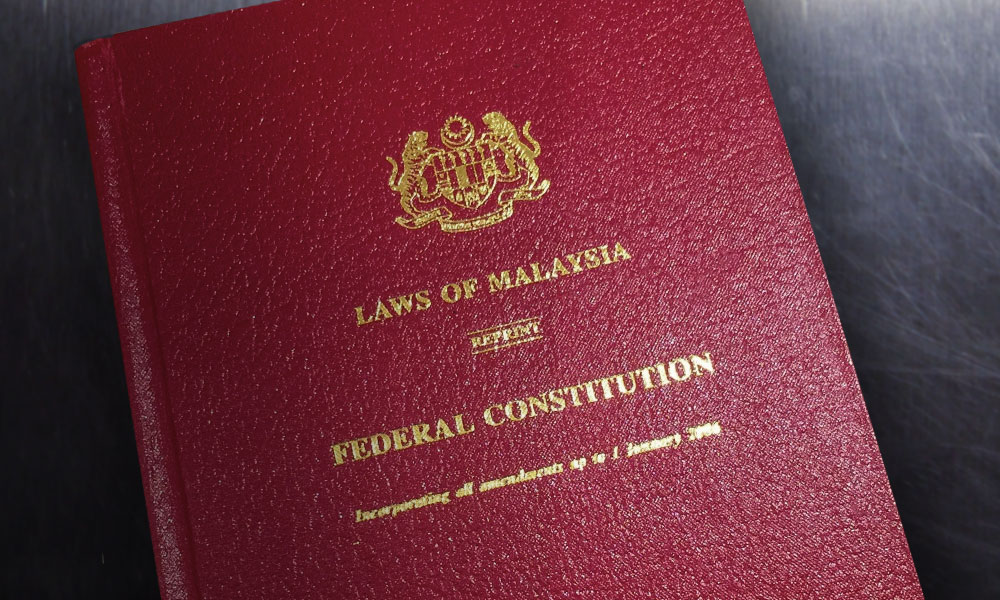
Constitutional supremacy means that Malaysia’s Federal Constitution stands as the ultimate legal authority. Any law contradicting the Constitution is void. This differs fundamentally from systems with parliamentary supremacy.
Judicial independence requires judges to make decisions based solely on law and facts, without political pressure or interference. This protects not judges but the people’s right to impartial justice.
The ultimate question for you
The chief justice’s Malta speech was not an attack on government but a resolute defence of constitutional principles.
She sought to strengthen Malaysia’s legal system by upholding the mechanisms designed to protect citizens and ensure fair governance.
This is a major constitutional crisis, as major as the 1988 judicial crisis.
And so, we are compelled to ask this question:
In a nation that values justice, should we not celebrate those who courageously defend the rule of law, the separation of powers, and constitutional supremacy - even when their words inconvenience the powerful?
Your answer will reveal whether Malaysia will choose the path of constitutional democracy or slide toward the arbitrary rule that the 1988 crisis so darkly foreshadowed.
So, what is your answer?
GK GANESAN is a lawyer and an international commercial arbitrator.
The author thanks UK Menon, G Naidu, KN Geetha, TP Vaani, JN Lheela and Lydia Jaynthi.
Malaysiakini has obtained permission to republish this article, which first appeared here.
The views expressed here are those of the author/contributor and do not necessarily represent the views of Malaysiakini.
/file/publisher-c1a3f893382d2b2f8a9aa22a654d9c97/2025/06/64ce91719d4091168ee465b67bd73da2.jpg)
/file/publisher-c1a3f893382d2b2f8a9aa22a654d9c97/2025/05/23b188dbf54d3cb189ac64d8480e07c4.jpg)
/file/publisher-c1a3f893382d2b2f8a9aa22a654d9c97/2023/11/89f067ffaf9770ebbafcf95400be8847.png)
/file/publisher-c1a3f893382d2b2f8a9aa22a654d9c97/2023/01/40fc586ecee4f7a06a6d14f3b543a670.jpg)
/file/publisher-c1a3f893382d2b2f8a9aa22a654d9c97/2025/07/cd8500a26c2dfa84be99cf7e48385113.jpg)


Report this comment
Are you sure you want to delete this comment?
This action cannot be undone.