


/file/publisher-c1a3f893382d2b2f8a9aa22a654d9c97/2022/01/86a3e9b51f738dd4d3c47e747ad81fcf.jpg)

COMMENT | Legends of justice: 11 greatest judges of all time
COMMENT | In every society, in every age, there comes a moment when the law stands at a crossroads.
To the left lies safety - the well-worn path of precedent, the comfort of tradition, the applause of the powerful. To the right lies danger - the unknown territory of justice, the rocky ground of principle, the lonely summit of truth.
Most judges, like most people, take the safe path. They apply the law as written, follow the precedent as set, and sleep peacefully knowing they have disturbed no one.
But then, there are the others - the rare few who hear a different calling, who see a different vision, who dare to believe that law can be more than chains binding the present to the past.
These are the judges who changed the world. Not with armies or manifestos, but with words. Not with revolution, but with reason. Not with violence, but with vision. They are the ones who, when history called, answered: “Here I stand.”
Their stories are the stuff of legend.
COMMENT | In every society, in every age, there comes a moment when the law stands at a crossroads.
To the left lies safety - the well-worn path of precedent, the comfort of tradition, the applause of the powerful. To the right lies danger - the unknown territory of justice, the rocky ground of principle, the lonely summit of truth.
Most judges, like most people, take the safe path. They apply the law as written, follow the precedent as set, and sleep peacefully knowing they have disturbed no one.
But then, there are the others - the rare few who hear a different calling, who see a different vision, who dare to believe that law can be more than chains binding the present to the past.
These are the judges who changed the world. Not with armies or manifestos, but with words. Not with revolution, but with reason. Not with violence, but with vision. They are the ones who, when history called, answered: “Here I stand.”
Their stories are the stuff of legend. Each faced a moment when everything hung in the balance -career, reputation, safety, even life itself. Each had to choose between the easy path and the right path. Each chose justice, though the heavens fall.
These are their stories. Note that this list does not pretend to be complete, nor does it have any particular order or seniority.
1. James Richard Atkin and Owen Dixon (joint first place)
Two men, born in Australia, serving two continents, sharing one vision: that law must serve humanity, not merely power. Atkin in Britain and Dixon in Australia transformed the common law world through different but equally profound approaches to justice.
Atkin (United Kingdom, 1867-1944)
May Donoghue bought ginger beer in a Scottish café. When she poured it over ice cream, a decomposed snail floated out. She fell ill. But who could she sue? She hadn’t bought the drink herself.
Atkin had the answer. In Donoghue v. Stevenson (1932), he created the “neighbour principle” -perhaps the most important legal doctrine of the 20th century. “You must take reasonable care to avoid acts or omissions which you can reasonably foresee would be likely to injure your neighbour,” he wrote.
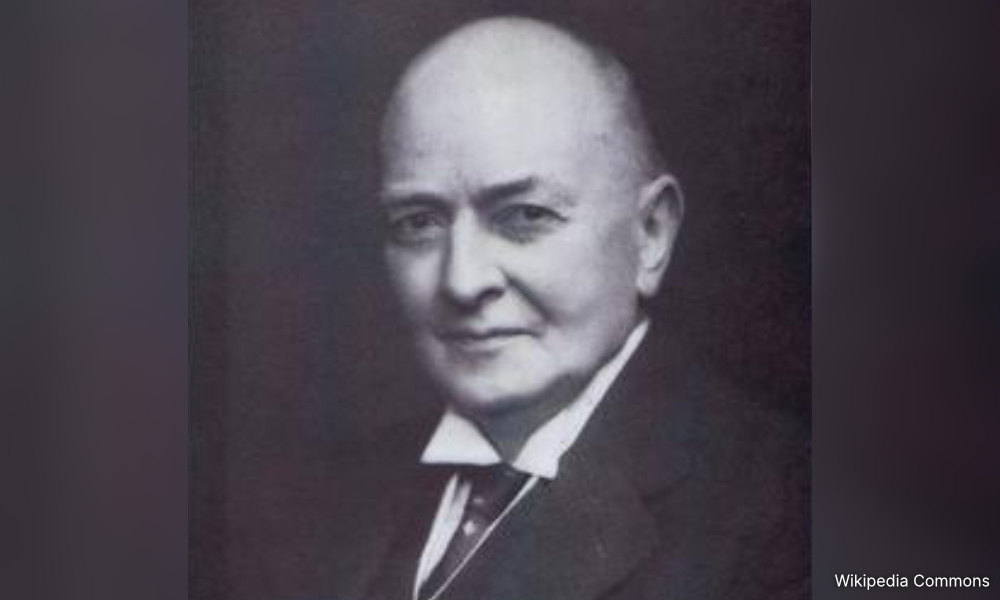
Atkin based his judgment on the Bible: “Love your neighbour.” In law, this became: “You must not injure your neighbour.” His decision created the modern law of negligence. The snail case changed everything. Manufacturers became liable to consumers. The injured could sue for careless conduct. The principle spread throughout the common law world and lasts to this day.
Born in Brisbane, Australia, to an Irish father and Welsh mother, Atkin was shaped by his father’s championship of liberal democracy. He rose to become a lord justice of appeal and finally a law lord. His judgments were driven by deep faith in Divinity and common sense, always asking: “What would ordinary justice require?”
Dixon (Australia, 1886-1972)
Dixon was different. Where Atkin drew from the Bible, Dixon drew from pure legal reasoning. Where Atkin championed the common person, Dixon championed “strict and complete legalism”.
Dixon served on the High Court of Australia for 35 years, including 12 as chief justice. He was considered one of the world’s leading common law jurists. His judgments “carried persuasive effect wherever the common law was applied”.
Dixon’s philosophy was revolutionary in its simplicity: judges must decide cases according to legal principle, not personal preference. “There is no other safe guide to judicial decisions in great conflicts than a strict and complete legalism,” he declared. His approach combined “strict logic and high technique” with a deep understanding of legal principle.
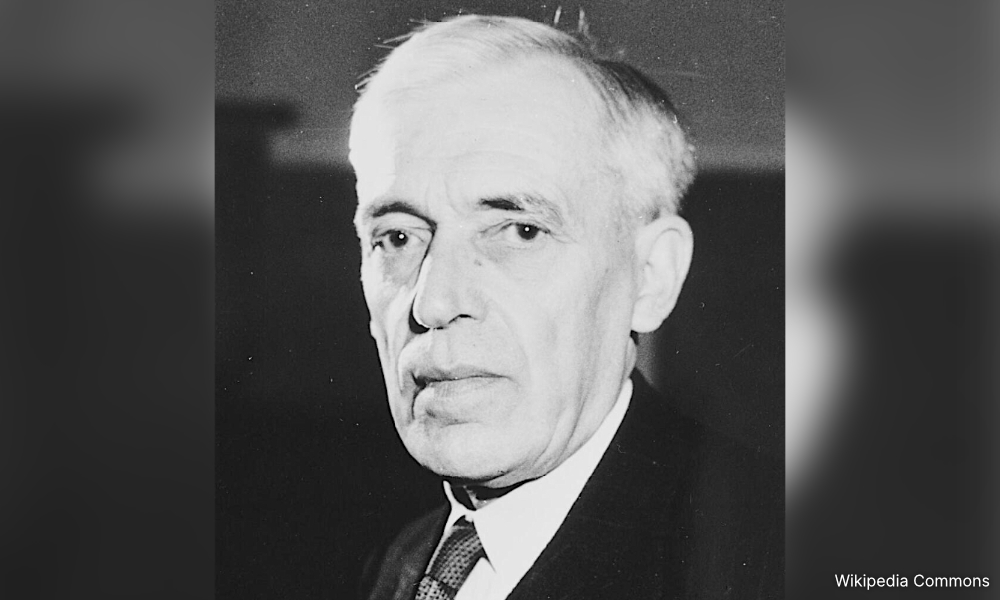
The Dixon Court became known as the “golden age” of the High Court. English barrister and judge, Tom Denning, called it one of “the great common law benches of history”. Dixon’s influence extended far beyond Australia - his reasoning was studied and followed by judges worldwide.
Their combined legacy
Atkin and Dixon proved that great judging takes many forms. Atkin’s humanity and Dixon’s intellectualism both served justice. Atkin made the law accessible to ordinary people. Dixon made the law intellectually rigorous and principled. Together, they showed that the best judges combine heart and mind, compassion and logic.
Their influence continues today. Every time a consumer sues a manufacturer, the Atkin’s neighbour principle applies. Every time a judge reasons from first principles rather than prejudice, Dixon’s legalism shines through. They proved that judges can be both servants of the law and architects of justice.
2. King Solomon (ancient Middle East, c. 970-931 bce)
Before there were law schools or legal precedent, there was Solomon. The biblical king whose wisdom became legend, whose judgment became the gold standard for judicial decision-making.
The story is timeless. Two women came before Solomon, each claiming to be the mother of a living child. No witnesses. No evidence. Just conflicting testimony. Solomon’s solution was as shocking as it was brilliant: “Divide the living child in two and give half to each woman.”
The real mother immediately cried out: “Give the living baby to the other woman. Do not kill him.” The false mother agreed to the division. Solomon’s trap worked perfectly.
“Give the living baby to the first woman. She is his mother,” he declared.
Solomon’s judgment revealed three truths that echo through judicial history: First, the best judges use psychology, not just procedure. Second, justice sometimes requires shocking methods to reveal the truth. Third, real wisdom lies in understanding human nature.
The Bible records that “all Israel revered Solomon, recognising that he possessed divine wisdom to administer justice”. His judgment became the template for wise judging across cultures and centuries. From ancient Israel to modern courtrooms, Solomon’s wisdom remains the benchmark.
3. Bao Zheng (China, 999-1062)
In Imperial China, corruption was as common as rice. Officials took bribes, the powerful escaped justice, and the common people suffered in silence. Then came Bao – “Justice Bao” - whose righteousness became legendary.
Bao earned his reputation through relentless investigation and unwavering integrity. Unlike other magistrates who used torture to force confessions, Bao solved cases through observation, deduction, and patience. He became known as the “Chinese Sherlock Holmes”.
His most famous case involved an ox whose tongue had been cut out. When the owner complained, Bao told him to slaughter the ox for sale.
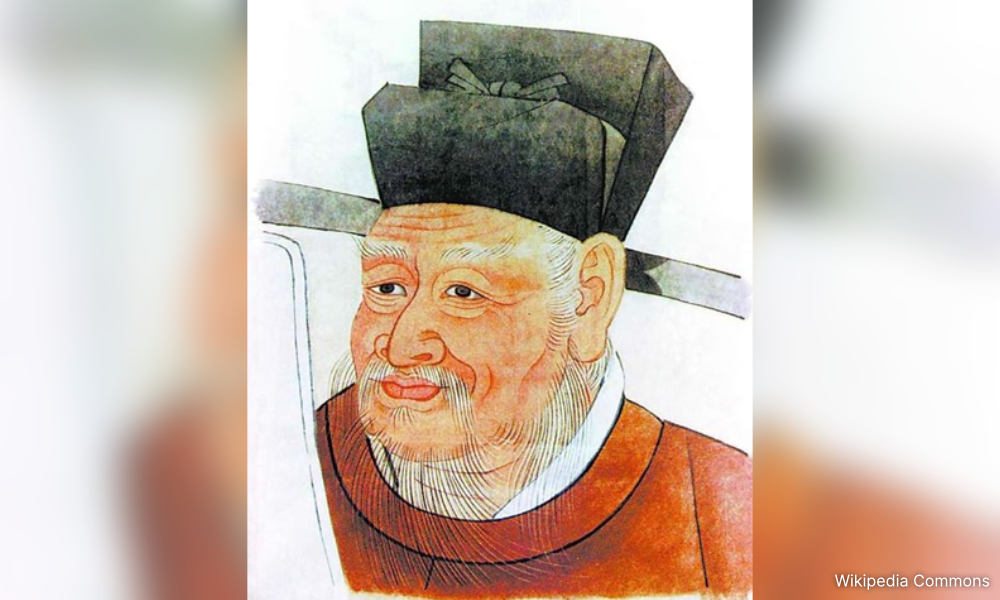
Soon, another man arrived, accusing the first of illegally slaughtering a “beast of burden” - a crime punishable by imprisonment. Bao thundered: “Why did you cut his ox’s tongue and then accuse him?” The culprit confessed in shock.
Bao’s integrity was absolute. He impeached an uncle of the emperor’s favourite concubine. He punished powerful families. He even sentenced his own uncle. Emperor Renzong admired Bao’s integrity so much that he extended the wings on Bao’s hat by four inches so he could easily spot him in court.
Bao’s legend grew beyond his lifetime. By 1250, professional bards were singing ballads about judge Bao. Chinese operas depicted him with a jet-black face and crescent moon on his forehead, symbols of righteousness and purity. He became the personification of justice in Chinese culture, inspiring countless stories, novels, and films.
4. Abu Hanifa (Iraq, 699-767)
In eighth-century Iraq, the Islamic empire was expanding rapidly. New peoples, new cultures, new legal problems emerged daily. The law needed to adapt, but how? Abu Hanifa had the answer: reason guided by faith.
Abu Hanifa revolutionised Islamic law by establishing the Hanafi school of jurisprudence. His method was radical: when the Quran and Hadith didn’t provide clear guidance, he used analogical reasoning (qiyas) to derive new legal principles. He proved that law could be both divinely inspired and intellectually rigorous.
His approach faced fierce resistance. Critics called his followers “people of opinion” because they used reason alongside revelation. But Abu Hanifa insisted there was no conflict between faith and reason.
“Theory without practice is like a body without a soul,” he declared.
Abu Hanifa’s influence was extraordinary. His student Abu Yusuf became the first chief judge (Qadi al-Qudat) of the Islamic empire under Caliph Harun al-Rashid. The Hanafi school spread throughout the Islamic world and became the largest school of Islamic jurisprudence.
Abu Hanifa’s insistence on independence, refusal of high office, even under threat of imprisonment and flogging, was a stand for judicial independence and impartiality.
His willingness to criticise unjust rulers and judges was strong evidence of his commitment to impartiality and equity.
Today, one-third of all Muslims follow Hanafi law. From Turkey to Central Asia, from the Balkans to South Asia, Abu Hanifa’s legal reasoning continues to guide judges and scholars. He proved that legal systems could adapt to new circumstances while maintaining core principles.
5. Chanakya (ancient India, c. 350-275 BCE)
Ancient India’s judicial system was centuries ahead of its time. At its heart was the concept of dharma - righteous law that balanced justice with morality. The system featured hierarchical courts, professional judges, and even early forms of jury trials.
Chanakya, author of the Arthashastra, helped design this system. His judicial philosophy emphasised that judges must be “impartial, restrained, and free from personal biases like anger and greed”. Their decisions should be performed “with a sense of duty, similar to a sacred ritual”.
The Indian system included remarkable features: family courts for domestic disputes, village assemblies for local matters, and the king’s court for major cases. Judges were required to sit in groups of three, five, or seven - never alone. They could even warn the king if his decisions violated law and equity.
Chanakya’s influence extended far beyond ancient India. His principles of judicial independence, due process, and moral reasoning became foundational to legal systems worldwide. The Arthashastra remains one of the most sophisticated treatises on law and governance ever written.
6. Hersch Lauterpacht (UK/international, 1897-1960)
In 1946, Lauterpacht sat in the Nuremberg courtroom, watching Nazi war criminal Hans Frank enter in shackles. This was deeply personal. Frank had governed the territory where Lauterpacht’s family lived. They were all dead now - victims of the Holocaust.
But Lauterpacht had given the prosecutors their most powerful weapon: the phrase “crimes against humanity”. Three words that would change international law forever. He proved that some acts are so evil they offend all humanity, transcending national boundaries and sovereign immunity.
Born in Galicia, Lauterpacht came to England in 1923, barely speaking English. By 1955, he was a judge at the International Court of Justice. He believed passionately that international law must protect individuals, not just states.
His writings helped draft the Universal Declaration of Human Rights. He showed that human dignity has no borders, that the law of nations must serve the needs of people. Former ICJ president Stephen Schwebel called him “the finest international legal mind of the 20th century”.
7. Ruth Bader Ginsburg (United States, 1933-2020)
In 1959, Ginsburg graduated first in her class from Columbia Law School. No top law firm would hire her. The reason was simple: she was a woman.
Ginsburg didn’t get angry. She got even. As a lawyer, she argued six cases before the Supreme Court. She won five. Each victory chipped away at laws that treated women as second-class citizens.
Her strategy was brilliant. She didn’t just represent women - she represented men too. Men denied alimony, men denied Social Security benefits. She showed that gender discrimination hurts everyone.
When she reached the Supreme Court in 1993, Ginsburg kept fighting. In United States v Virginia, she struck down the all-male policy at Virginia Military Institute. Her dissent in Ledbetter v Goodyear led Congress to pass the Lily Ledbetter Fair Pay Act.
Even battling cancer four times, she never stopped. She became the “Notorious RBG” - a cultural icon who proved that one person can change the law, and the law can change the world.
8. Thurgood Marshall (US, 1908-1993)
The University of Maryland Law School rejected Marshall because he was Black. So, he sued them. And won.
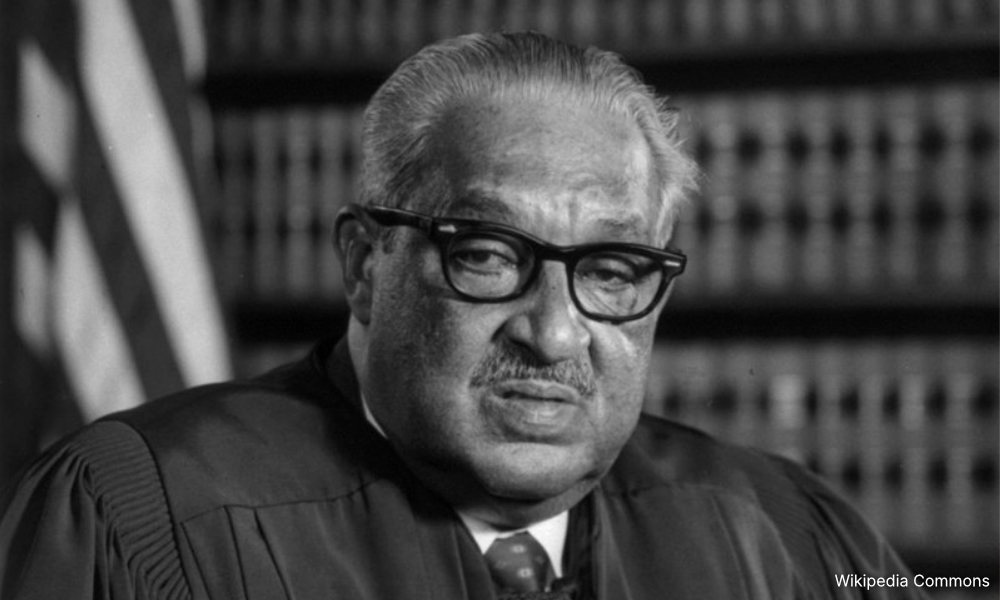
That victory was just the beginning. Marshall made segregation his enemy. As chief counsel for the National Association for the Advancement of Colored People (NAACP), he argued 32 cases before the Supreme Court. He won 29.
His masterpiece was Brown v Board of Education. For decades, “separate but equal” had justified racial segregation. Marshall demolished it. He proved that separate was never equal, that segregation scarred children’s hearts and minds.
When then-chief justice Earl Warren read the unanimous decision - “separate educational facilities are inherently unequal” - Marshall had won more than a case. He had started a revolution. The decision dismantled legal segregation and ignited the civil rights movement.
In 1967, Marshall became the first Black Supreme Court justice. For 24 years, he was “the great dissenter”, fighting for civil rights when the Court grew conservative. He proved that law could be a sword for justice, not just a shield for the status quo.
9. Louis Brandeis (US, 1856-1941)
They called him radical. They called him dangerous. In 1916, when president Woodrow Wilson nominated Brandeis to the Supreme Court, the establishment fought back. The New York Times sneered that he was “a contender, a striver after change”.
They were right to worry. As a lawyer, Brandeis had turned the law upside down. When insurance companies gouged workers, he created savings bank life insurance. When employers claimed long working hours were constitutional, he invented the “Brandeis brief” - packed with social science, not just legal precedent.
On the Supreme Court, Brandeis championed privacy rights decades before anyone else. He wrote: “The right to be let alone - the most comprehensive of rights and the right most valued by civilised men.” That phrase became the foundation of modern privacy law.
Brandeis was the first Jewish Supreme Court justice. His appointment faced bitter anti-Semitism. But he proved that America belonged to everyone willing to fight for justice. His dissents became the majority opinions of future courts, showing that today’s heresy can become tomorrow’s orthodoxy.
10. Jean-Jacques Cambacérès (France, 1753-1824)
Napoleon Bonaparte conquered Europe with armies. Jean-Jacques Cambacérès conquered it with law. As Napoleon’s second consul, Cambacérès wrote the Civil Code - the most influential legal document since Roman law.
Cambacérès was a survivor. During the French Revolution, he navigated between extremes. When they tried King Louis XVI, Cambacérès voted for a conditional death sentence - execution only if France was invaded. The king died anyway, but Cambacérès lived.
The Napoleonic Code became his masterpiece. Clear, logical, comprehensive - it organised civil law into a single book. The code spread wherever Napoleon’s armies marched. Then it kept spreading. Today, over 70 countries base their laws on Cambacérès’s work.
He proved that law is power. Not the power to punish, but the power to organise society. His code outlasted Napoleon’s empire. It shaped the modern world. From Quebec to Japan, from Louisiana to Egypt, the Civil Code remains the foundation of legal systems worldwide.
11. Saladin (Middle East, 1137-1193)
Saladin conquered Jerusalem not through brutality, but through justice. When he retook the holy city from the Crusaders in 1187, he could have massacred his enemies. Instead, he showed mercy that echoed through history.
Saladin’s approach to justice was revolutionary. He held public court sessions twice a week, attended by jurists and scholars.
“The door would be opened to litigants so that everyone, great and small, senile women and old men, might have access to him,” recorded his chronicler.
His judicial philosophy was captured in his own words: “For my part, I would rather miss the mark in being merciful than inflict undeserved punishment.” Even when an old man sued Saladin himself in a property case, the sultan “came down from his throne to be judged equally”.
Saladin proved that justice and victory could coexist. His fair treatment of Christians in Jerusalem earned him respect from both Muslims and Crusaders. He showed that true strength lies not in vengeance, but in justice.
Enduring legacy: When courage conquers fear
These 11 judges shared one trait: courage. They saw law not as chains binding the present to the past, but as tools to build a better future. They proved that judges can be more than neutral umpires - they can be architects of justice.
Their stories remind us that the law is human. Behind every principle stands a person who dared to think differently. Behind every precedent lies a moment when someone chose progress over precedent.
Atkin and Dixon gave the common law world principled reasoning and human compassion. Solomon gave us wisdom in judgment. Bao gave China incorruptible justice. Abu Hanifa gave Islam legal reasoning.
Chanakya gave India a systematic jurisprudence. Lauterpacht gave the world human rights law. Ginsburg gave women equality. Marshall gave civil rights to African Americans. Brandeis gave workers and consumers protection. Cambacérès gave the world modern civil law. Saladin gave the Middle East merciful justice.
They faced threats, ostracism, and persecution. They were called radicals, activists, and troublemakers. But they persevered because they knew that justice delayed is justice denied, that courage is contagious, and that the arc of history bends toward justice - but only when brave people bend it.
Today, when courts face new challenges, from climate change to artificial intelligence, from global terrorism to digital privacy, these judges light the way. They show us that law can be both anchor and sail, both foundation and bridge, both shield and sword.
Their legacy lives in every courtroom where fairness still matters, in every judgment that protects the vulnerable, in every decision that chooses justice over convenience. They proved that when the moment comes, when history calls, when justice hangs in the balance, the right answer is always the same: “Here I stand.”
They changed the world, one judgment at a time. And in doing so, they changed what it means to be a judge - forever.
GK GANESAN is a lawyer and an international commercial arbitrator.
The author thanks UK Menon, G Naidu, KN Geetha, TP Vaani, JN Lheela, and Lydia Jaynthi.
Malaysiakini has obtained permission to republish this article, which first appeared here.
The views expressed here are those of the author/contributor and do not necessarily represent the views of Malaysiakini.
/file/publisher-c1a3f893382d2b2f8a9aa22a654d9c97/2024/03/8bcc7806e68d5e830a25bf1175422620.jpg)
/file/1360/4261179e72a93ec19935a87784c81ae6.jpeg)
/file/publisher-c1a3f893382d2b2f8a9aa22a654d9c97/2023/11/89f067ffaf9770ebbafcf95400be8847.png)
/file/publisher-c1a3f893382d2b2f8a9aa22a654d9c97/2023/01/40fc586ecee4f7a06a6d14f3b543a670.jpg)
/file/publisher-c1a3f893382d2b2f8a9aa22a654d9c97/2025/07/b916a13eb1aacd3c4faf9947ab378de3.jpg)
/file/publisher-c1a3f893382d2b2f8a9aa22a654d9c97/2025/07/4bb3e4e1e1db55d9bc2738fe41a0fba5.jpg)


