


/file/publisher-c1a3f893382d2b2f8a9aa22a654d9c97/2020/10/2bda679309c88e264ef963588bbe46d2.jpg)

COMMENT | Can Malaysians still trust their courts?
COMMENT | As more and more political and business elites seem to step away from courtrooms, untouched, these are the questions that haunt the mind of every thinking Malaysian.
I. What is judicial independence, and why does it matter?
Judicial independence and the rule of law are foundational principles of a fair and just society.
That is why, under international treaties and human rights law, every country must guarantee fair hearings before truly independent judges: Article 14(1) of the International Covenant on Civil and Political Rights, alongside the United Nations Basic Principles on the Independence of the Judiciary, reinforce that principle.
The words “judicial power” are still there in the Constitution.
COMMENT | As more and more political and business elites seem to step away from courtrooms, untouched, these are the questions that haunt the mind of every thinking Malaysian.
I. What is judicial independence, and why does it matter?
Judicial independence and the rule of law are foundational principles of a fair and just society.
That is why, under international treaties and human rights law, every country must guarantee fair hearings before truly independent judges: Article 14(1) of the International Covenant on Civil and Political Rights, alongside the United Nations Basic Principles on the Independence of the Judiciary, reinforce that principle.
The words “judicial power” are still there in the Constitution.
II. Why do we need it?
Judicial independence shields our judges from pressure, so that they may act “without fear or favour,” with legal security and protected tenure.

When that independence is lost, judges may become tools, justice becomes a weapon, and the people’s faith in courts crumbles.
III. When did the system start to crack?
A “discharge not amounting to acquittal” (DNAA) is a court decision where criminal charges can be dropped temporarily, leaving open the possibility for prosecution to revive the case later.
As I have said earlier, in practice, once a DNAA is entered, the case is dropped for good.
This power comes from Section 254(1) of our Criminal Procedure Code and Article 145(3) of the Constitution, which gives the attorney-general full discretion in prosecutions (except for syariah, native, or military courts).
Between 2018 and 2024, official figures confirm that at least 18 DNAA decisions involved well-connected Malaysians - from politicians to business elites. Nearly two in five of these cases occurred in just the last two years.

At the end of this article are the details of who received the benefit of these DNAA orders.
Even in Parliament, the government did not release the names of some individuals who have received DNAA orders. This is strange.
IV. Where are the weaknesses
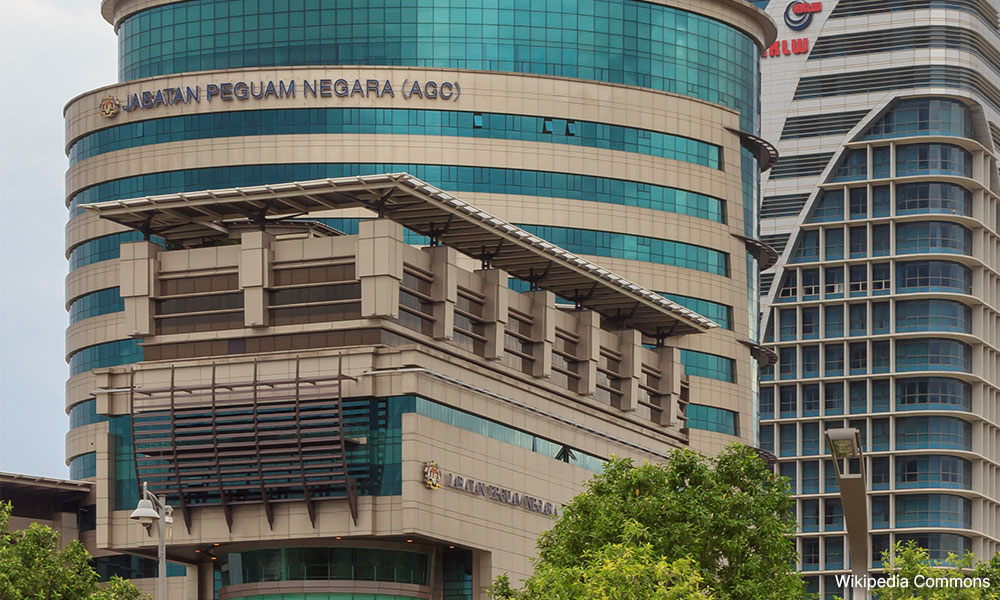
Prosecutorial power: The attorney-general acts as both the government’s lawyer and the country’s chief public prosecutor, a dual role explicitly authorised by Article 145(3) of our Constitution.
Article 145(3) is untenable and is widely criticised for conflicts of interest, especially when the government or its officials or politicians are the subject of an investigation.
Judicial appointments: The Judicial Appointments Commission (JAC), created under the Judicial Appointments Commission Act 2009, consists of nine members, five of whom are appointed at the complete discretion of the prime minister, allowing the executive to quietly steer appointments.
Vacancies and delays: Frequent leadership gaps, such as when the posts of chief justice and president of the Court of Appeal are left vacant, can halt court business and open space for further executive manipulation.
Secrecy and leaks: When credible claims of executive interference in judicial promotions arose in 2025, the official response was to threaten charges under the Official Secrets Act rather than embrace transparency.

The whole idea of a process, the royal prerogative of mercy (or “pardons”) or, indeed, judge selection in the JAC was transparency.
The crucial questions were asked, but the government unaccountably spoke of “secrecy” and “confidentiality”.
V. Why should Malaysians care?
Each questionable DNAA tells the ordinary Malaysian that the courts have two sets of rules - a strict set for the powerless, and a flexible one for the powerful.
This erodes trust in justice, halts anti-corruption drives, scares away investors, and makes it harder for honest officials to bring wrongdoers to account.
VI. Lessons from the world
There is a technique that governments use to suppress independent judges. Though the nations differ, when the same circumstances arise, governments use an identical playbook. Here are some examples.
United States: Former president Richard Nixon urged a team of his party advisers to break into the Watergate Building to tap the Democratic Party election team (Nixon was a Republican). They were caught.
As Nixon ordered cover-up after cover-up, he sank into an inexorable position of conflict.
He ordered the so-called “Saturday Night Massacre” in 1973 and fired the Watergate prosecutor. Two top Department of Justice officials then resigned rather than risk the rule of law.

Public outrage led to Nixon’s downfall, reminding the world that even the mighty can be brought to heel by independent courts.
United Kingdom: The 2005 Constitutional Reform Act created an independent Judicial Appointments Commission, for the first time giving judges security from government interference and clearly dividing judicial work from Parliament and the executive.
India: After the government tried to handpick a politically compliant chief justice in 1973, India’s Supreme Court responded by inventing the “collegium” system, ensuring only judges can pick the next judge - a shield from politicians.
But what if the Collegium itself is not free from bias or corruption?
Australia: Several times, serving attorneys-general were made High Court judges, prompting decades of debate about how open and unbiased Australia’s system really is.
New Zealand: There, the attorney-general nominates judges after closed-door consultations, causing persistent worries of appointments based on friendship, not merit.
Poland: After a government-imposed “disciplinary chamber” punished critical judges, the European Court of Justice ruled such controls illegal, reaffirming independence as universal law.
Hong Kong: Article 44 of the National Security Law lets the chief executive pick special judges for sensitive cases, causing global concerns for fair trials and the separation of powers.
VII. How can Malaysia heal?
Tighten DNAA rules: Amend Section 254(1) of the Criminal Procedure Code so every DNAA comes with a public, written explanation.
Separate the AG’s roles: Like in Britain, consider creating an independent director of public prosecutions.
Reform judicial appointments: Change the JAC’s makeup to include more diverse voices, and publish how appointments are made.
Speed up vacancies: Require leadership posts to be filled fast; never leave courts rudderless.
Ensure there is a chain of command based on seniority: even if there is a delay in leadership gaps, create a clear, automatic, workable protocol on opening up temporary acting posts, without having to wait for the politicians to initiate or other constitutional institutions to start shifting gears.
Audit and inquire: A royal commission inquiry, as urged by the Malaysian Bar, must dig into all credible claims of interference.
VIII. The final question
“Which judge will stand up for the powerless? And will he or she have the courage of his or her conviction to face off against the executive?”
Those are the questions echoing in the secret chamber of every Malaysian’s heart.
Will Malaysians demand a law that protects every citizen, or accept a future where rules bend and justice means “just us”?
As history shows at home and abroad, the stakes could not be higher.
GK GANESAN is a lawyer and an international commercial arbitrator.
The author thanks UK Menon, KN Geetha, TP Vaani, JN Lheela and Lydia Jaynthi.
Malaysiakini has obtained permission to republish this article, which first appeared here.
The views expressed here are those of the author/contributor and do not necessarily represent the views of Malaysiakini.
/file/publisher-c1a3f893382d2b2f8a9aa22a654d9c97/2025/04/1f9da94078a3bb26e02a410e9d999a04.jpg)
/file/publisher-c1a3f893382d2b2f8a9aa22a654d9c97/2025/07/24b2e2d18bc28e014dc147d1a6e70154.jpg)
/file/publisher-c1a3f893382d2b2f8a9aa22a654d9c97/2025/07/7a8bb7627ed1a831ea6f3098daed766a.jpg)
/file/publisher-c1a3f893382d2b2f8a9aa22a654d9c97/2025/07/adae408caebacc41e88a939bb9e4420a.jpg)
/file/publisher-c1a3f893382d2b2f8a9aa22a654d9c97/2025/07/a94864da032f68e9236478a3cb7f767a.jpg)
/file/publisher-c1a3f893382d2b2f8a9aa22a654d9c97/2025/07/5da5444d752f7f66cb4343092fca8ea1.jpg)


Are you sure you want to delete this comment?
This action cannot be undone.