


/file/publisher-c1a3f893382d2b2f8a9aa22a654d9c97/2023/08/bb3500109ea677224d6735319e4bdd3f.jpg)

COMMENT | Too many parties, too little direction
COMMENT | Our political scene is beginning to resemble a crowded marketplace, filled with competing slogans, overlapping identities, and leaders scrambling for attention rather than offering solutions.
The latest voice to enter this noisy space is the Malaysian Indian People’s Party (MIPP), a component within Perikatan Nasional, now publicly positioning itself as the gatekeeper for issues involving Indians.
According to the MIPP’s leadership, any potential cooperation with MIC must first be discussed with them.
They claim to represent the Indian voice within PN and insist that no formal discussions have been held with MIC about joining the coalition.
It is a confident stance, but one that prompts a serious question. Who is MIPP, and what have they contributed to national politics?
COMMENT | Our political scene is beginning to resemble a crowded marketplace, filled with competing slogans, overlapping identities, and leaders scrambling for attention rather than offering solutions.
The latest voice to enter this noisy space is the Malaysian Indian People’s Party (MIPP), a component within Perikatan Nasional, now publicly positioning itself as the gatekeeper for issues involving Indians.
According to the MIPP’s leadership, any potential cooperation with MIC must first be discussed with them.
They claim to represent the Indian voice within PN and insist that no formal discussions have been held with MIC about joining the coalition.
It is a confident stance, but one that prompts a serious question. Who is MIPP, and what have they contributed to national politics?
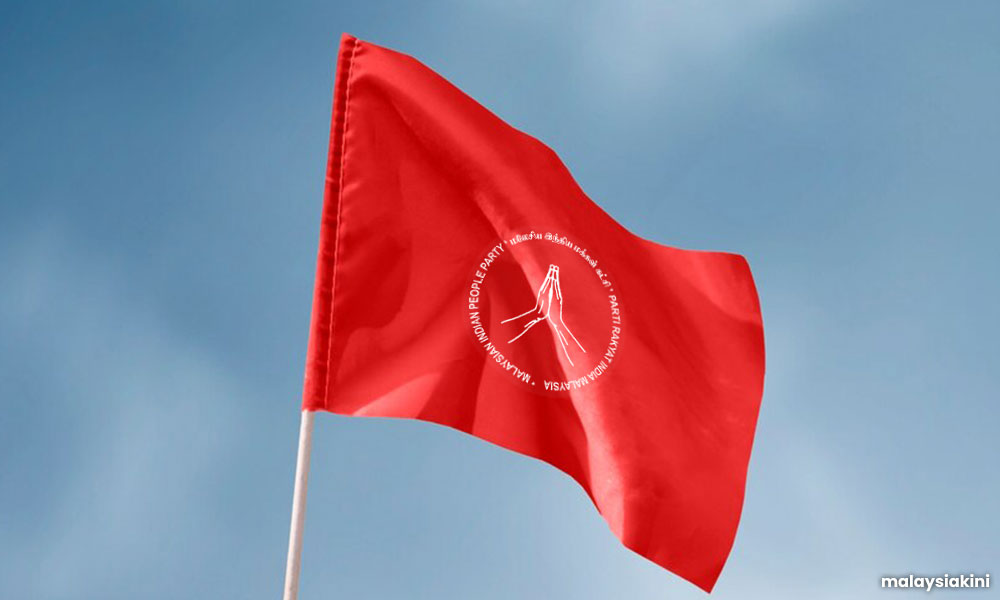
MIPP holds no parliamentary seats, no senatorships, and does not have a visible track record of community mobilisation. Yet it speaks with the authority of a national stakeholder.
More is not better sometimes
This is less a critique of MIPP itself than a reflection of a larger problem in our politics. We are witnessing the multiplication of political parties without any meaningful expansion of public benefit.
Umno gave way to Bersatu. Bersatu inspired Pejuang and Putra. PAS’ lane has been mirrored by Berjasa and countered by Amanah.
Each claims to represent similar values, whether Malay identity, Islamic principles or national unity. But while their leaders argue over symbols and seats, the rakyat continues to face rising costs, economic uncertainty, and job insecurity.
Having more parties does not guarantee better democracy. It often leads to voter fatigue and ideological confusion.
In the case of PN, we hear plenty of statements but see little in the way of policy direction. Where is the comprehensive plan to boost employment? What is their strategy to support small businesses or protect vulnerable communities?

MIPP’s recent remarks similarly reflect a political culture focused on positioning rather than performance.
When a party without electoral presence begins dictating coalition terms, it shows just how far our politics has drifted from service to self-interest. National discourse must rise above internal power plays and return to practical solutions.
Substance needed, not just noise
The Madani government, for all its flaws, remains the only coalition currently demonstrating the capacity to govern.
Budgets are being passed, economic reforms are underway, and key institutions are being restructured to rebuild public trust. These are not small achievements, especially in a post-pandemic world.
If PN aspires to be more than a critic, it must show leadership beyond press releases. That includes offering a clear policy agenda, demonstrating inclusive governance, and earning voter trust through delivery, not drama.
Fixating on whether MIC should or should not be allowed into PN, without any strategy for economic recovery or social equity, is a distraction our nation cannot afford.
Real leadership is not defined by how many parties form a coalition. It is measured by the strength of ideas, the depth of public trust, and the consistency of execution.
Voters today are not looking for more parties to choose from. They are looking for fewer excuses and more results.
Until the focus shifts from personalities to performance, the rakyat will continue to face the same issues, and the political class will remain stuck in a cycle of noise, without direction.
MAHATHIR MOHD RAIS is a former Federal Territories Bersatu and Perikatan Nasional secretary.
The views expressed here are those of the author/contributor and do not necessarily represent the views of Malaysiakini.
/file/publisher-c1a3f893382d2b2f8a9aa22a654d9c97/2025/01/4e841b7782828b2c2e3a97b977a4115b.jpg)
/file/publisher-c1a3f893382d2b2f8a9aa22a654d9c97/2025/06/1df3071b4ede038eb01e4f12f5526e29.jpg)
/file/publisher-c1a3f893382d2b2f8a9aa22a654d9c97/2023/07/3250f7be397cb5d22976716bdd0eb30d.jpg)
/file/publisher-c1a3f893382d2b2f8a9aa22a654d9c97/2025/05/eb3fd01b54661db5a8dce00738f38599.jpg)
/file/publisher-c1a3f893382d2b2f8a9aa22a654d9c97/2025/08/19e5d127fc692f199a6d2bcb9e644d5a.jpg)
/file/publisher-c1a3f893382d2b2f8a9aa22a654d9c97/2025/08/9e2d281d05e7027643c42e99288aec8e.jpg)


Report this comment
Are you sure you want to delete this comment?
This action cannot be undone.