


/file/publisher-c1a3f893382d2b2f8a9aa22a654d9c97/2023/12/14c7482692205426542d762e21a38176.jpg)

COMMENT | Digital identity: Malaysia's new immigration frontier
The UK’s initiative involves issuing secure digital IDs that will serve as proof of identity and legal residency, particularly for right-to-work checks. This system aims to curb illegal employment, reduce administrative inefficiencies, and enhance security.
While the UK emphasises the benefits of a centralised digital identity infrastructure, implementing a similar scheme in Malaysia requires careful consideration of legal, administrative, technical, political, and human rights implications.
Malaysia faces persistent challenges related to undocumented immigrants, particularly in sectors like construction, agriculture, manufacturing, and domestic work. The current system relies heavily on physical documents, multiple enforcement agencies, and often opaque regularisation programmes.
A digital ID system, if designed correctly, could address...
COMMENT | As the United Kingdom rolls out a new digital identity scheme to streamline access to services and control illegal immigration, the question arises whether such a system can be adapted to manage immigration more effectively in Malaysia.
The UK’s initiative involves issuing secure digital IDs that will serve as proof of identity and legal residency, particularly for right-to-work checks. This system aims to curb illegal employment, reduce administrative inefficiencies, and enhance security.
While the UK emphasises the benefits of a centralised digital identity infrastructure, implementing a similar scheme in Malaysia requires careful consideration of legal, administrative, technical, political, and human rights implications.
Malaysia faces persistent challenges related to undocumented immigrants, particularly in sectors like construction, agriculture, manufacturing, and domestic work. The current system relies heavily on physical documents, multiple enforcement agencies, and often opaque regularisation programmes.
A digital ID system, if designed correctly, could address many of these issues. It would allow authorities to identify individuals more accurately, monitor immigration flows, and provide a legal identity for those willing to regularise their status.
However, implementing such a system is not merely a technical exercise; it demands political will, legal reform, and widespread public trust.
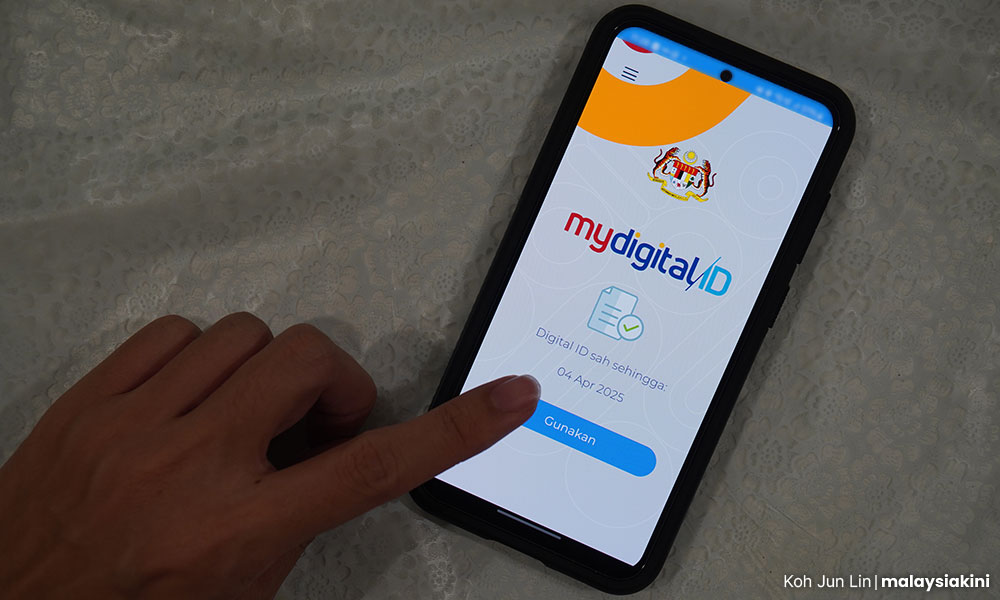
Legally, Malaysia’s framework for data protection and digital governance is still developing.
The Personal Data Protection Act (PDPA) offers basic safeguards but lacks the comprehensive scope needed to govern a national biometric identity database that would include foreign workers, asylum seekers, and possibly stateless individuals.
A successful digital ID scheme must be underpinned by legislation that guarantees data privacy, defines the scope of use, establishes clear accountability for misuse, and provides redress mechanisms.
Without strong legal anchors, a digital ID system risks becoming an intrusive surveillance tool rather than a public good.
Administratively, a digital ID scheme would require significant coordination across federal and state agencies. Malaysia’s current immigration and civil registration systems operate in silos, with limited interoperability.
Integrating these systems into a unified platform would be a massive undertaking, requiring robust IT infrastructure, data harmonisation, and cross-agency cooperation.
Furthermore, the system would need to account for people who lack access to smartphones or the internet that many of whom are among the most vulnerable populations. A digital identity system that excludes such individuals would only deepen marginalisation.
Trust, safeguards, and balanced enforcement
Public trust is another critical element. In Malaysia, past controversies surrounding identity documents, refugee registration, and immigration crackdowns have created a climate of fear among migrant communities.
To be successful, a digital ID scheme must be perceived as a pathway to inclusion, not a mechanism of control. Migrants and undocumented individuals are unlikely to register voluntarily unless they are guaranteed protection from arbitrary detention or deportation.
This means that any rollout must be accompanied by amnesty or regularisation programmes, as well as strong assurances that the data collected will not be used for punitive purposes.
From a security standpoint, digital identity systems come with both benefits and risks. On the one hand, they reduce the potential for document forgery and identity fraud, improve border security, and enable better tracking of overstays and illegal employment.
On the other hand, centralising personal and biometric data increases the risk of hacking, data leaks, and misuse by state or non-state actors.
Therefore, the design must incorporate privacy-by-design principles, including encryption, access control, decentralisation where possible, and mechanisms for individuals to revoke or correct their data.

Another key issue is enforcement. The UK’s scheme ties digital IDs directly to right-to-work checks, meaning employers are legally required to verify the ID before hiring. This approach shifts enforcement from the state to the employer and creates a powerful disincentive for hiring undocumented workers.
In Malaysia, where informal labour is widespread and enforcement is inconsistent, such a mechanism may be harder to implement. Employers might simply bypass the system or shift further into informality.
Therefore, enforcement must be balanced with incentives such as reduced penalties for employers who participate in migrant registration drives or tax benefits for hiring documented workers.
Phased, inclusive rollout key to success
Importantly, Malaysia should not attempt a nationwide rollout immediately. A phased approach, beginning with specific sectors or geographic areas, would allow policymakers to test and refine the system before scaling it up.
For instance, the government could start with documented foreign workers in plantations or construction, who are already in the system and have biometric records. The next phase could involve outreach to undocumented individuals under a voluntary registration or amnesty programme.
Throughout the process, collaboration with civil society, NGOs, migrant organisations, and employers is essential to ensure that the system is user-friendly, inclusive, and fair.
A hybrid model may also be more appropriate for Malaysia. Instead of replacing physical documents altogether, the digital ID could serve as an optional complement, particularly useful for those who need easier access to services or mobility across states.

This would reduce resistance and provide a safety net for those who may not be ready or willing to transition to a fully digital system.
In a nutshell, a UK-style digital ID scheme can be adapted to the Malaysian context, but it must be done with care, inclusivity, and respect for rights. The potential benefits, such as improved immigration control, more efficient services, and reduced fraud, are substantial.
But so are the risks: exclusion, misuse, and erosion of public trust. For such a system to work in Malaysia, it must not only be technologically sound but also politically legitimate, legally grounded, and socially just.
If the government can strike that balance, a digital identity system could become a cornerstone of a modern, humane, and efficient immigration policy.
However, if rushed or politicised, it risks deepening existing inequalities and creating a digital divide between the visible and invisible populations in Malaysia.
R PANEIR SELVAM is the principal consultant of Arunachala Research & Consultancy Sdn Bhd, a think tank specialising in strategic national and geopolitical matters.
The views expressed here are those of the author/contributor and do not necessarily represent the views of Malaysiakini.
/file/publisher-c1a3f893382d2b2f8a9aa22a654d9c97/2024/04/dc53ca58a9c00a736d315bf461aa5b1e.jpg)
/file/1119/c6062ca1e5b1c80c7476baaff07fe720.jpeg)
/file/publisher-c1a3f893382d2b2f8a9aa22a654d9c97/2024/12/f78201a32e580ee2c0535f36018367e8.jpg)


Report this comment
Are you sure you want to delete this comment?
This action cannot be undone.