


/file/publisher-c1a3f893382d2b2f8a9aa22a654d9c97/2025/10/14b680f007233cf30c141ab5e78e3f93.jpg)

COMMENT | M'sia-US trade deal like insurance against reckless driver
COMMENT | There was strong resistance in Malaysia against the 12-member Trans-Pacific Partnership (TPP), which included the US, during the negotiating period between 2010 and 2015.
When its successor, the Comprehensive and Progressive Agreement for Trans-Pacific Partnership (CPTPP), was finally signed in March 2018, after the US withdrawal under the first Donald Trump presidency, many of the fears surrounding the negative impacts of the CPTPP proved to be overblown.
They include the use of the Investor State Dispute Settlement mechanism by multinational firms to take the Malaysian government to court.
The eventual ratification of the CPTPP took place under the Perikatan Nasional government in September 2022 and came into force under the Madani administration in November 2022.
Some of the language and details in the CPTPP text share similarities with the recently signed Malaysia-US agreement on reciprocal trade, including the commitment to reduce technical barriers to trade and a commitment to international labour standards and environmental protection.
Admittedly, there are major differences between the CPTPP and the Malaysia-US trade agreement, in the negotiation process as well as the text.
The Malaysia-US trade deal was negotiated in a compressed period, without any parliamentary debate or much stakeholder engagement.
Malaysia may be seen as having conceded more than we have gained from a market access and tariffs reduction perspective.
Some parts of deal, when read in isolation, can be (mis)interpreted that Malaysia will be forced to “align” our domestic policies with that of the US.
But the reciprocal trade agreement is not a conventional Free Trade Agreement (FTA).
Investment, Trade and Industry Minister Tengku Zafrul Abdul Aziz has...
COMMENT | There was strong resistance in Malaysia against the 12-member Trans-Pacific Partnership (TPP), which included the US, during the negotiating period between 2010 and 2015.
When its successor, the Comprehensive and Progressive Agreement for Trans-Pacific Partnership (CPTPP), was finally signed in March 2018, after the US withdrawal under the first Donald Trump presidency, many of the fears surrounding the negative impacts of the CPTPP proved to be overblown.
They include the use of the Investor State Dispute Settlement mechanism by multinational firms to take the Malaysian government to court.
The eventual ratification of the CPTPP took place under the Perikatan Nasional government in September 2022 and came into force under the Madani administration in November 2022.
Some of the language and details in the CPTPP text share similarities with the recently signed Malaysia-US agreement on reciprocal trade, including the commitment to reduce technical barriers to trade and a commitment to international labour standards and environmental protection.
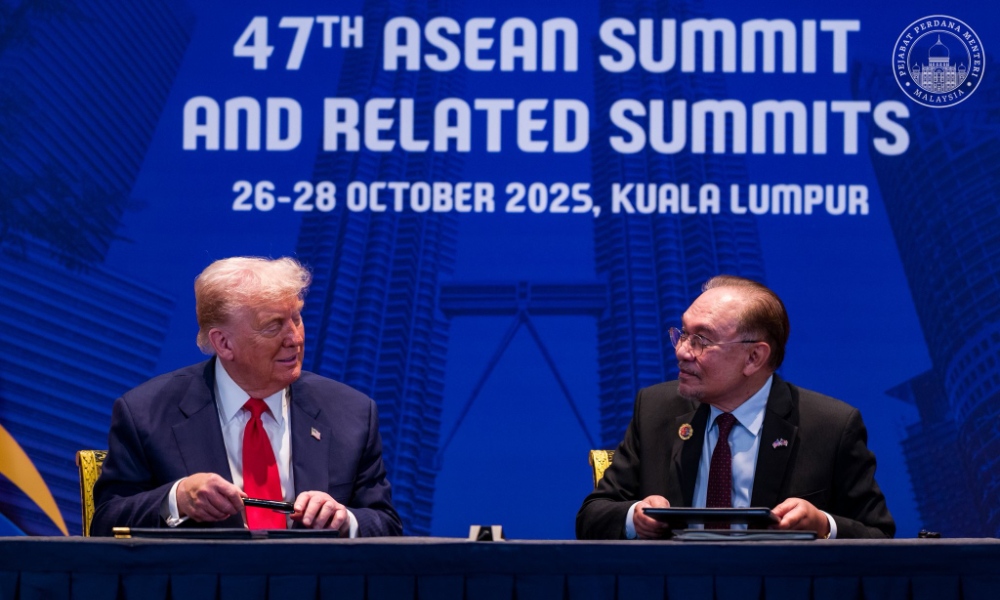
Admittedly, there are major differences between the CPTPP and the Malaysia-US trade agreement, in the negotiation process as well as the text.
The Malaysia-US trade deal was negotiated in a compressed period, without any parliamentary debate or much stakeholder engagement.
Malaysia may be seen as having conceded more than we have gained from a market access and tariffs reduction perspective.
Some parts of deal, when read in isolation, can be (mis)interpreted that Malaysia will be forced to “align” our domestic policies with that of the US.
But the reciprocal trade agreement is not a conventional Free Trade Agreement (FTA).
Investment, Trade and Industry Minister Tengku Zafrul Abdul Aziz has explicitly stated and explained this.
Unique, strategic approaches
The Barack Obama administration was seeking an “Asian pivot” in the 2010s, with a much more inclusive approach towards negotiating the TPP.
The Trump administration has taken a punitive, unilaterist and unpredictable “tariff first” approach towards trade, including towards some of its closest allies such as Canada, Mexico, the EU and India.
We must acknowledge that these unique times in international trade call for unique and strategic approaches.
Let’s examine the counterfactual of Malaysia not signing this agreement during Trump’s visit last month.
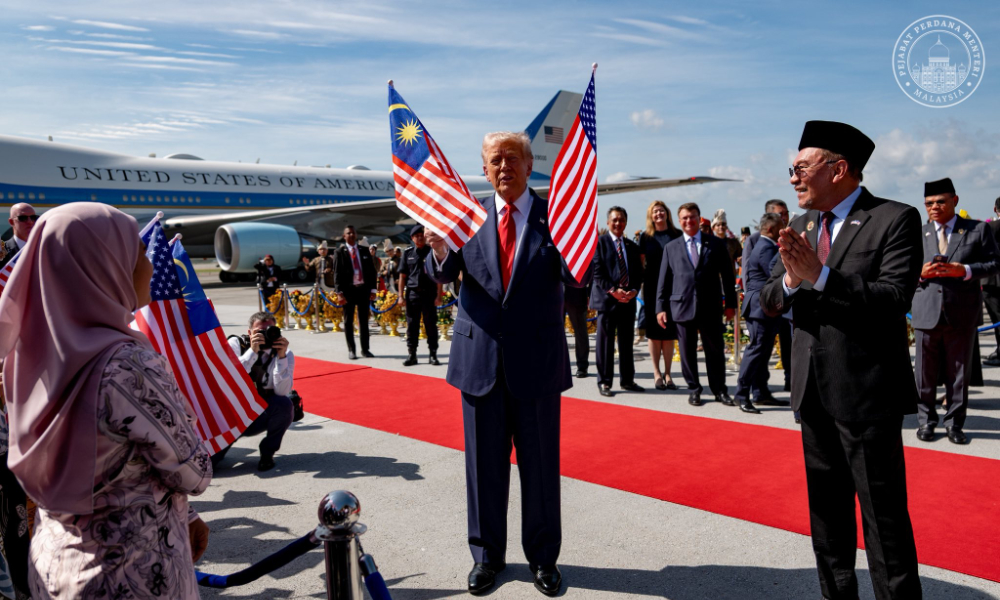
The US president would have seen this in a negative light, that Malaysia doesn’t want to do a “deal” with the US, even though he agreed to come to Malaysia to participate in the Asean summit and to witness the Thailand-Cambodia peace agreement.
This would have left a bad impression and worst still, exposed Malaysia to future punitive measures.
Semiconductor industry
The ongoing Section 232 investigations on the semiconductor industry, which has not yet been hit by the “liberation day” tariffs, has the potential to affect significant parts of Malaysia’s electrical and electronics (E&E) exports.
E&E exports totalled RM601.2 billion or 40.1 percent of the country’s total exports of RM1.5 trillion, with semiconductors making up RM437.5 billion, or almost 30 percent of total exports.
The E&E sector, which is part of a larger global supply chain, also provides more than 500,000 jobs in the country. What if the Section 232 investigations result in a 100 percent tariff being imposed on semiconductor imports into the US on countries which have not signed any trade deals with the US?
Furthermore, Malaysia is already being monitored as a destination for “transshipments” from the US to China, as well as being used to procure high graphics processing unit (GPU) chips to bypass existing US restrictions on chip sales to China.
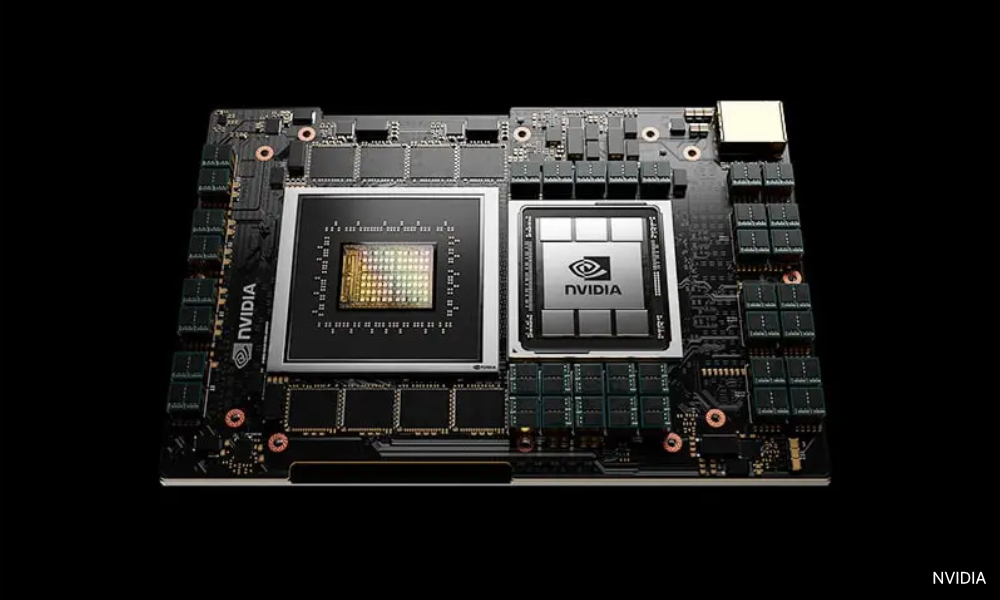
What if the lack of a trade deal with the US leads to stricter quotas on GPU chips being imposed by the US on Malaysia? This would have major repercussions on current and future data centre investments in the country.
Nvidia would not bat an eyelid to “sacrifice” its GPU chip commitments to Malaysia if we were to find ourselves on a US “blacklist” for high-end chips.
Look on the bright side
Rather than viewing the latest Malaysia-US trade deal as an imminent threat, it should be seen as opening up new possibilities.
Malaysia should seek funding and investments from the US in areas such as critical minerals and power generation while also exploring opportunities with companies from other countries that can provide similar technologies and value propositions.
We should upgrade and enhance our domestic policies in these areas to provide a level playing field to all parties and not discriminate against companies from any country, including the US.
We should also increase our vigilance on illegal transhipment activities meant for tariff circumvention, which contribute little to the Malaysian economy.
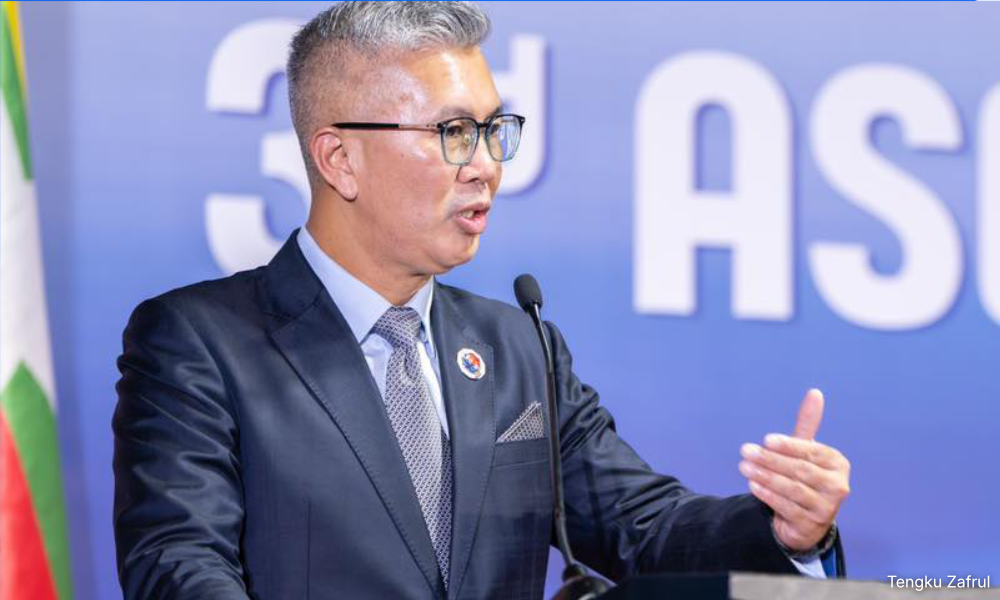
Finally, the issue of Malaysia having to “align” our policies to US interests needs to be addressed. Zafrul has already stated that our policy sovereignty is not affected by this agreement.
We should go one step further by asking how likely will the US “force” Malaysia to align its policies to US interests by threatening to terminate the deal.
This is unlikely for two reasons. Firstly, US policies on a whole host of matters are in a flux because they are largely determined by the whims and fancies of one person – the mercurial President Trump.
With the exception of his preference for tariffs (and even on this, there are exceptions), he has flip-flopped on his engagement with China, Russia, the EU, Japan, and others, on a number of issues. Without policy stability, it is hard to ask for policy “alignment”.
Not big enough a player
Secondly, Malaysia is not important enough of a player on the international stage to warrant special policy influence from the US on matters of economic and strategic value.
Trump’s focus will be on the “big powers” (China, India, Russia, Brazil, the EU) and some of his neighbours and not on Southeast Asia.
And if he is asked about Malaysia, he will remember us positively, as the place where he “danced” on his arrival with a troupe of Malaysian performers, where he witnessed a peace deal between Thailand and Cambodia, and where the US-Malaysia trade agreement was signed.
He would remember Prime Minister Anwar Ibrahim as a “very good man” who welcomed him warmly and facilitated a successful visit.
In all other matters, it will be left to negotiations at the working level, where both sides will seek room to find consensus in some areas and the ability to disagree in others, without threatening the termination of the deal.
The most suitable analogy for the deal is taking out an expensive car insurance policy when you know that there is a dangerous driver out there with a much bigger and stronger vehicle that can easily damage you without giving a second thought.
Right now, that bigger car with the dangerous driver has gone down the highway, with little or no damage done to us in Malaysia.
If we continue to be strategic and nimble in our international “balancing” act, as evidenced by the successful conclusion of the 47th Asean Summit in Kuala Lumpur, we can emerge with our economic interests enhanced.
ONG KIAN MING is a former deputy international trade and industry minister.
The views expressed here are those of the author/contributor and do not necessarily represent the views of Malaysiakini.
/file/publisher-c1a3f893382d2b2f8a9aa22a654d9c97/2025/10/f99085dfd52125317472940cf120f678.jpg)
/file/publisher-c1a3f893382d2b2f8a9aa22a654d9c97/2025/11/e242b3548ebab4ed4d2acac69cd66936.jpg)
/file/publisher-c1a3f893382d2b2f8a9aa22a654d9c97/2022/12/8fde8817a2e5e02d350fd76645a12789.jpg)
/file/publisher-c1a3f893382d2b2f8a9aa22a654d9c97/2025/10/94ae4a9e2efbf21703556ff27355f5af.jpg)


When Trump announced his trade war to other countries he boasted that leaders of countries were lining up to kiss his A-s-s to make a deal. Is this applicable here????????
Are you sure you want to delete this comment?
This action cannot be undone.