


/file/publisher-c1a3f893382d2b2f8a9aa22a654d9c97/2019/02/c3e2e33e7c0c930378fde311207bb2ee.jpg)

COMMENT | An education hub: Why BM and history matter
International education is not a side story. It is a services export that supports jobs in teaching, housing, retail, food, transport, and the wider ecosystem around schools and universities.
Recent reporting citing EMGS estimates a current international student population of around 150,000, with a sizeable annual economic impact.
Against that backdrop, the prime minister’s announcement this week is significant: all education streams in Malaysia, including international, religious, and UEC-linked schools, must ensure BM and Malaysian History are offered, so that Malaysian students, without exception, sit for SPM BM and History.
Some may frame this as a tension between “global education” and “national identity”. It does not have to be. In fact, done well, this policy can become Malaysia’s differentiator: a globally connected education hub with a clear national core.
The key is...
COMMENT | Malaysia has long positioned itself as a regional destination for education, not just for locals but for families and students across Asia and beyond.
International education is not a side story. It is a services export that supports jobs in teaching, housing, retail, food, transport, and the wider ecosystem around schools and universities.
Recent reporting citing EMGS estimates a current international student population of around 150,000, with a sizeable annual economic impact.
Against that backdrop, the prime minister’s announcement this week is significant: all education streams in Malaysia, including international, religious, and UEC-linked schools, must ensure BM and Malaysian History are offered, so that Malaysian students, without exception, sit for SPM BM and History.
Some may frame this as a tension between “global education” and “national identity”. It does not have to be. In fact, done well, this policy can become Malaysia’s differentiator: a globally connected education hub with a clear national core.
The key is implementation. In education, the “what” gets the headlines, but the “how” determines whether families feel attracted or burdened.
Nation-building and competitiveness can coexist
Every serious education hub has its own anchor. Japan does not apologise for Japanese. France does not apologise for French civic identity. A country’s language and history are not just symbols; they shape social cohesion, civic literacy, and shared reference points in a diverse society.
Malaysia’s intention, as stated in the announcement, is to standardise key national foundations across different schooling pathways.
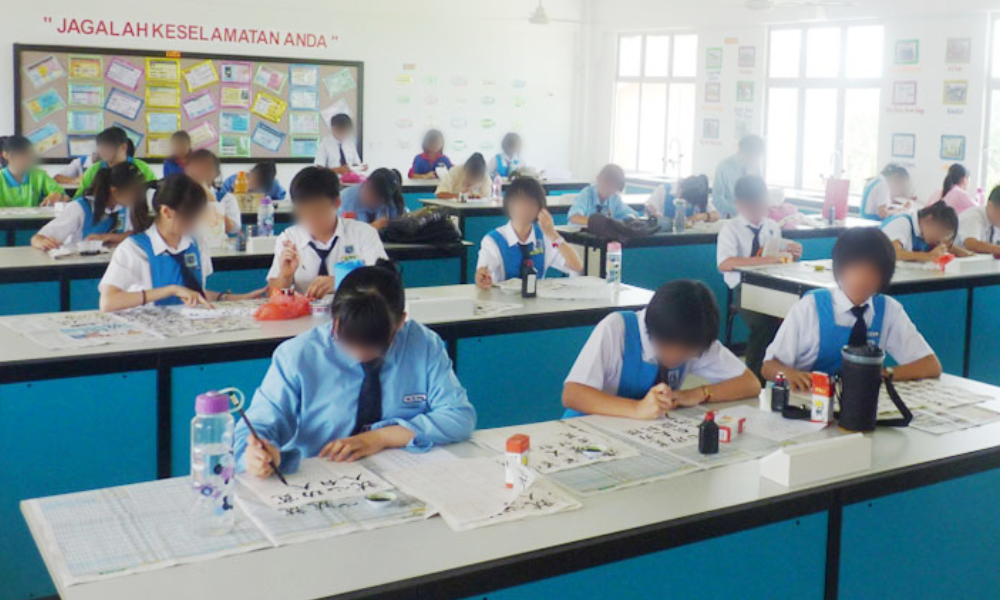
If we want the education ecosystem to be trusted, especially by Malaysians choosing international pathways, there is logic in ensuring that national language and history are not treated as optional extras.
But making something compulsory is the easy part. Making it credible, modern, and internationally legible is the real work. Here are three principles that can make the policy hub-friendly while still fulfilling nation-building goals.
1. Make it bilingual by design, not by accident
For Malaysian students in international schools, the requirement to sit SPM BM and History is clear. What determines success is whether schools can deliver these subjects with quality, without turning them into rushed compliance classes.
A practical approach is to design bilingual delivery models that support understanding and mastery. That means:
Clear learning outcomes aligned with the ministry’s curriculum expectations;
Teacher training and resource packs that support bilingual explanation (where appropriate); and
Assessment preparation that focuses on competency, not memorisation drills.
This does not dilute the national language, but rather strengthens it by ensuring students actually learn, and not merely “sit for an exam”.
2. Teach History like a modern, global-facing subject
History becomes powerful when it develops critical thinking: evidence, causality, perspective, and moral reasoning.
If Malaysian History is taught as a memory contest, it will feel like friction. If it is taught as a story of institutions, social change, regional integration, and Malaysia’s place in the world, it becomes an asset, especially for a hub positioning itself as globally relevant.

A modern Malaysian History curriculum can naturally connect to:
Asean and regional diplomacy;
Migration and multicultural nation-building;
Trade routes and economic transformation; and
Constitutional development and civic responsibility.
This aligns with the broader move to strengthen civic and constitutional literacy across the system (including at the tertiary level). The win is not just “national identity”; it is producing graduates who understand how societies function, something employers and investors value.
3. International flexibility while protecting identity goals
Malaysia’s education hub story has two audiences: Malaysians and non-Malaysians.
The policy focus reported in multiple outlets is on ensuring Malaysian students in all streams meet national requirements for BM and History at the SPM level. That should remain the core.
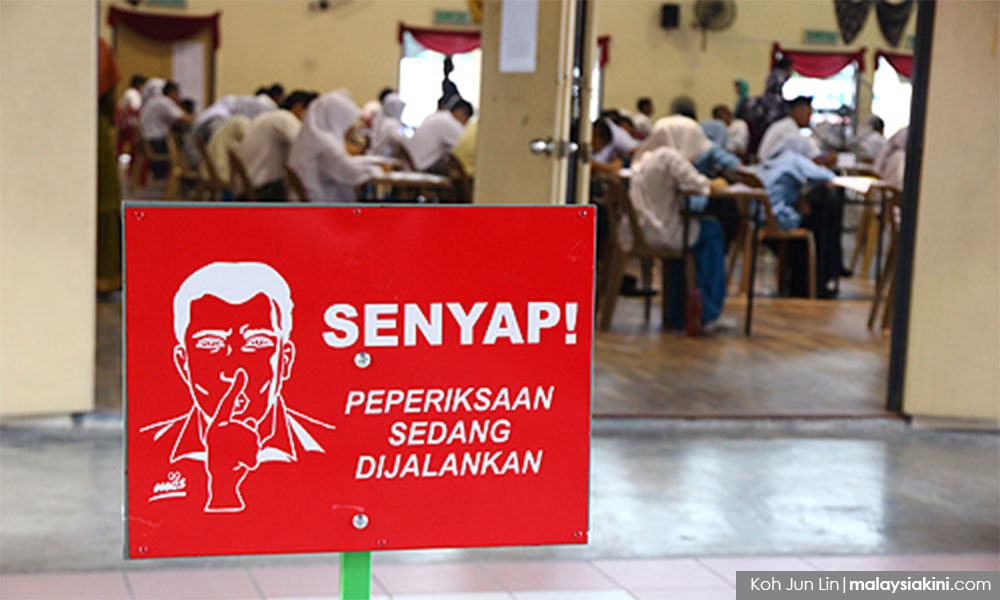
At the same time, for international students in international schools, implementation should be flexible and clearly communicated: what is required of Malaysian students versus what is offered (or optional) for non-Malaysians. The goal is clarity, not confusion.
This is where a simple national implementation guide matters:
Timelines and transitional arrangements;
Teacher supply and training plans;
Approved pathways for international schools to deliver BM and History without disrupting IB/IGCSE structures; and
A consistent message to parents so anxiety does not drive an unnecessary “tuition scramble”.
Turning policy into an advantage
Education hubs compete on quality, trust, and predictability. Malaysia can turn this move into a brand statement: world-class programmes anchored in Malaysian identity, not drifting away from it.
If the ministry gets the implementation right on high-quality bilingual delivery, modern history pedagogy, and clear flexibility for international cohorts, this policy won’t weaken Malaysia’s ambition to be an education hub.
It will strengthen it by offering something rare in the region: an international education experience with a coherent national foundation.
In the end, an education hub is not just a marketplace. It is a promise. Malaysia’s promise can be simple: global standards, local grounding, and a system confident enough to offer both.
GALVIN LEE KUAN SIAN is a PhD researcher in marketing at the Asia-Europe Institute, Universiti Malaya, and serves as a lecturer and programme coordinator in business at a private college in Malaysia.
The views expressed here are those of the author/contributor and do not necessarily represent the views of Malaysiakini.
/file/publisher-c1a3f893382d2b2f8a9aa22a654d9c97/2025/12/694bc84f877e18ddea7c13585fa36a4b.jpg)
/file/publisher-c1a3f893382d2b2f8a9aa22a654d9c97/2023/11/d2f82837ffa541b016f774391bac31fa.jpg)
/file/publisher-c1a3f893382d2b2f8a9aa22a654d9c97/2025/11/a0e62f6ccfe8897e51d4dc948e618536.jpg)
/file/publisher-c1a3f893382d2b2f8a9aa22a654d9c97/2025/07/5e95a777c56718824d5ac42b76d467e2.jpg)


Report this comment
Are you sure you want to delete this comment?
This action cannot be undone.