


/file/1214/736f87857cc1d6c6d3543887227ce051.jpeg)

ADUN SPEAKS | Using PDA 1974 to deny Sabah's right contrary to MA63
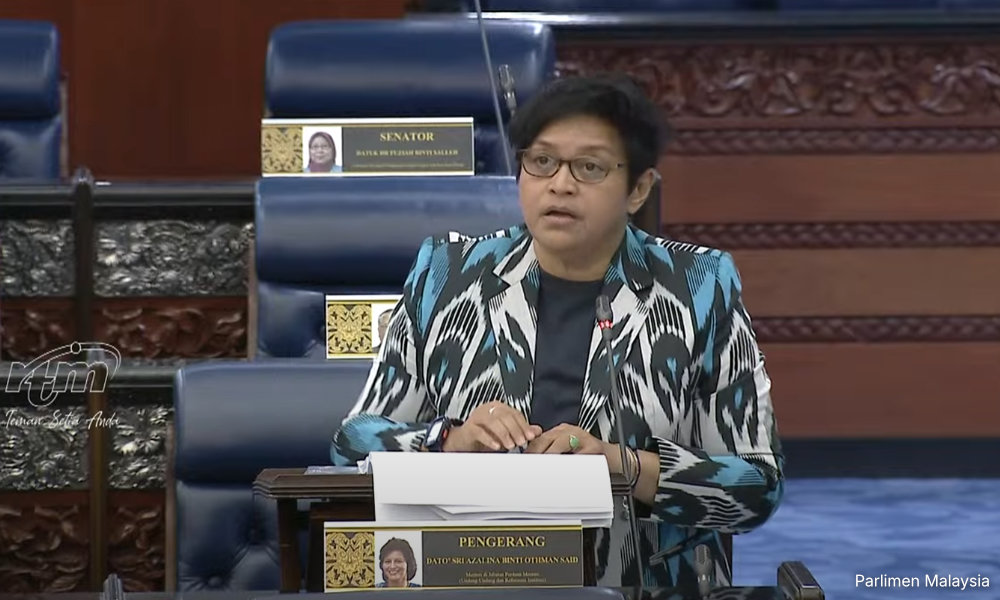
ADUN SPEAKS | Minister in the Prime Minister’s Department (Law and Institutional Reform) Azalina Othman Said had provided a written parliamentary reply on the ownership or regulation of oil and gas resources.
Her assertion that the Malaysia Agreement 1963 (MA63) contains no provisions on oil and gas and that full ownership therefore vests in Petronas under the Petroleum Development Act 1974 (PDA) reflects a fundamentally flawed understanding of constitutional structure, federalism, and the legal status of MA63.
MA63 is not a sectoral statute. It is a...
ADUN SPEAKS | Minister in the Prime Minister’s Department (Law and Institutional Reform) Azalina Othman Said had provided a written parliamentary reply on the ownership or regulation of oil and gas resources.
Her assertion that the Malaysia Agreement 1963 (MA63) contains no provisions on oil and gas and that full ownership therefore vests in Petronas under the Petroleum Development Act 1974 (PDA) reflects a fundamentally flawed understanding of constitutional structure, federalism, and the legal status of MA63.
MA63 is not a sectoral statute. It is a constitutional compact that safeguards the continued operation of Sabah’s and Sarawak’s pre-existing powers, laws, and jurisdiction at the point of entry into the federation.
The legal principle is clear: “What is not lawfully transferred remains with the state. Silence does not equal surrender.”
At the time of Malaysia’s formation, land and minerals were matters of state jurisdiction. This position is constitutionally entrenched through the state list in the Federal Constitution.
Petroleum, being a natural resource located in or under state land and territorial waters, was therefore within state authority unless expressly transferred, which it was not.
To now argue that Sabah has no claim because MA63 does not expressly mention “oil and gas” is to invert the entire purpose of MA63. The agreement was intended to protect against federal encroachment, not to provide a legal vacuum for later centralisation.
More critically, the federal government’s reliance on PDA 1974 exposes the weakness of its own argument. The PDA was enacted 11 years after MA63, during an Emergency-era political climate, and was never incorporated into MA63 nor constitutionally entrenched with the consent of Sabah and Sarawak as required for laws affecting state rights.
Constitutional displacement
An ordinary Act of Parliament cannot override constitutional guarantees and founding agreements of the federation.
If federal ownership over petroleum depends entirely on the PDA, then it follows that such ownership is not derived from MA63 at all, but from subsequent unilateral federal legislation - the very type of erosion of state rights MA63 was meant to prevent.
Furthermore, pre-existing state petroleum laws and regulatory frameworks were never repealed by constitutional amendment. In Sarawak, the Oil Mining Ordinance 1958 continues to exist.
The federal claim to exclusive control is therefore not rooted in original constitutional design, but in later political dominance and contractual coercion, including royalty agreements entered into under severe imbalance of bargaining power.
This is not constitutional consent. This is constitutional displacement.
To equate MA63 with PDA, or to suggest that PDA lawfully supersedes MA63 safeguards, is legally unsustainable. MA63 is part of the constitutional architecture of Malaysia; PDA is not.
It is therefore deeply troubling for a minister responsible for law and institutional reform to make statements that effectively pre-judge constitutional disputes that are actively before the courts, including disputes over regulatory authority and revenue entitlement in Borneo states.
Such statements risk undermining judicial independence and prejudicing public understanding of ongoing constitutional litigation.
Sabah’s entitlement
Let me be absolutely clear: There has been no constitutional amendment, no lawful surrender, and no valid legal mechanism that extinguishes Sabah’s entitlement to revenue derived from Sabah, including oil and gas.
The obligation to pay Sabah its 40 percent entitlement has never been repealed, suspended, or replaced by any valid constitutional process.

The federal position today is not based on the founding agreement of Malaysia, but on post-MA63 legislative expansion of federal power, which is precisely what MA63 was designed to prevent.
Sabah did not join Malaysia to become a resource colony governed by later federal statutes. Sabah joined Malaysia on the basis that its constitutional position, territorial rights, and economic foundations would be protected.
Any attempt to use MA63’s so-called “silence” as justification for permanent federal appropriation of State resources is not only legally defective, but constitutionally dangerous.
Sabah will not accept constitutional revisionism dressed as statutory interpretation.
CHIN TEK MING is the Kapayan assemblyperson.
The views expressed here are those of the author/contributor and do not necessarily represent the views of Malaysiakini.
/file/publisher-c1a3f893382d2b2f8a9aa22a654d9c97/2020/09/597c34182eb5117b4197a53ca074e57c.jpg)
/file/publisher-c1a3f893382d2b2f8a9aa22a654d9c97/2025/11/4a70c8cf112e8366455590a5a358f2f6.jpg)
/file/publisher-c1a3f893382d2b2f8a9aa22a654d9c97/2025/11/ee326e3b6537b766bd3571f6f5fcf206.jpg)
/file/publisher-c1a3f893382d2b2f8a9aa22a654d9c97/2025/11/cf976b483a3a105ff9d0d93f99d77588.jpg)


Report this comment
Are you sure you want to delete this comment?
This action cannot be undone.