


/file/publisher-c1a3f893382d2b2f8a9aa22a654d9c97/2022/12/8fde8817a2e5e02d350fd76645a12789.jpg)

COMMENT | Will AG-PP split stop political interference in prosecutions?
COMMENT | Malaysia is finally taking steps to split the roles of the attorney-general (AG) and public prosecutor (PP).
This sounds like a bold, modern reform.
It sounds clean.
Is it?
One person, two hats
For decades, one person in Putrajaya has
COMMENT | Malaysia is finally taking steps to split the roles of the attorney-general (AG) and public prosecutor (PP).
This sounds like a bold, modern reform.
It sounds clean.
Is it?
One person, two hats
For decades, one person in Putrajaya has worn two hats.
The AG advises the government on how to stay in power.
He also decides who will be prosecuted and who will quietly walk away.
That fusion of roles has repeatedly hurt public confidence.

It has placed Malaysia at odds with the way many other constitutional democracies organise their prosecuting authorities.
During the Pakatan Harapan government, it has resulted in tens of discharges not amounting to acquittals (DNAAs).
But will it truly stop politicians from deciding who gets charged and who walks free?
In my view, the answer is: not yet.
The new bill is a hesitant half‑step. It keeps too much power in the hands of the politicians. It falls far short of the strong legal protections we see in other Commonwealth countries, in Fiji, and in the Nordic states.
What does ‘executive’ mean?
To grasp the danger of the current system, we must first understand one word: “Executive”.
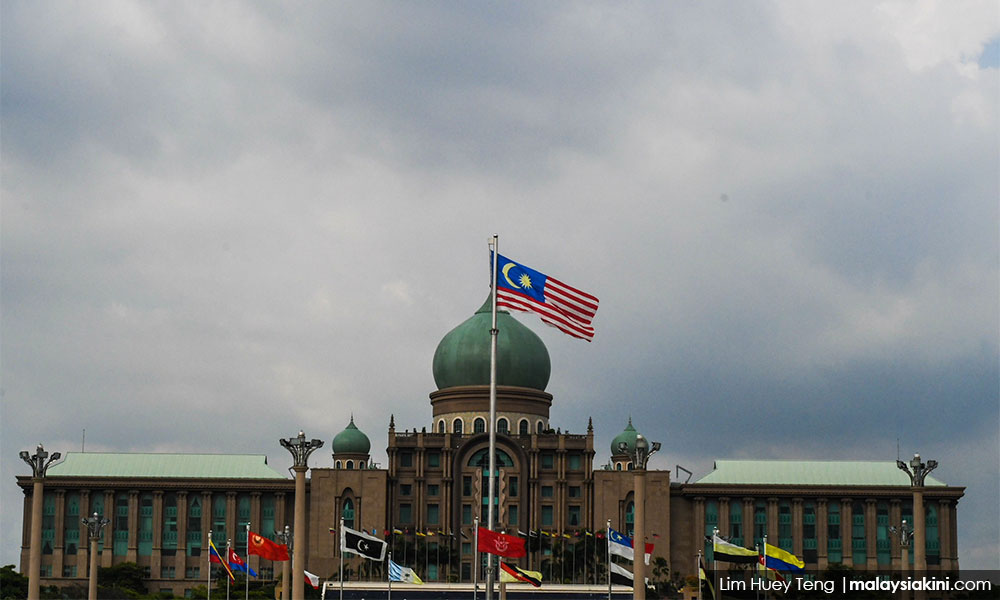
Whenever I say “executive” or “government”, I mean the political elite who run the country. Keep that in mind, and you will see exactly what is at stake.
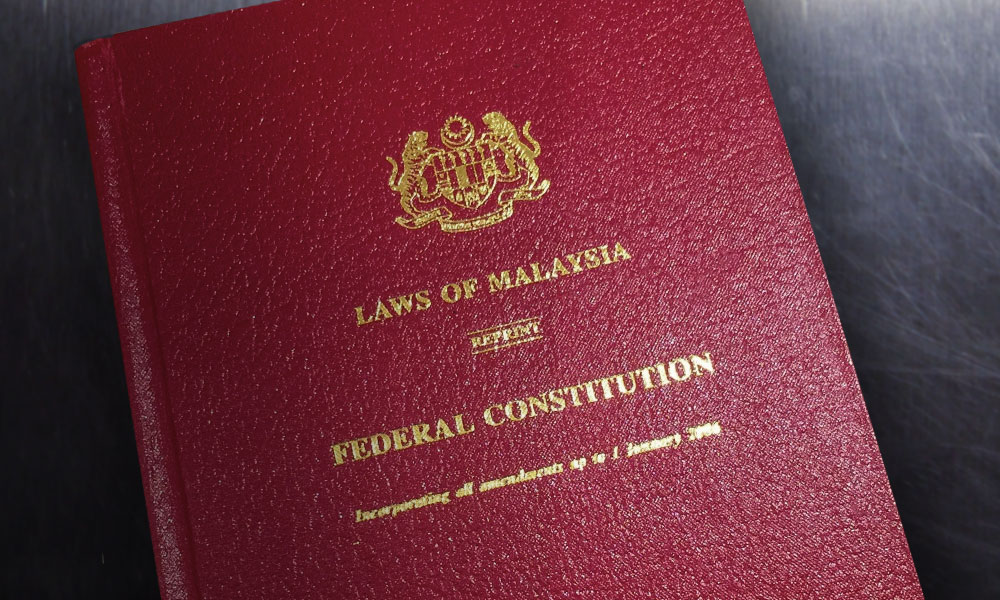
Right now, the Federal Constitution gives the AG incredibly wide powers.
Under Article 145(3), one person wears two very different hats.
First, he is the chief legal adviser to the government.
Second, he is the sole controller of all criminal prosecutions in the country. Section 376 of the Criminal Procedure Code confirms that the AG is the PP, with control over all prosecutions.
This setup is deeply flawed. It creates a massive, built‑in conflict of interest.
What happens when a powerful politician or a cabinet minister is accused of a crime?
Dismayed public
The public often watches in dismay as high‑profile cases are quietly dropped, downgraded, or delayed.
The power to halt a prosecution rests entirely in a single office –which depends on who the current controlling politicians are. This is bad.
Rarely are convincing reasons given to the people why some prosecutions are being stopped.
We saw this when Abdul Gani Patail was removed during the 1MDB investigations.
We saw it again when Ahmad Zahid Hamidi received a DNAA on 47 charges.
Many Malaysians see these cases as symptoms of a fragile system, not as isolated accidents.
A cosmetic makeover?
The proposed bill now attempts to “fix” this by creating a completely separate office for the PP.
Under this new law, the AG will lose his power to prosecute. He will remain the government’s legal adviser.
The new PP will take over the sole power to prosecute crimes, and will serve a fixed seven‑year term with no automatic renewal.
Some crucial points are worth noting:
(a) The PP becomes a separate constitutional office, not merely part of the AG’s role.
(b) The PP, not the AG, will sit on Pardons Boards and give written advice on clemency.
(c) The AG and PP are removed from the “public services” in Article 132, and the Judicial and Legal Service Commission (JLSC) is reshaped to handle the PP’s appointment, suspension and removal.
On paper, this looks like real progress. It looks like a clean split.
But the devil, as always, is in the details.
The legal architecture still bends heavily towards the politicians controlling the government.
Hidden traps
The bill improves on the old model, but it does not cure the main disease. Politics can still shape prosecutions.
1. Prime minister still holds the keys
The new PP will be appointed and removed through the JLSC.
This sounds like a safe, neutral buffer. It is not.

Who controls appointments to the JLSC? The executive is still incredibly influential. The prime minister and the government retain massive indirect control over who gets this powerful job, and over who sits in judgment over the PP.
There is no strict rule stopping the government from appointing a political loyalist as PP.
Imagine a future government appointing a loyal friend as the PP. Over a seven‑year term, this loyalist quietly drops cases against ministers, while energetically pursuing opposition leaders.
The current bill does not prevent this. It simply moves the problem from the AG’s door to the new PP’s door.
2. Silence where strength is needed
In countries with a strong rule of law, the constitution often says bluntly that the prosecutor takes orders from nobody.
For example, Fiji’s Constitution states that its director of public prosecutions “shall not be subject to the direction or control of any person or authority” when exercising prosecutorial powers.
The Malaysian bill dodges this completely. It has no strong, unbreakable guarantee that the PP will act independently. It does not explicitly forbid politicians from trying to sway the PP behind the scenes.
The long corridor from the Prime Minister’s Office to the prosecutor’s desk is still open. It may have more doors, but it is the same corridor.
3. The revolving door
There is no rule in the new bill stopping a recently retired politician or party office‑bearer from becoming the top prosecutor.
In many modern systems, top prosecutors are career professionals, visibly detached from party politics. Malaysia needs the same strict boundary.

4. Too much secrecy
If the new PP decides to drop a major corruption case against a politician, do they have to explain why?
No.
The bill does not contain strict rules forcing the PP to give clear reasons to the public. There is no firm duty to report such decisions to Parliament.
This leaves plenty of room for backroom deals and quiet favours.
How other countries do it
To make this easy to read on your phone, here is a narrow table with only three columns.
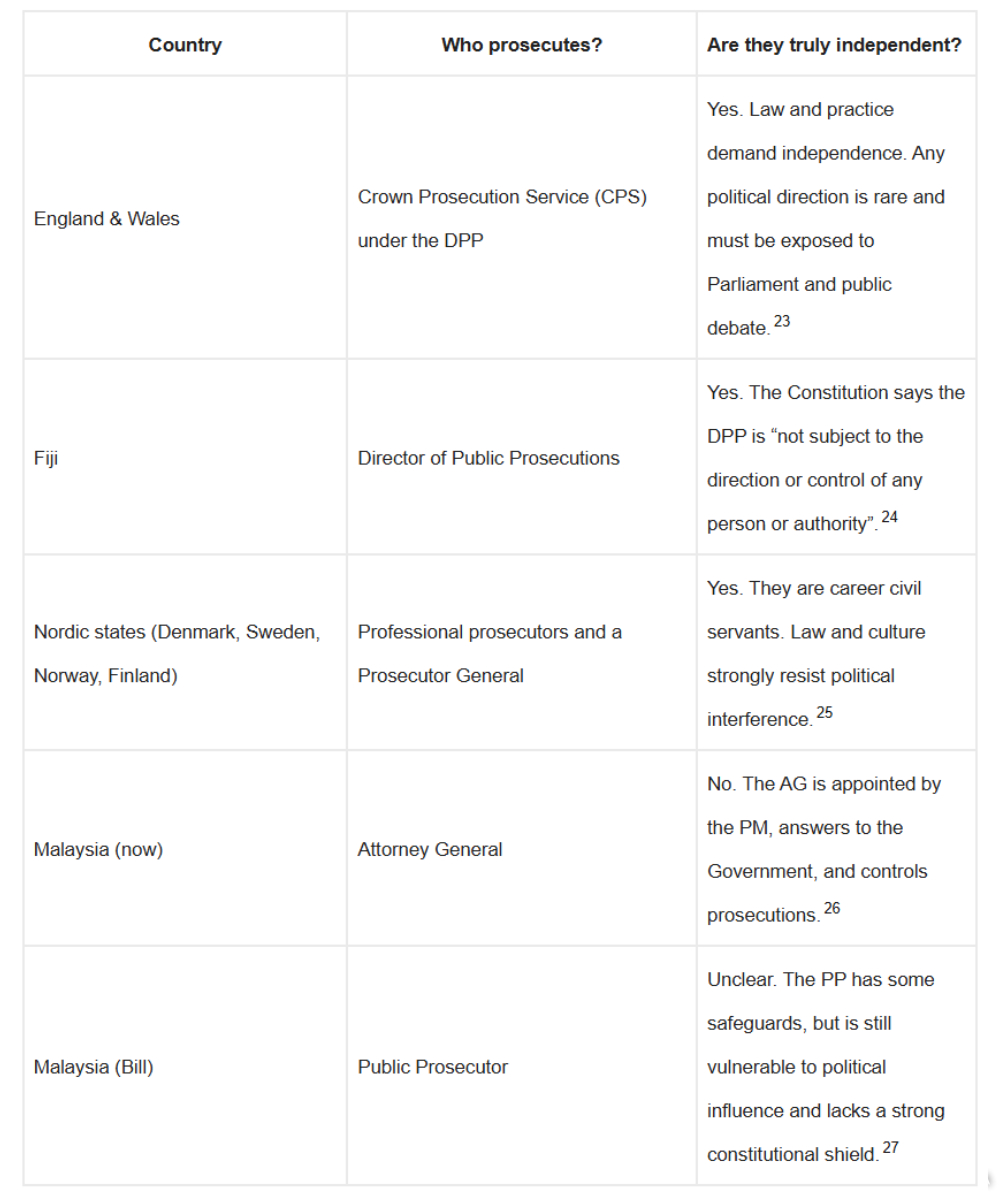
These examples show one vital truth. A prosecuting authority must be treated as a public trust, not as a political prize.
How current model fails international standards
If we compare Malaysia’s present system with these examples, the gaps are obvious.
(a) We allow one person to both advise the government and control prosecutions. That is unusual and dangerous.
(b) We give that person very broad, personal discretion to start or stop cases, with little explanation.
(c) We do not insist on clear independence language in our Constitution. Fiji and others do.
(d) We have weak traditions and weak rules on explaining controversial decisions, or facing detailed questions in Parliament every year.
By these measures, the current Malaysian model fails international standards of independence, transparency and accountability.
How we can fix the bill
If Malaysia truly wants to stop political interference, the bill must be improved in a few clear ways. We cannot rely on slogans and press conferences.
1. Add an iron‑clad independence clause
We must add strong language directly into the Federal Constitution.
It should say:
“In the exercise of his or her powers, the Public Prosecutor shall act independently and shall not be subject to the direction or control of any person or authority.”
This single sentence builds a constitutional firewall against political bullying.
2. Depoliticise the hiring process
The prime minister cannot quietly choose the PP.
Instead, he or she should be appointed by a truly neutral body, such as an independent Constitutional Offices Commission, made up mainly of judges and senior non‑political lawyers.
Ex‑politicians and party office‑bearers should be completely banned from taking the job for at least five years. This closes the revolving door. It also sends a clear message that prosecutions are not a reward for party loyalty.
3. Demand total transparency
If the government ever issues general policy guidelines to the PP, these must be in writing and made public. They must be debated openly in Parliament.
Above all, there should be an absolute legal ban on politicians giving instructions on specific, individual cases.
Policy can be political. Cases must not be.
4. Make the AG, the PP and the politicians explain themselves
When a high‑profile case is suddenly dropped, the public deserves to know exactly why.
The law must force the PP to publish written, logical reasons for these major decisions, in a way that does not harm ongoing investigations.
The PP should also be required to submit a detailed annual report to Parliament. This ensures their choices can be examined in the open light of day, as they are in many rule‑of‑law systems.
At constitutional crossroads
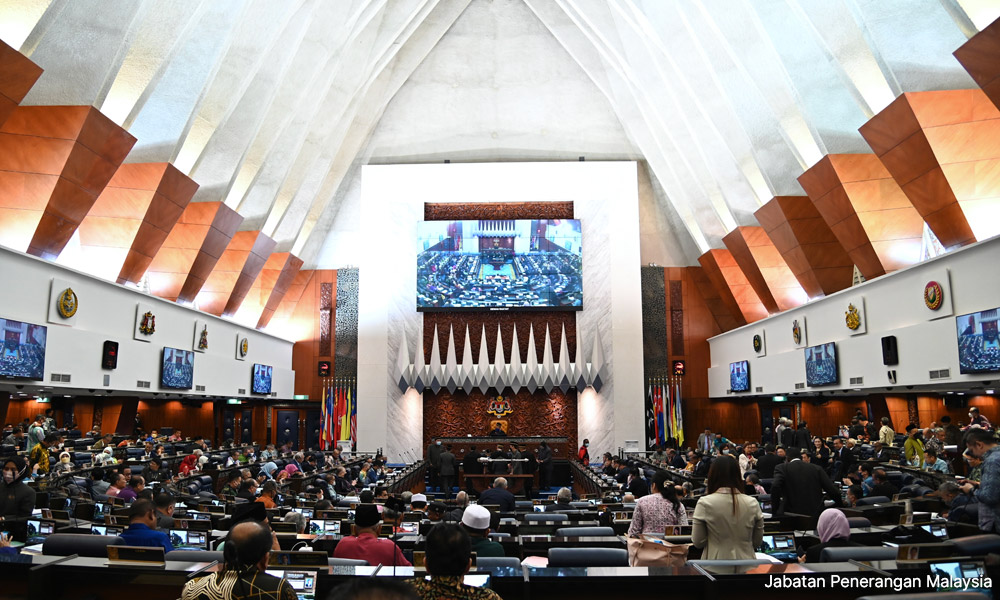
Malaysia now stands at a constitutional crossroads.
It can keep a system where prosecutorial power sits in the long shadow of politics, “dressed up” in the language of “reform”.
Or it can build what other mature democracies already take for granted: a truly independent, transparent and professional prosecution service that answers to the law, to the courts and ultimately to the people.
The text of the bill is still in our hands. The question is whether we dare to write into it the independence we keep “promising” each other.
GK GANESAN is a lawyer and an international commercial arbitrator.
The author thanks Miss KN Geetha, Miss Lydia Jaynthi, Miss TP Vaani and Miss JN Lheela.
Malaysiakini has obtained permission to republish this article, which first appeared here.
The views expressed here are those of the author/contributor and do not necessarily represent the views of Malaysiakini.
/file/publisher-c1a3f893382d2b2f8a9aa22a654d9c97/2026/02/d1ac2fcc58a33cefc5d743d400f881af.jpg)
/file/publisher-c1a3f893382d2b2f8a9aa22a654d9c97/2026/01/06d90b0c4ad7188296f02d606882992c.jpg)
/file/publisher-c1a3f893382d2b2f8a9aa22a654d9c97/2026/02/b54c624ca670b8f5077b8941eedcede1.jpg)
/file/publisher-c1a3f893382d2b2f8a9aa22a654d9c97/2024/11/3747b98561855b854b54d322c3feee28.jpg)
/file/publisher-c1a3f893382d2b2f8a9aa22a654d9c97/2026/02/320192b8eaf55e977da96304955ecf5f.jpg)
/file/publisher-c1a3f893382d2b2f8a9aa22a654d9c97/2022/12/8fde8817a2e5e02d350fd76645a12789.jpg)
/file/publisher-c1a3f893382d2b2f8a9aa22a654d9c97/2020/07/f092dd2f912e05ebaafc5277ecad92e6.jpg)


Report this comment
Are you sure you want to delete this comment?
This action cannot be undone.