




Education globalisation: Will poor benefit?
In 1970, adult literacy in Malaysia stood at 70 percent; today it is 94 percent. In that time, our economy has boomed enviously and the middle-class has burgeoned. Material expectations have risen, and so have educational demands.
In 1970, adult literacy in Malaysia stood at 70 percent; today it is 94 percent. In that time, our economy has boomed enviously and the middle-class has burgeoned. Material expectations have risen, and so have educational demands.
Private colleges are packed and more than half of Malaysian parents confer extra tuition on their children. It's clear that many Malaysian families are rising up to the challenge of educating their children in an ever more competitive and globalising world.
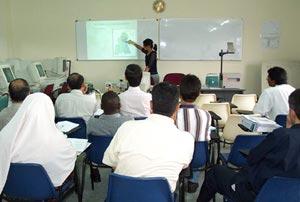 Before Merdeka, Malayan elites were routinely sent to England to be educated, the result of which is that our first three prime ministers were educated at Cambridge, the Inner Temple and Lincoln's Inn. All former Lord Presidents of the Federal Court received their education in England, as did nine of our thirteen Yang di Pertuan Agongs; two also received training at the Royal Military Academy at Sandhurst.
And there is an enduring affinity for British-style educational institutions among those who have access to them. The numbers of Malaysian children attending universities in the UK or Australia are higher than ever, and so is demand for preparatory schools. Independent international schools have become popular among Malaysians and waiting lists are growing.
British-style boarding with Malaysian or hybrid curricula is also provided by a large number of schools such as Kolej Tuanku Jaafar or Kolej Yayasan UEM and of course, the historically elite (and state-sponsored) Malay College Kuala Kangsar and Tunku Kurshiah College.
All these schools send plane-loads of students to British and Australian universities (as a cursory look through Malaysian students societies' registers in those countries will reveal), but Malaysians who stay home can still obtain such degrees through twinning programmes or attending branches of universities – such as Nottingham or Monash – in Malaysia.
The breadth of choice and variety already available has undeniably contributed to the proliferation of a prosperous middle and upper-middle class in Malaysia. Sustaining this creation of wealth and opportunity is the challenge by which Malaysians should judge our government's education policy.
Although there is a wide agreement that the Malaysian education system needs to improve its quality, few acknowledge that greater choice and freedom could be the catalyst to provide this quality. Instead, it is often assumed that the onus should be with direct government intervention.
Own language too
Professor James Tooley, in his paper ‘Could the globalisation of education benefit the poor?’ investigated for-profit schooling in low income areas or rural villages in developing countries. His most applicable policy conclusion in the Malaysian context is to grant state schools and universities some of the same freedoms that their private counterparts already enjoy.
These could include control over their budgets, the power to employ teachers according to their own contracts, the freedom to set their own entry criteria, disciplinary code and focus of curricula, or even the power to set their own school uniform.
Crucially, educational institutions could choose their language of instruction. Such powers would enable them to compete with private schools on a more level footing and give parents a real choice over the future of their children.
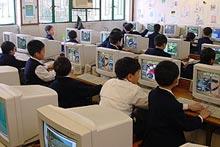 There are already government-assisted schools in Malaysia which enjoy some degree of autonomy by having independent boards of governors, and there is no compelling case as to why these should not be replicated.
Furthermore, Malaysia's federal system could be taken advantage of to devolve such decisions in stages to state, and then local, authorities. Of course, there will be great challenge - some schools in rural areas lack basic amenities and it might be difficult to attract students and teachers.
And for many in rural areas there may only be one school available within range. But even then, as Tooley points out, private schools are more accountable than public schools. If this accountability could be simulated in a state-funded system (for example, by enabling parents to reward teachers they deem effective and to fire those found lacking) then students living in remote areas would still benefit.
Many Malaysians are already the beneficiaries of globalisation in education through scholarships, both government and private, to overseas universities. The opening of overseas universities' campuses in Malaysia further increases the scope of scholarships for the poor - the Tinggi Foundation Scholarship is one such example.
But globalisation of education goes both ways. The Limkokwing University – a private, fee-charging Malaysian institution – opened its doors in London, last month. The resultant benefits will not be merely educational as economic, political and social links will be strengthened too.
Racial segregation
There is one final aspect of Malaysian education which deserves special attention, and that is the racial segregation in the Malaysian education system. Politicians often debate the pros and cons of multi-ethnic 'integrated schools' against vernacular schools targeting a particular ethnicity.
But it is no accident that a strong cross-racial sense of camaraderie can be found among those who had access to private education - their parents have chosen those schools based on academic, rather than racial, criteria.
The promotion of better schools through increased choice and competition is a far superior method of fostering inter-ethnic ties than political parties cajoling children to attend certain types of schools.
Malaysians have profited enormously from private, for-profit education in the past and educational entrepreneurs continue to improve the options. But the nation's future should not have to rely solely on such visionaries.
Empowering state-sponsored schools to compete with them and expanding this ethos into rural areas could bring benefits to all future Malaysians.
ABIDIN MUHRIZ, director, Malaysia Think Tank London , attended the Alice Smith School, Marlborough College and the London School of Economics and Political Science. Click on the preceding link to download the report ‘Could the globalisation of education benefit the poor?’


