


/file/publisher-c1a3f893382d2b2f8a9aa22a654d9c97/2026/05/aea27c2b8c89a2e2d7e343a2c63918c1.jpg)

COMMENT | Part 2: Will kancil save reformasi?
COMMENT | Political influence is not built merely by projecting a new vision or rejecting compromise.
Parti Keadilan Nasional did not become one of Malaysia’s mainstream political parties because it possessed the most sophisticated reform manifesto.
It became influential because it built a broad social coalition that united the urban middle class, wage earners, social moderates, minorities, civil society activists, and voters searching for an alternative model of governance.
As an agency of change, one also needs to be innovative and courageous. When Keadilan was formed, it went against conventional norms of traditional political practice.
Its leadership embraced PAS and DAP as partners when they were perceived as two polar extremes. The majority of Malays saw DAP as chauvinistic, and non-Malays thought PAS was fundamentalist. The coalition of such diversity broke outdated taboos.
The real challenge facing Parti Bersama Malaysia (Bersama), therefore, is not whether it can criticise PKR more effectively, but whether it can...
COMMENT | Political influence is not built merely by projecting a new vision or rejecting compromise.
Parti Keadilan Nasional did not become one of Malaysia’s mainstream political parties because it possessed the most sophisticated reform manifesto.
It became influential because it built a broad social coalition that united the urban middle class, wage earners, social moderates, minorities, civil society activists, and voters searching for an alternative model of governance.
As an agency of change, one also needs to be innovative and courageous. When Keadilan was formed, it went against conventional norms of traditional political practice.
Its leadership embraced PAS and DAP as partners when they were perceived as two polar extremes. The majority of Malays saw DAP as chauvinistic, and non-Malays thought PAS was fundamentalist. The coalition of such diversity broke outdated taboos.
The real challenge facing Parti Bersama Malaysia (Bersama), therefore, is not whether it can criticise PKR more effectively, but whether it can construct a social base large enough to replace PKR's role in Malaysian politics.
Every durable political party rests on two foundations: an ideological identity and a mass constituency.
Ideology tells voters what a party stands for. Constituency tells society whom the party represents.
Without both, a party becomes dependent on the popularity of individual leaders or seasonal issues - yet without enduring political support.
READ PART 1: COMMENT | Kancil: A vehicle for change or mere political noise?
Bersama appears to draw support from many of the same urban, educated, reform-minded voters who traditionally formed part of PKR's base.
The kancil (mousedeer) attempts to ride on their frustration with what they perceive as the slow pace of reform under the Madani government.
Nevertheless, dissatisfaction alone does not automatically translate into a new voter constituency.
Rafizi may generate media attention by highlighting inadequacies within the government and PKR, but media attention is not the same as political organisation.
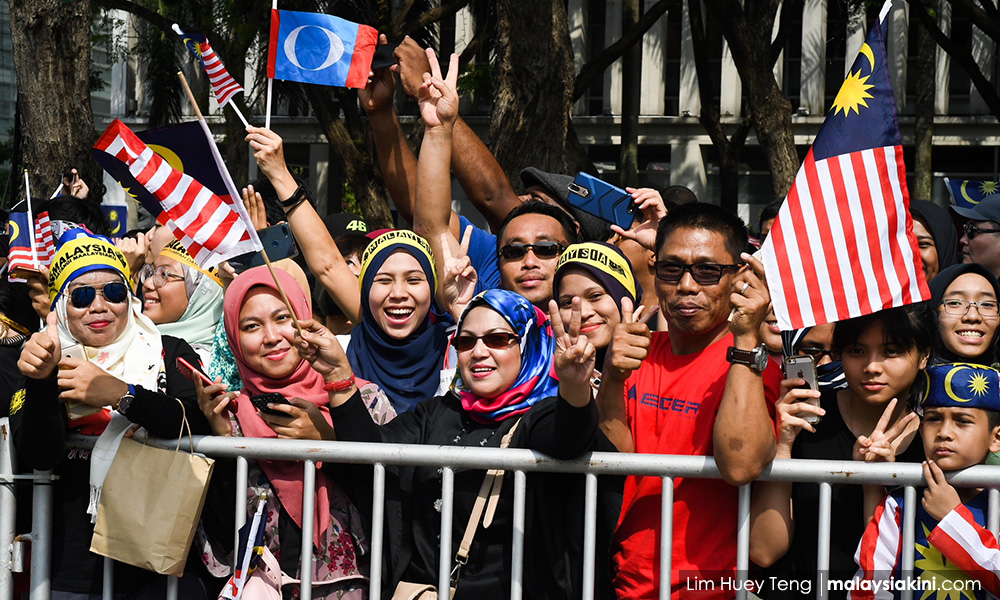
Malaysian politics is filled with parties that attracted enthusiastic online support yet failed to build strong grassroots networks capable of winning elections.
There is no question that Bersama could incite significant defection from PKR. However, it is doubtful that it can develop entirely new constituencies beyond PKR's traditional base.
Unless it expands beyond dissatisfied reformists, it risks becoming a smaller version of PKR rather than its successor.
The formation of Bersama differs fundamentally from PKR's. The reformasi movement emerged during a national crisis that inspired millions of Malaysians who previously lacked a viable opposition vehicle.
Bersama, by contrast, was introduced into a political landscape full of multiple alternatives for reform-minded voters.
The first question: Justification
Leaders and members who leave PKR must explain convincingly why reform from within has become impossible. Unlike those who were previously expelled by their parties, Bersama's founders departed voluntarily and are actively encouraging others to do the same.
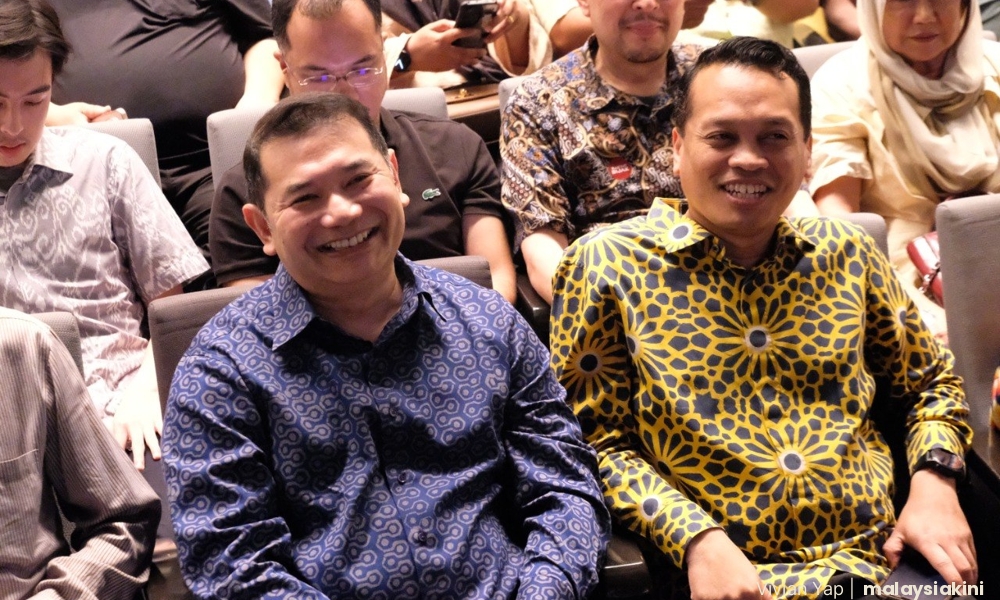
If Rafizi's supporters possess sufficient influence to persuade thousands of members to leave PKR, one wonders whether that same organisational strength could have been deployed to influence PKR's direction from within.
Losing a leadership contest does not mean Rafizi's faction has lost all ground to shape debate, build support, contest future elections, or influence party policy.
Rafizi's abrupt resignation inevitably raises questions about whether he had truly exhausted all avenues for internal reform.
If a group cannot even devise a strategy to improve the party with which they have been associated for decades, why should they be trusted to reform the government's colossal bureaucratic structure?
PKR leadership, too, cannot entirely dismiss the impact of an exodus of members.
Bersama's criticisms still bear the reminder for PKR to commence massive reforms in order to prove that their departure was not the only realistic path available for members.
The harder question
The second question is ultimately more important. This debate is not primarily about vote-splitting or benefiting opponents. For now, whether Bersama becomes a genuine vehicle for reform or merely another symbol of discontent remains to be seen.
Many parties have championed broadly similar aspirations: democratic values, multiracialism, moderation, budget accountability, and social justice.
There are like-minded parties like Parti Rakyat Malaysia (PRM), PSM, and Muda, etc. Bersama does not have exclusive ownership of these ideas.
The difficulty has never been identifying attractive principles. Offering wonderful ideas and getting people to buy in are two very different things.
The challenge has always been building the political machinery capable of translating those nice principles into public policy. Rafizi and his friends have not clearly explained why they were reluctant to fight a long war - with patience and perseverance - to reform the party from within.

So far, Bersama has articulated its criticisms of PKR more clearly than it has articulated its own long-term political identity.
Criticism, however persuasive, is not a substitute for a political project.
To become a genuine reform force, Bersama must address several fundamental issues:
What social interests does it represent?
What constituency does it seek to organise?
What ideological space does it occupy that is distinct from PKR and other reform-oriented parties?
More importantly, what makes its strategy for achieving reform different from those already attempted?
Since 2018, Malaysians have experienced multiple changes of government. As a result, many voters are no longer satisfied with parties that merely act as the voice of conscience.
They increasingly demand parties that can demonstrate a credible capacity to govern and implement realistic change.
This is where Bersama faces its greatest test.
Both Rafizi and his fellow former PKR MP Nik Nazmi Nik Ahmad previously served in government and held senior ministerial positions. Those offices provided them with opportunities to pursue reform from within the executive branch.
Sadly, both ultimately chose resignation over continued engagement in the arduous task of institutional reform.
That decision may be seen as principled. The action may even have been praiseworthy. Nevertheless, it raises an unavoidable question.
If reform proved difficult while occupying ministerial office and serving within government, what new instruments does Bersama now intend to acquire that would allow it to overcome the same structural constraints?
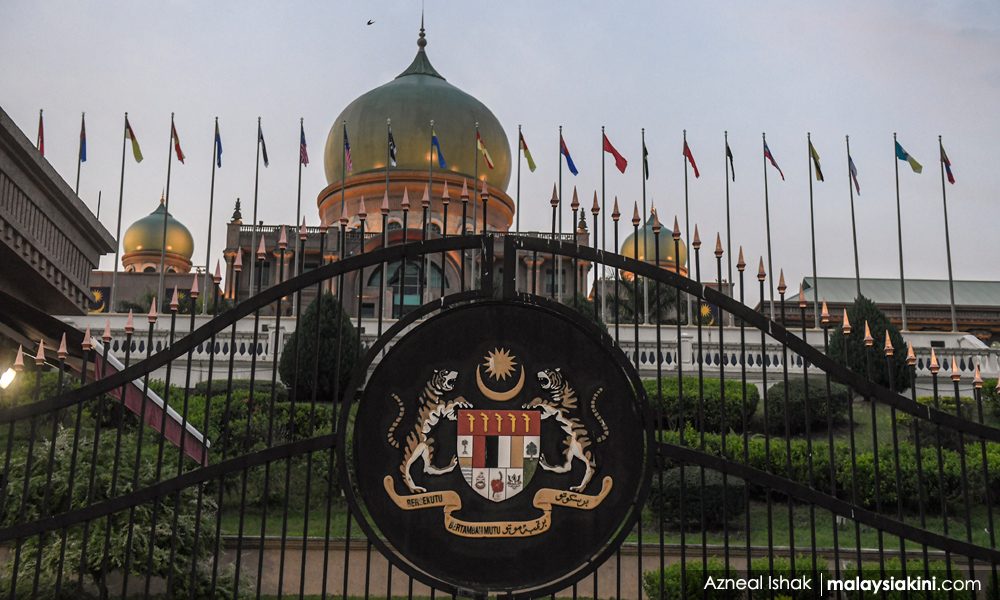
How will the party tackle the structural resistance, bureaucratic inertia, societal pressures, and political realities that have disrupted reform efforts under successive administrations?
The Bersama leadership must demonstrate not only that its rivals have failed, but also that it has invented new methods, strategies, or political resources that previous reform efforts lacked.
Successful political parties survive because they become institutions rather than campaigns. They cultivate loyal constituencies, develop organisational depth, and create a sense of political belonging that extends beyond individual leaders.
Until these issues are satisfactorily resolved, Bersama is unlikely to appear as the next torchbearer of reformasi.
Instead, it risks being perceived primarily as an emotional reaction to the frustrations generated by reformasi's unfinished journey.
Kancil: Clever, but can it govern?
When unveiling the party's logo, Rafizi explained that the kancil symbolises wisdom and strategic intelligence. The symbolism is understandable. Bersama is a small party seeking to challenge larger and more established political forces.

In Malay mythology, the kancil indeed emerges victorious by outsmarting larger adversaries. However, the kancil is also cunning and unscrupulous.
To achieve its objectives or escape danger, the kancil has no qualms about resorting to trickery and deception, and often failing to keep its promises. Hopefully, this will not be the destiny of those who place their hope in the kancil.
If the kancil depends on cleverness alone and does not build political endurance, voters may eventually conclude that Bersama represents a change of vehicle - but not a change of destination.
TIAN CHUA is a former Batu MP.
The views expressed here are those of the author/contributor and do not necessarily represent the views of Malaysiakini.
/file/publisher-c1a3f893382d2b2f8a9aa22a654d9c97/2026/06/753850b21891ad360d28eb5549dd51f0.jpg)
/file/publisher-c1a3f893382d2b2f8a9aa22a654d9c97/2026/06/8dda4ac66815d0bfc91464bafad2896e.jpg)
/file/publisher-c1a3f893382d2b2f8a9aa22a654d9c97/2026/05/7f726ed9b1f79ba3b3e103b95a86e77d.jpg)
/file/publisher-c1a3f893382d2b2f8a9aa22a654d9c97/2022/04/b310c1c49bef0a14dcef4cb0a57ca8a4.jpg)
/file/publisher-c1a3f893382d2b2f8a9aa22a654d9c97/2026/05/001e4e941e1b99097b1f88de23ebcbf0.jpg)


Are you sure you want to delete this comment?
This action cannot be undone.