


COMMENT | Trump-Xi summit signals shift in global order - is the unipolar system waning?
While the leader who contributed to this historic summit, Trump, is still basking in his memories of the visit, international news outlets have offered differing interpretations of the outcome. The Straits Times argues both leaders won, while Newsweek and Reuters contend that Xi had the upper hand in the summit.
The Trump-Xi summit carries structural implications that transcend the immediate political calculus of who “won” or “lost”. It signifies the paradigm shift in global dynamics.
Put simply, the reality is that China has been subtly accepted as a superpower by the existing and only superpower, the United States, and 2026 may be remembered as the inflexion point marking the beginning of the end of the unipolar system.
The unipolar system we have long acknowledged found its footing after the disintegration of the Soviet Union in December 1991, establishing the United States as the sole superpower of the world.
The Soviet Union’s defeat demonstrated that...
COMMENT | Weeks after the much-anticipated summit between leaders of the United States and China, Donald Trump and Xi Jinping, on May 14 and 15, post-summit ripples continue to pass through the strategic community.
While the leader who contributed to this historic summit, Trump, is still basking in his memories of the visit, international news outlets have offered differing interpretations of the outcome. The Straits Times argues both leaders won, while Newsweek and Reuters contend that Xi had the upper hand in the summit.
The Trump-Xi summit carries structural implications that transcend the immediate political calculus of who “won” or “lost”. It signifies the paradigm shift in global dynamics.
Put simply, the reality is that China has been subtly accepted as a superpower by the existing and only superpower, the United States, and 2026 may be remembered as the inflexion point marking the beginning of the end of the unipolar system.
The unipolar system we have long acknowledged found its footing after the disintegration of the Soviet Union in December 1991, establishing the United States as the sole superpower of the world.
The Soviet Union’s defeat demonstrated that having a successful economic model is a key to winning a competition between superpowers, and the Washington Consensus helped the US win that competition.

The major characteristics of the unipolar system are that the Washington Consensus became a panacea for all developing economies dreaming of catching up with developed economies; that no country could overcome economic countermeasures imposed by Washington; and that the US has never ceded its agenda-setting power to any other power in bilateral relations.
Origins of unipolar dominance
In the beginning, as English economist John Williamson argued, the Washington Consensus was built upon the US economic model that advocates for a small government and a free market. This rendered the US a role model and rule-maker of the consensus.
As a rule maker, Washington secured an unsurpassed position of economic stewardship, bolstered by its dominance in the International Monetary Fund, the World Bank, and Wall Street institutions.
However, the golden rule for economic development, the Washington Consensus, has been challenged by the Chinese economic model.
Party state capitalism and socialist market economy are jargon popular in the academic community, while socialism with Chinese characteristics is the official Chinese terminology to describe the Chinese economic model.

The key point is not the terminology, but that the Chinese model defies the Washington Consensus to achieve prosperity and shows its resilience in navigating economic shocks, like the recent oil supply crisis stemming from the closure of the Strait of Hormuz, and promotes technological innovations such as artificial intelligence and electric vehicles.
Most importantly, by operating outside the Washington Consensus, China remains insulated from American regulatory constraints.
Moreover, China’s rapidly growing economic might, coupled with the launch of the Belt and Road Initiative, Brics, and the Asian Infrastructure Investment Bank, provides China with unwavering ground to challenge the unipolar economic system set by the US. Scholars dubbed this the Beijing Consensus.
Nowadays, these mechanisms offer countries a viable alternative to Western structures, an alternative the former Soviet Union was never sophisticated enough to deliver.
China alternative emerges
This brings a second question into focus: whether the Chinese economic model can sustain US economic countermeasures.
Historically, whenever Washington felt its economic supremacy threatened, it successfully deployed countermeasures to reassert dominance.
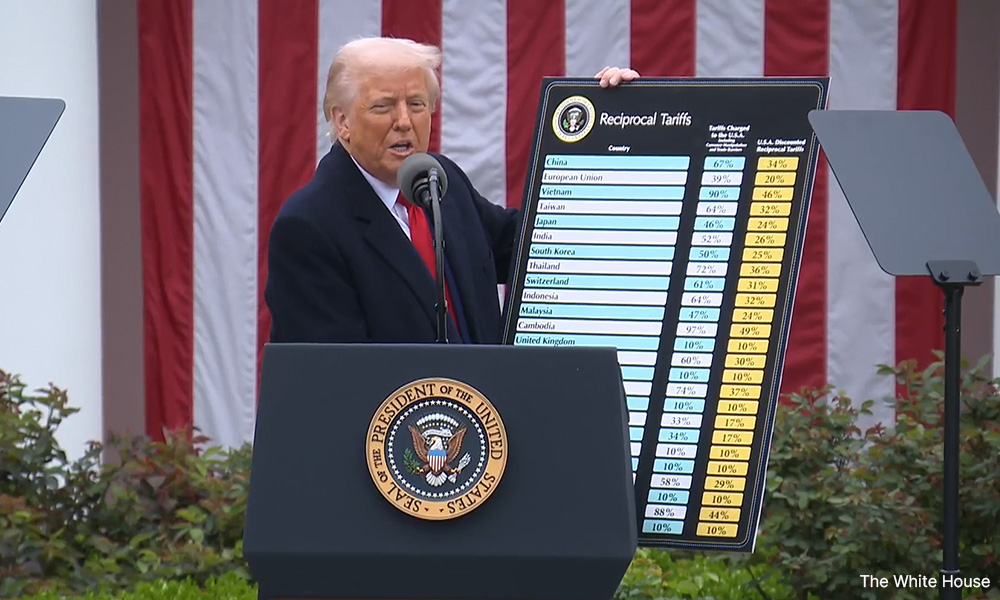
The 1985 Plaza Accord remains a classic example of the United States leveraging its financial clout to compel even its closest allies to alter their domestic economic trajectories.
The US has repeated this playbook by launching a trade war and enacting sweeping technology decoupling protocols against Chinese technological giants, citing national security concerns. Huawei, ZTE, BYD, Deepseek, DJI and so on are the famous cases.
Sanctions and China’s resilience
During Trump’s second term, Washington imposed an unprecedented 145 percent tariff on all Chinese goods, citing trade imbalance concerns and ramped up technological sanctions against Chinese artificial intelligence and information giants, including electric vehicles and solar panel products.
Given US dominance in international financial services and technology, Chinese companies and trade volume should have been severely impacted.
In contrast, Huawei regained its position of top smartphone supplier in China in January 2026, BYD overtook Tesla as the biggest electric vehicle supplier in the world in 2025, and Deepseek managed to defy US CPU sanctions to become one of the leading providers of open source AI.

Furthermore, China’s trade volume grew 15 percent year-on-year in the first quarter of 2026.
This resilience stems from the sheer scale of China’s domestic market, which provides a massive buffer that allows domestic firms to achieve economies of scale before expanding abroad.
While advanced economies like Japan, Germany, or the wider European Union have historically buckled under unilateral US tariff pressures, China possesses the domestic depth and a unique economic model to endure them.
This begs the third question: if a superpower will never let its competitor dictate the agenda of order, is China the exception? This brings us back to the recent Trump and Xi summit.
Since Xi came to power in 2012, he has been enthusiastic about promoting a new type of major power relations centred on the principles of no conflict, no confrontation, mutual respect, and win-win cooperation.
However, the US has never seriously considered the Chinese proposal, let alone discussed it in an official summit of leaders and written it down in a black-and-white statement.
For over a decade, successive Obama, Trump, and Biden administrations summarily dismissed or ignored this framework, refusing to grant Beijing the explicit peer status it sought.
While receiving a lukewarm response from Washington, China has enjoyed an overwhelming response from Russia. Beijing hails its ties with Moscow as a model of a new type of major power relations, built upon the basis of equality, mutual trust, non-alignment, and freedom from external interference.
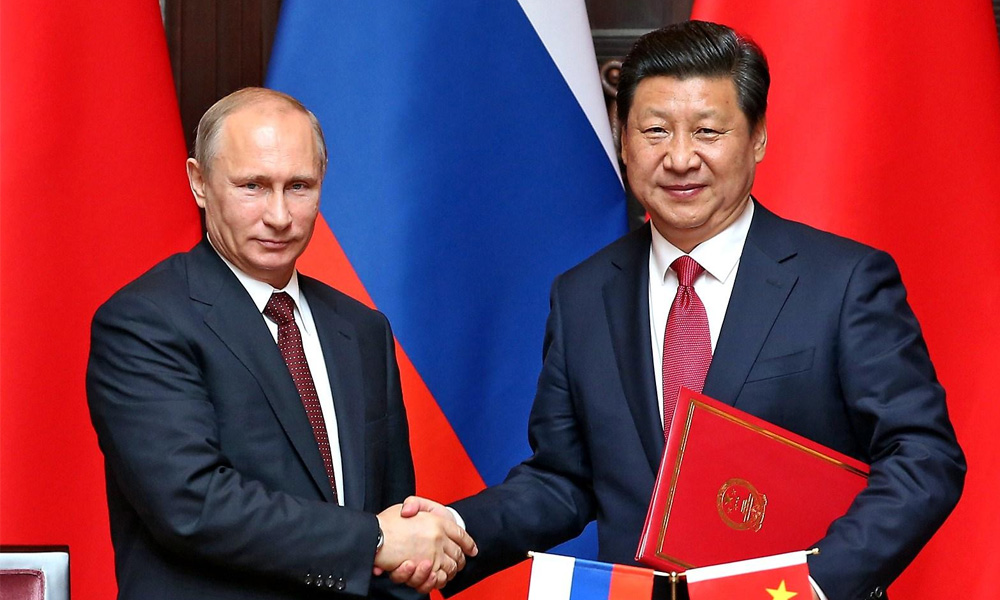
In spite of getting a cold shoulder from Washington, Beijing has never given up.
In the recent summit between Trump and Xi, it was Chinese state media that first broke the news that Trump accepted Xi’s proposal of a constructive relationship of strategic stability, which is old wine in a new bottle, carrying the same meaning as the new type of major powers relations.
Subsequently, a spokesperson from the Chinese Foreign Affairs Ministry explained that the said relationship would provide strategic guidance for China-US relations over the next three years and beyond.
“Constructive strategic stability means positive stability with cooperation as the mainstay, healthy stability with competition within proper limits, constant stability with manageable differences, and lasting stability with expectable peace.”
Moreover, a party propaganda arm released an explanatory article on the same night, May 14, 2026.
In contrast to Beijing’s rapid news releases, the White House remained silent for three days before releasing a confirming factsheet on May 17.
In the first point, the factsheet stipulates that both presidents agreed to build a “constructive relationship of strategic stability”, adding only the caveat that it occurs “on the basis of fairness and reciprocity”.
During that three-day silence, global strategic dialogue was shaped entirely by Beijing’s narrative. It is virtually unprecedented in modern diplomatic history for Washington to cede the initial rhetorical territory, allowing an adversarial state to define the parameters of a bilateral head-of-state meeting.
As Voice of America observed, “strategic stability” is fundamentally a Chinese diplomatic concept, not an American one.
According to British political theorist Steven Lukes, power includes the ability to shape the agenda, since that determines what is discussed and what is left out. On that basis, Xi appeared to have greater influence in setting the terms and framing of the meeting than Trump.
Shift of narrative power
It is the first time since the end of the Cold War that Washington has ceded its agenda-setting power to an adversary - China. This nuance signals that Washington acknowledges Beijing as a peer.
The core pillars of the unipolar system are fracturing. The monopoly of the Washington Consensus is being challenged by the China-led international financial arrangement. Furthermore, Beijing has proven capable of withstanding and even thriving under US countermeasures and sanctions.
Finally, Beijing has exercised power to constrain China-US bilateral ties on its own terms. All in all, China is now a real peer competitor to the US.
It is worth noting that having two superpowers does not mean that the unipolar system dissolved overnight after the Beijing summit. Rather, 2026 may be recorded as the year the structural foundations of the unipolar system definitively began to wane.
LAM CHOONG WAH is a senior lecturer in the Department of International and Strategic Studies in the Faculty of Arts and Social Science of Universiti Malaya.
The views expressed here are those of the author/contributor and do not necessarily represent the views of Malaysiakini.




Report this comment
Are you sure you want to delete this comment?
This action cannot be undone.