


/file/publisher-c1a3f893382d2b2f8a9aa22a654d9c97/2022/12/8fde8817a2e5e02d350fd76645a12789.jpg)

COMMENT | Parliamentary vetting a must when appointing public prosecutor
The strength of this historical reform depends not only on the separation but on how the PP is chosen.
The debate around the AG-PP separation has produced a narrative trap that demonises political power in the PP appointment: if the political appointment of the PP is the problem, then remove it entirely.
Projek Sama argues contrarily that political appointment is bad only because it is...
COMMENT | Projek Sama urges MPs across party lines to ensure that the Constitution (Amendment) (No 2) Bill 2026 establishes a transparent and meaningful parliamentary process for vetting candidates for the office of public prosecutor (PP).
The strength of this historical reform depends not only on the separation but on how the PP is chosen.
The debate around the attorney-general and public prosecutor separation has produced a narrative trap that demonises political power in the PP appointment: if the political appointment of the PP is the problem, then remove it entirely.
Projek Sama argues contrarily that political appointment is bad only because it is vulnerable to abuse due to three structural flaws, namely, (1) monopoly of power by the prime minister; (2) exercise of the power in secrecy, and; (3) the absence of a credible and legitimate selection process with clear criteria.
Under the current bill, the concern is not just about the removal of the PM or cabinet in the appointment process, but whether the proposed amendments eliminate the aforementioned structural flaws or simply reinforce them.
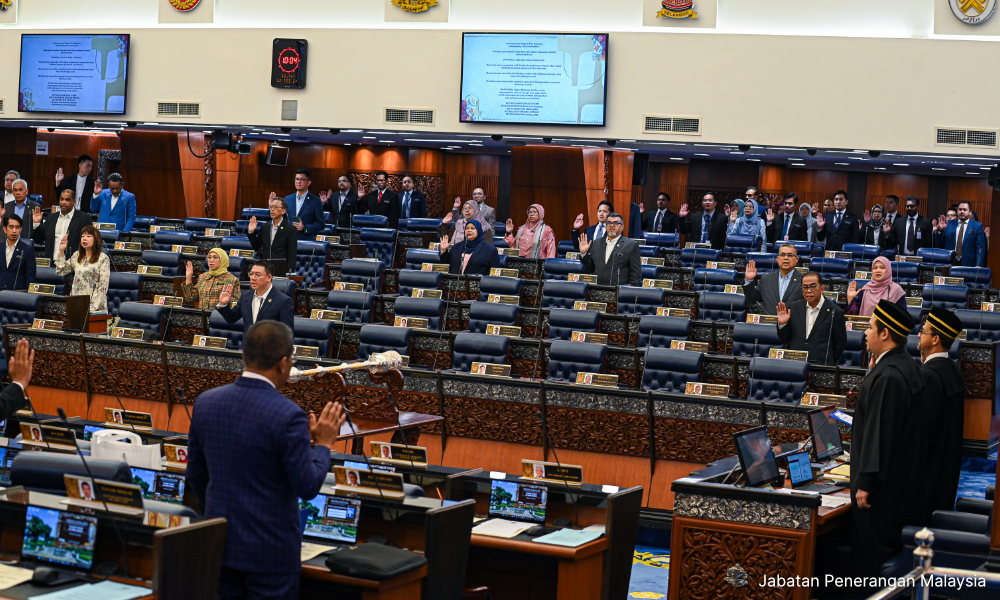
We argue that without Parliament playing a meaningful role of check and balance, we may risk replacing the PM’s arbitrary power with the Yang di-Pertuan Agong’s and Judicial and Legal Service Commission’s (JLSC) secretive and non-reviewable power to appoint.
We reiterate that we must reform political accountability, not eliminate it.
If no elected body has any role in who becomes the PP, the public has no avenue to ask why a particular person was chosen, and no one in the appointment chain is electorally answerable for that choice.
The reform we need in the PP appointment is political power with three positive elements: (a) sharing of the power by multi-party politicians; (b) exercise of the power under public scrutiny; and (c) a credible and legitimate selection process with clear criteria.
Best practices from Canada, Kenya
We need a multi-layered, transparent process that distributes decisional authority across various institutions, incentivises impartiality, and insulates the office from executive patronage.
Within the Commonwealth, we have two good examples - Canada and Kenya - of how such an accountable and credible process may be put in place.
Canada is a parliamentary system with almost 160 years of multiparty democracy and a professional and impartial prosecutorial service.
Kenya is a new presidential democracy that had experienced nearly three decades of one-party rule after independence (1964-1991), when prosecution was controlled by the executive.
These two countries serve good references for Malaysia because we are a parliamentary system like Canada, but we also endured six decades of one-party rule until 2018, with a highly politicised prosecution until today.
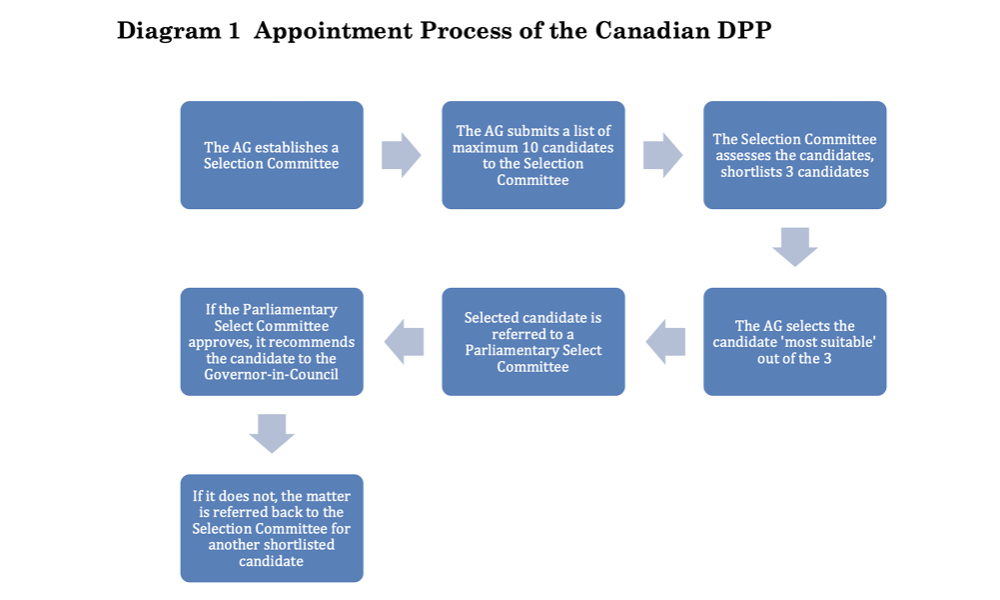
In Canada, Parliament is involved in two stages between the AG: first, through a selection committee which includes every parliamentary party and other stakeholders that shortlists three candidates from many choices by the AG.
Next, a parliamentary select committee that approves or disapproves the final nominee by the AG.
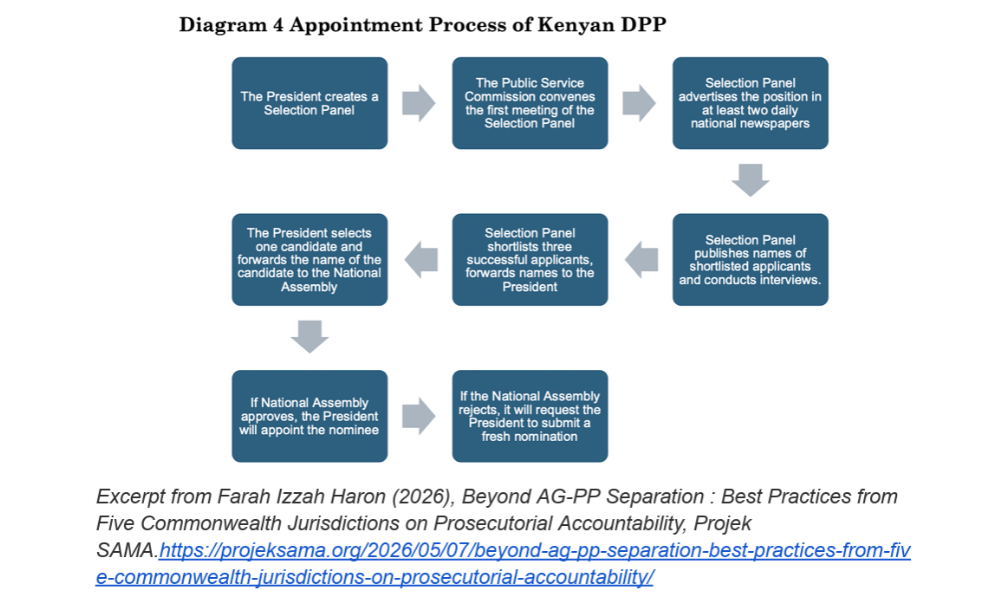
In Kenya, the president constitutes a multi-institutional selection panel to advertise the vacancy, conduct interviews, and submit three names in ranked choices to the president.
The president then nominates the candidate, whose appointment must be approved by Parliament.
Both jurisdictions emphasise high professional standards, requiring candidates to have at least 10 years of legal experience, and further safeguard independence through single, non-renewable fixed terms - seven years in Canada and eight years in Kenya.
Reforms must not worsen status quo
Projek Sama sees the PP reform as entailing extremely high stakes and calls upon all parliamentarians to ensure that the reform improves and does not worsen the status quo.
To produce a responsible, accountable and credible PP, we envision essentially a simple and necessary four-step process that transforms the initial selection process into a collective and public exercise of recommendation power involving Parliament:
The JLSC acts as the selection panel to nominate candidates for the position of the PP;
A bipartisan parliamentary special select committee (PSSC) vets the credentials and suitability of nominees and provides recommendations. The PSSC’s recommendations are then adopted by Dewan Rakyat via a resolution;
The JLSC presents the Dewan Rakyat’s recommendations to the Agong;
The Agong acts on the recommendation and makes that appointment.
We have no confidence that the current bill, as laid before Parliament on June 22, would produce an accountable and credible PP, as it reduces parliamentary oversight to a perfunctory and meaningless role.
The provision allows Parliament to give comments, but it does not require the Dewan Rakyat to examine the nominees through a select committee and formally table its recommendations.
Without that structure, parliamentary involvement risks becoming a box-ticking exercise, rather than a genuine scrutiny process.
It also does not require that the name of the nominee be publicly disclosed. A private communication to Parliament behind closed doors defeats the purpose of transparency.
The bill, as tabled on June 22, falls short of substantive reform. Its appointment process merely removes one source of political power and reallocates it to another that is unelected, reducing Parliament’s proposed oversight to a role so superficial it borders on the purely ceremonial.
Projek Sama calls on the government to close these gaps before the bill is put to debate and voted on.
PROJEK SAMA is an initiative to advocate for institutional reforms for the sake of political stability and accountability at a time when our nation steers through the uncharted waters of a hung Parliament and coalition government.
The views expressed here are those of the author/contributor and do not necessarily represent the views of Malaysiakini.
/file/publisher-c1a3f893382d2b2f8a9aa22a654d9c97/2022/12/8fde8817a2e5e02d350fd76645a12789.jpg)
/file/publisher-c1a3f893382d2b2f8a9aa22a654d9c97/2026/06/febc5825edd1ab5f55ca17d5d4ef0211.jpg)
/file/publisher-c1a3f893382d2b2f8a9aa22a654d9c97/2026/06/a84fba9a9a05a92d7a18764e8117fd5e.jpg)


Report this comment
Are you sure you want to delete this comment?
This action cannot be undone.