




Where is world economy heading?
Over the past couple of years, there has been much debate about the condition of the world economy.
Banks have collapsed in the United States, Western Europe and elsewhere. Stock markets have plummeted across the world, even more than in the 1997 Asian financial crisis.
Growth has been slowing and ‘property booms’ found to have hollow legs in much of the developed world.
Over the past couple of years, there has been much debate about the condition of the world economy.
Banks have collapsed in the United States, Western Europe and elsewhere. Stock markets have plummeted across the world, even more than in the 1997 Asian financial crisis.
Growth has been slowing and ‘property booms’ found to have hollow legs in much of the developed world.
Beginning in the US, the sub-prime crisis has seen about 250,000 home foreclosures occur each month over the past year. ‘Sub-prime’ means borrowers of lower credit status. Now the crisis is moving to wealthier or ‘prime’ home buyers who had higher credit status at the time of borrowing.
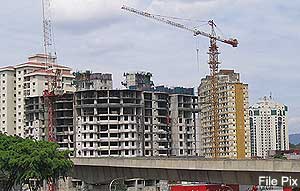 The American crisis has been exported in varying degrees across the world, including to much of Asia and to Australia. It has been estimated that in Australia there are 10,000 home foreclosures each year, with 15,000-20,000 mortgage paying households being in severe financial stress.
It has also been reported that the old Henderson Poverty Line is being used by lending institutions to determine if people will have enough money to live, after meeting payments to a mortgage that the lending institution is about to offer. ( ABC Four Corners , March 31, 2008) This is sub-prime lending at its American worst.
ASX chief executive Robert Elstone said the world is facing “the worst financial crisis since the Great Depression”.
He blames three factors that make a lethal combination of forces causing the crisis ( The Australian , April 12-13, 2008):
• a drift in US fiscal and monetary responsibility, care of the ‘war on terror’
• a decade of easy credit (leading on to the sub-prime mess)
• a failure of intermediation by several global investment banks
Similar gloomy predictions for the world economy have come out of the International Monetary Fund (IMF) in recent months. In its World Economic Output Report released last month, it notes that annual growth in the US economy is barely 0.5 percent, with only a tiny rise to 0.6 percent expected next year.
The report warns that the current credit crisis (sub-prime) may “mutate into a full-blown credit crunch” with massive losses over US$1 trillion worldwide ( ABC News , April 10, 2008).
Growth in the world economy, says the IMF, may well fall below 3 percent this year and next. The fact that there is growth at all in world production is almost entirely attributable to the developing nations (previously called the Third World).
Since 2000, 65 percent of the world's growth has come from these nations. China alone has generated 22 percent of global growth, compared with 13 percent in the US. It is an extraordinary situation for the one-time economic powerhouse of the world.
 The urgency of the situation has been emphasised by President George W Bush pushing through Congress an economic stimulus package worth A$169 billion. He noted, though, that in the long run Americans could be confident about the economic growth.
At the start of the year, he told Americans that they “can be confident about our economic growth...in the long run it is resilient, it is strong”. ( ABC News , Jan 29, 2008)
Conflicting assessments
There are conflicting assessments of how the growing world economic crisis will affect Australia. The IMF report says “the growth momentum in Australia remained robust and the turbulence in global financial markets had so far only had a limited impact on its economy”.
It predicts that Australian GDP growth will decrease from 3.9 percent in 2007 to 3.2 percent this year and 3.1 percent next year. ( The Age , April 9, 2008)
Australian Treasurer Wayne Swan has been the principal government spokesman on the gathering economic storm clouds. Early in the year he expressed optimism about the strength of the Australian economy and its capacity to remain strong, despite the huge financial dramas across North America and Western Europe.
The economy is still in very good shape, he said. He did acknowledge, though, that “Australia would not be immune from a slowdown in the US that will have second- and third-round effects (here)”. ( ABC 7.30 Report , Jan 14, 2008)
In mid-April, Swan represented Australia at a meeting of the IMF held in New York. After taking in the views of many participating countries, he seemed a good deal more worried about the impact of the global economic situation on Australia.
Things “had moved considerably since Labor was elected last November”, he said. The almost self-satisfied notion, evident over the past few years, that the “resources boom” would go on forever had also become a bit shaky.
Swan noted that economic growth in the two boom buyers of the resources - China and India - was indeed slowing and may impact upon Australia. ( Daily Telegraph, April 14, 2008).
Inescapable relationships
The inter-relationships between all national economies are again emphasised. No single country, big or small, can build an impenetrable economic wall around itself.
By way of prominent example, if the US and other (so-called) developed countries continue into sharp recession, their present massive demand for low-cost Chinese manufactured goods will slow.
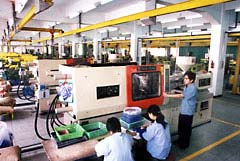 Despite the Chinese government's commitment to developing greater home consumption for its currently exported output, that factor is unlikely to quickly offset loss from overseas sales.
A slowdown in the big Chinese and Indian economies will undoubtedly bring reduction in purchases of Australian resource ores, especially coal, iron ore and alumina. The “resources boom” as protector of the Australian economy becomes something of nonsense.
The difficulties for all countries are compounded by the growing impact of an emerging world food crisis and ongoing climate change. An ever increasing human population is putting huge pressure on grain-based foods in particular. Ongoing drought in big grain producer countries, such as Australia, is adding to the shortages.
The cost of controlling human damage to the earth's natural systems is only beginning to be estimated. The need to find alternatives to coal-fired electricity generation is a key requirement to contain negative climate change. In an additional way, the “everlasting” Australian resources boom may well be hit again.
Directions for Australia
The way out of this very tight economic and environmental corner will not be simple for all countries, including Australia. Much work needs to done to re-direct the Australian economy on a long-term basis.
Australia's prosperity could never expect to rest forever on a mineral resources “export boom”, any more than it was once said “to ride on the sheep's back”.
New ideas must be researched and applied to build up new industries and technologies, based largely on existing strengths. As a world food crisis looms, Australia may be able to contribute a lot more in applying its agricultural knowledge and practical experience to increasing world food production, while also helping make it efficient and less wasteful of the natural environment.
Likewise in the development of new technologies for cleaner coal, less damaging mineral smelting, restoration of damaged watercourses, tapping of solar energy and other fields, Australia is well-placed to build new industries based on these needs.
These fields of enterprise not only could make an important contribution to the world, but also build an ongoing base for Australian prosperity.
Likewise in the service industries side, there is much more Australia has to offer the world, especially in the fields of health and education. There is extensive expertise available in its medical and public health fields.
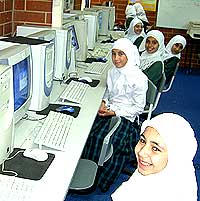 Australia has already built a quite pretty large market through opening its education systems to tens of thousands of young people from Southeast Asia and East Asia, the Indian sub-continent and elsewhere.
This service industry could be further developed, but only after the cleaning up of the exploitative fees and even corrupt academic practices in some universities (for example, ‘awarding’ degrees to overseas students who hand over the money).
There is little doubt that economic times ahead will be turbulent. There are limited things that individuals can do to reverse the impact.
However it is important to keep up with the situation, avoid use of high interest credit and try to ensure that investments and stock buying are not placed in one basket.
RICHARD WONG is an executive member of the Chinese Professional and Business Association and a council member of the Federation of Chinese Associations in Victoria, Australia.


