




Get going on parliamentary reform
Since the 12th general election was concluded in March, has Parliament shown a capability to reform itself? Uppermost in the minds of many Malaysians is whether MPs would uphold professionalism, modernisation and democratisation.
What has been demonstrated instead is continued unbecoming conduct. We all would agree that MPs should ensure that their language is gender-sensitive and that their behaviour is civilised. MPs who go breach rules should be fined if they refuse to apologise.
Since the 12th general election was concluded in March, has Parliament shown a capability to reform itself? Uppermost in the minds of many Malaysians is whether MPs would uphold professionalism, modernisation and democratisation.
What has been demonstrated instead is continued unbecoming conduct. We all would agree that MPs should ensure that their language is gender-sensitive and that their behaviour is civilised. MPs who go breach rules should be fined if they refuse to apologise.
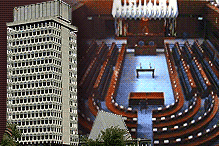 There is no code of ethics for Malaysian MPs, unlike in the UK. Although a parliamentary select committee was set up to deliver a code of ethics during the previous session, it held only one meeting - in June last year - and has not met since.
MPs have to put public interest where it belongs - at the top of their agenda. They must reinforce ethical values and most importantly, practise what they preach.
The purpose of an ethical landscape in public life should be to ensure high standards of conduct -the fact that it will not necessarily increase public trust in politicians should not detract from this purpose, nor should it be a reason to abandon attempts to improve standards of conduct. It is also true that poor standard of conduct will further reduce public trust in politicians.
Education and guidance can play a part in developing the ethical landscape. MPs should be encouraged to be pro-active and to see the regulation of standards of conduct not as a trap for the unwary, but as an important aspect of their position in public life. The aim of any system should be to foster a culture of compliance with the rules on standards and not just to punish the wrongdoer.
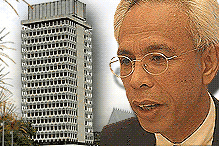 Johor Baru MP Shahrir Abdul Samad, the former head of the Barisan Nasional Backbenchers Club, believes that “if the re-introduction of integrity fails in the Parliament, it will fail elsewhere”.
To succeed, there must be a clear distinction between Parliament and political parties. The need to reform Parliament is urgent as MPs in government have failed to be detached from their party interests when in the Dewan Rakyat.
The way I see it, reform of the parliamentary system is urgent to ensure that MPs are given adequate opportunities to address issues of national importance, together with the necessary support for them to perform professionally.
Truly representing voters
As a result of the ‘political tsunami’ of March 8, recent sittings have seen a surge of interest in the proceedings.
MPs are clearly more active in the debate than ever, in part due to the bigger number of opposition members and the corresponding drop in BN frontbenchers from 91 to 68 members.
The deputy speaker has suggested an all-year long sitting, to provide more time for debate and passage of bills.
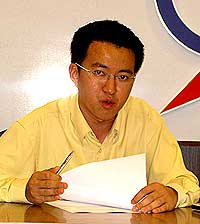 DAP Bukit Bendera MP Liew Chin Tong, who has remarked that MPs are fighting for a chance to speak, offers three suggestions for immediate changes to make Parliament more relevant and therefore more efficient:
First, he says the weekly meeting of party whips proposed by Minister in the PM’s Department Mohd Nazri Abdul Aziz should be implemented and institutionalised as soon as possible.
No mature Parliament runs its affair in a free-for- all style. Instead, the government whip negotiates with his counterpart in the opposition to set the Parliament’s agenda. The whips then arrange MPs in their respective parties to participate in debates in the most effective manner.
Second, a system of parliamentary committees is needed. Again, no mature Parliament conducts its affairs without a committee system to screen Bills and monitor ministerial performance. Experts generally agree that the real work of MPs is done within these committees.
Third, a second chamber is worth considering. To accommodate MPs’ need to address the House, the Australian and British Parliaments have created a second chamber, respectively called the Main Committee and Westminster Hall.
The second chamber is a smaller hall - chaired by deputy speakers or the speaker’s assistants - where MPs speak and have their speeches recorded in the Hansard, and have their questions answered by ministers. The only caveat is that the second chamber does not pass laws.
With weekly meetings of the whips, an effective committee system and an additional chamber in place, the Dewan Rakyat’s business will be conducted in a more efficient manner without jeopardising the MPs’ chances of representing the rakyat adequately.
In 2004, DAP Ipoh Timor MP Lim Kit Siang made these proposals for reform and modernisation of Parliament:
• ‘Live’ telecast of parliamentary proceedings
• Daily two-hour question time
• Prime Minister’s Question Time twice a week
• Opposition MP to head the Public Accounts Committee
• Some 30 specialist parliamentary select committees to be set up, with one for every ministry
• About 10 general select committees to produce annual reports on progress, trends and recommendations on national integrity, IT, women’s agenda, environment, mass media, and corruption, among other issues
• Allocation of certain days a week specifically to deal with opposition business;
• research and constituency staffing for MPs
• An Opposition deputy speaker to be appointed
• Modernisation and democratisation of Standing Orders
• Code of ethics for all MPs
• Ministers’ parliamentary code of conduct
I strongly suggest that these be implemented, beginning with amendment of the Standing Orders.
This should be accompanied by the creation of bipartisan discussion panels that also include educationists and political analysts, among other stakeholders. These would provide a platform to explore related issues and place them on the table for a decision.
KANESHWARARAN GOVINDASAMY works in a private firm Kuala Lumpur and is currently pursuing his Masters in Business Administration. He is a former member of MIC.


Are you sure you want to delete this comment?
This action cannot be undone.