




Nights of terror in Mumbai
There were horrendous scenes on all news screens for 60 hours. Our two kids - Bushra and Ammar - asked childish questions.
We wanted to keep them away from scenes for which we did not have much reply, but even I couldn’t take my eyes off the TV screen.
There were horrendous scenes on all news screens for 60 hours. Our two kids - Bushra and Ammar - asked childish questions.
We wanted to keep them away from scenes for which we did not have much reply, but even I couldn’t take my eyes off the TV screen.
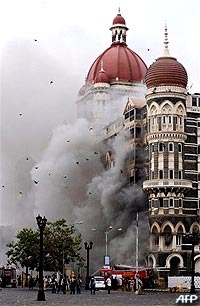 The CST station, Cama hospital and Metro cinema are just 4-5 minutes walk to the south-west of our home where the first attacks took place. The other locations - the Oberoi-Trident hotel, Nariman House and Taj Mahal Palace hotel - are within a two kilometre radius.
The attacks began at around 9.30pm on Nov 26 and ended at around 9.30 am on Nov 29, when India’s National Security Guards (NSG) regained control of all the locations in ‘Operation Black Tornado’. At least 188 people were killed and 293 were injured.
The sirens of ambulances, fire trucks and police vehicles were so frequently heard below in the Crawford market circle, that it sounded as if the doomsday had arrived. Those nights and painful memories of 26/11 will never be forgotten by many.
All the horror action flicks produced by Hollywood and Bollywood paled in comparison to the real action in Mumbai, which was more terrifying to us that what we saw of the 9/11 terror attacks in the US.
It was continuous panic for long three nights and two days. People across India were glued to TV screens, screaming over new developments that unfolded through ‘live and exclusive’ coverage. As events unfolded, shock and horror were interwoven with sorrow and sympathy.
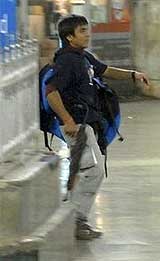 But even before the bloody saga could end, sections of the media were busy revealing the complete bio-data and of the attackers and other logistical details - their nationality, the weapons they carried, the phones they used and even the commands they were getting from across the border!
At the time, most TV channels were racing for ‘hot’ stories as if it was a feast for channel marketing. They gave in detail the number of terrorists in each building, reporting that the attackers were looking for citizens from the US, Britain and Israel.
One channel - which claims to be ‘the best’- reported that there were at least 17 terrorists in one wing of the Taj and constantly repeated ‘we are the first to give you this breaking story’.
Another aired interviews with two terrorists holed up in a building surrounded by commandos, but no one wondered why their phone hadn't been jammed. A lot of other questions came to mind.
Why did the terrorists call this particular TV channel twice a day? If they preferred publicity for their notorious brand of ‘heroism’ through a ‘live’ telecast, why were they so selective?
And why did one of our TV stations become a source for publicity propaganda through which they justified their crime?
Surprisingly few people have been interested in discussing these in the post-attack public debates.
Inflammatory remarks aired
Most of the information given by the ‘terrorists’ in the ‘live’ interviews was proven wrong when the operation ended in the building the next day.
The ‘interviews’ could have misled the NSG commandos, causing either over-estimation or under-estimation of the attacking force, and requiring more time and energy to determine the number of the terrorists in a particular building before a final assault could be launched.
The coverage also carried a very inflammatory sermon by the terrorists, justifying their atrocious crime against Indian nationhood.
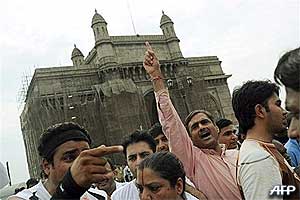 They claimed to be Indian nationals, fighting on behalf of Muslim Indians and in revenge for the carnage in Gujarat previously. This gave rise to high possibility of a communal backlash in an already volatile atmosphere.
Thank goodness, ordinary Indians have shown better sense than some TV journalists. There seems greater togetherness than before Nov 26, and they now openly speak for one another.
I don’t want buy into any conspiracy theory about the killing of Mumbai ATS chief Hemant Karkare and other two trusted senior police officers, but a question keeps going through my mind: why can’t the ‘terrorists be just ‘contract killers’?
May be it’s just not the right question. But in the world we live in, anything is possible.
M BURHANUDDIN QASMI is editor of Eastern Crescent and director of the Mumbai based Markazul Ma'arif Education and Research Centre.


