




Straws in the wind
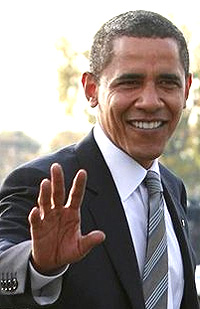
President-elect Barack Obama faces a huge task to save what he can of the United States economy and start economic restructuring.
Unemployment in the US is 8.9 million, currently going up by half a million a month. Two million people could lose their homes.
President-elect Barack Obama faces a huge task to save what he can of the United States economy and start economic restructuring.
Unemployment in the US is 8.9 million, currently going up by half a million a month. Two million people could lose their homes.
The mortgage crisis for malls and hotels is just starting. For Wall Street, Main Street, the factory floor, exports and trade there is no going back to business as usual.
Post-Bush America will reflect new demographic, economic and social realities at home and a new balance of global economic power, reverting to a multi-polar world instead of a temporary US hegemony.
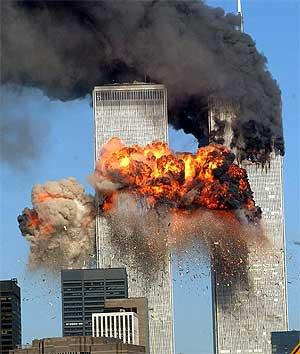 Sept 11 was a turning-point, but it led to a diversion, an historical cul-de-sac, a wasted decade leading the west to an unconvincing outcome in the Global War On Terror, short of victory, and not far short of defeat.
However as Jusuf Wanandi pointed out in the Jakarta Post yesterday, "When the United States is under siege and has lost some soft power and ability to lead" then the views of China and East Asia "in general have been farsighted and statesmanlike enough not to gloat or be arrogant regarding the mistakes of the United States".
Muhammad Lutfi, Chairman of the Indonesian Investment Co-ordinating Board underlined the global shift in economic power when he noted recently that the Gulf States and Middle Eastern sovereign and private funds had available US$1.6 trillion (by August 2008) to finance trade and investment.
Some of this is already reaching Indonesia according to Alwi Shihab, the Indonesian government’s special envoy to the Middle East.
In 2009, Indonesia will mobilise close to US$25 billion for investment in oil, gas, energy and mining from China, the Middle East, Asean states, the US, Japan and Europe, plus about US$16 billion of inward investment for non oil and gas sectors (infrastructure, telecom, tourism). Indonesia and South Asia are on the move, with China and the Gulf, along with the rest of the BRICs (Brazil, India, Russia).
At the end of the Bush era, the US is perceived as economically and militarily weaker. The balance of power in world institutions will adjust to the new economic power of the G30 states. Military solutions, after Iraq, given doubts in Afghanistan, are unconvincing.
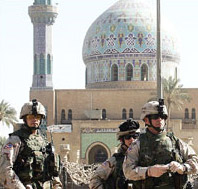 Professor Lawrence Freedman, professor of war studies at Kings College, London recently said, "There were two important developments over the past year. One, Iraq got a bit easier and two Afghanistan a bit harder".
The Americans and the British are now leaving Iraq. Both say they will move more troops to Afghanistan, but to do what?
The US and the UK are fresh from near defeat in Iraq, militarily overstretched, reeling under financial collapses that are not yet over, facing deepening economic recessions and rising unemployment and with public opinion utterly unconvinced as to viable military strategies in these new foreign wars. These are not the springboards for victory in Afghanistan.
Tired of conflict
The world leadership, not just the west, are failing to make headway against security collapses in Sudan's Darfur, in the Democratic Republic of the Congo, in Somalia, in the islands of insecurity across Central Asia and the Russian border, in southern Thailand, in the southern Philippines.
Just when we need strong UN intervention forces with multilateral support, but only in the context of strong political strategies, we are instead economically and militarily nearly flat on our backs and incapable of the political leadership that is needed.
The unresolved Palestine-Israel dispute is almost sidelined by all these developments and by the quiet shadow of Kurdistan which looms large over Syria, Iraq, Iran and Turkey.
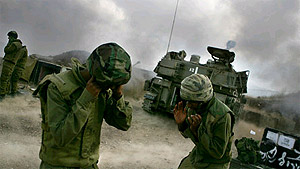 Most Arabs and most Muslims, like Western public opinion, are tired of all these conflicts, want to focus on economic development and on building their houses, schooling their children and on buying their motorbikes, cars, mobile phones and hand-held devices, browsing the Internet, visiting shopping malls and planning holidays.
People are walking away, mentally and physically, from extremism, conflicts and politics and many will walk away from religion too if it becomes too tainted with these things. They won't argue, they will just drift away.
Most of the rest of the world is getting on with life and increasingly fed up with stories of Muslim fundamentalists, warring tribes and the underlay of rebel movements that seem increasingly intertwined with local gangsters, and warlords, all of which seem to belong more to medieval history books, rather than the 21st century.
Muslim fundamentalism cannot be defeated by military means. The struggle for the hearts and minds of the Muslim world cannot be fought by proxy by Western armies.
The militarisation and westernisation of the battle for Muslim modernisation can only result in defeat for the west, undermining the rising political power of Muslim modernisers in the emerging middle and working classes of North Africa, the Middle East and Asia.
These growing social groups, with their companies and small- and medium- enterprises are the ones leading the modernisation of the Muslim world. They are the only ones who can win the battle for progress.
It is the coincidence of underdevelopment with economic and social backwardness and poor education that gives the greatest advantage to fundamentalist extremists, gangsters and warlords, but the west must desist from tactics that make such groups stronger.
 It is sadly true that so far this battle has brought Islam itself into disrepute, arousing Islamophobia in the west and globally, and a wave of prejudice against Muslims
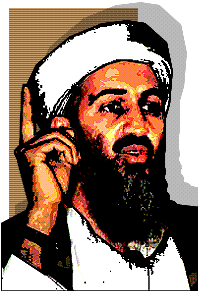
In the end, Osama Bin Laden and the fundamentalists cannot hijack Islam. They do not represent the majority. By the same token, the west cannot hijack the saving of Islam. That is a task for Muslims.
Muslim leaders, their global position reinforced economically and politically by the emergence of a more equitable New Economic Order, now have to use their increased economic leverage to persuade the west to change track.
Fighting the war on want
The end of the Bush presidency and the arrival of President Obama provide the opportunity to do this. But it is an opportunity that could easily be lost if the US is overwhelmed by domestic pressures and if the new US foreign policy team fails to break the Bush mould.
The war in Afghanistan can easily be lost there, but it cannot be won in Afghanistan alone.
 The focus is moving from the Middle East to Asia. The terrorist target is moving more squarely against the one thing that can marginalise and defeat them – economic success. The Mumbai attacks emphasised this, as well as trying to drive a wedge between India and Pakistan.
Despite many unresolved contradictions, fundamentalist extremists are being squeezed out of the Middle East where most countries have tightened security and are increasingly battened down against them.
Once the main US and British forces leave Iraq, the foreign extremists still there lose their rationale. Their time in Iraq is running out.
Pakistan is now the weakest link in the Muslim chain.
It is the base for al-Qaeda and a secure haven for the Afghan Taliban. It is developing an insurgency of its own led by a coalition of the Pakistan Taliban, tribal groups and political elements opposed to the new government. This insurgency and terrorism are spilling over into
India. There is the risk it will spread into Central and Southern Asia.
Moreover Pakistan has an economic crisis and had to bring in the IMF (one of the few Muslim countries in this position). Pakistan has a weak democracy and a new government trying to establish its leadership.
A large scale internal guerilla war will not solve these problems. It would make them worse.
The wind of change is blowing throughout the Muslim world, especially in the North Africa, the Middle East and Asia.
A wave of petrol dollar liquidity has bolstered the Gulf States, strengthening new economic and investment links with the Middle East countries, Asia and Europe.
But those who politically manipulate Islam and this multiplicity of separatist, criminal and tribal interests seem to understand what the wind of change means for them. It means loss of power and money. It means the end. They must try to stop or delay the new economic developments.
 However, those who use Islamic fundamentalism as a mercantile trade label, and who make coalitions with fundamentalists when it suits them, will have no interest to do so if they can no longer hold onto local power or make money that way.
So the development strategy deployed must focus on breaking these links and creating alternative opportunities for their followers, so that the sons and daughters of gangsters and warlords will have other options and help to supplant their parents. The fundamentalist attempt at theocratic revolution must be defeated by their children. Better prospects. More carrots, less sticks.
The coming battle for the hearts and minds of Muslims and the economic and political future of Muslim countries will be lost or won in Pakistan. Neither the Muslim world nor the West can afford that this battle is lost in a state with a pivotal geo-political position and possessing nuclear weapons.
Muslim countries and the west should focus hard on how to support and help Pakistan before it is too late.
The majority of Pakistanis have already voted for change. Now they need the material means and support to achieve it, and help to strengthen their leadership, capacity and civil society.
That's how you win a modern war. By fighting the war on want, security and policing issues must become subordinated to political and economic strategy, instead of the reverse.
DR TERRY LACEY is a development economist who writes from Jakarta, Indonesia, on modernisation in the Muslim world, investment and trade relations with the EU and Islamic banking.


