




The problems with Obama (Pt 1)
Barack Obama is now the US president. You can almost hear pundits and journalists all over the world popping the proverbial bottle of champagne.
Barack Obama is now the US president. You can almost hear pundits and journalists all over the world popping the proverbial bottle of champagne.
Too much consensus. Too little skepticism. I am not so sure Obama's platform is good for the world. But it's too late to warn this: Be careful what you wish for.
Every opinion maker in the world seems to have rooted for Obama, for his triumph over racial divide and slogan of "change." But even as the candidate magnanimously suppressed the race issue, Obama's grassroots campaigners and guilt-hawking media appeared happy to exploit it.
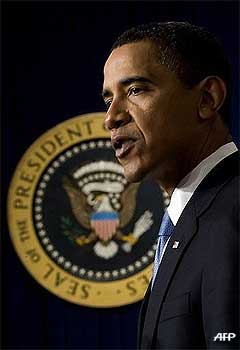 Asian pundits thrill ourselves on the race story with increasing abandon, revealing just how much more racist we actually are compared to the American voters. The conservatives in Japan must be in shock, considering it is Japan's xenophobic rejection of immigration of labour that has forced its perennial exodus of capital in search of foreign labour. This wandering Yen has sloshed around and destabilized world finance for decades, most recently via the subprime mortgage bubble. Yes, humanity and liberty issues do affect our pocket books in roundabout and mysterious ways.
Two months after election, still very few pundits are looking at President Obama and the Democratic Party's protectionist policies, the campaign debt he owes to the left and labor unions, and the substantial loss of political checks and balances in the superpower we call the US.
Even fewer see the linkage between Obama's protectionist bend and the endless financial tsunami sweeping the world. Is it coincidental that the tsunami started upon Obama's ascent in late 2007, and accelerated just as World Trade Organisation negotiation failed in July 2008?
This is going to be a very unpopular view that may cost me a few friends. But please do consider the other side of the story, as I list five problems about the Obama presidency. Much of the problem, however, lies with our left-leaning intellectuals, snug in the free world but incapable of appreciating its foundation in the free market.
Change does not equal reform
The first problem with Obama is that change is not the same as reform. Obama's promises of change are vague, unlike the ‘reformasi’ demands in Indonesia and Malaysia to abolish specific oppressive laws, or the EU merger to liberate people by harmonising commerce. Obama hasn't defined what "change" is, beyond personifying the concept and rehashing favorite Democratic policies.
His Democratic Party does not want reform. For all its complexity, our financial tsunami got out of hand when substandard housing loans ballooned since 2004. Why? Because Freddie Mac and Fannie Mae overreached. How? The Democratic Party took over the US Congress in 2006 and egged on these semi-government mortgage agencies to lend more - to those who could NOT afford the loans. Why else is it called "substandard" or "subprime?"
No pundits see the irony that Democratic Party stalwarts would rather send poor families - who couldn't yet afford regular housing loans - into fueling a late-stage, high-price, property bubble. The Democrats do this in the name of spreading wealth. Republicans share the blame for not reforming these semi-governed agencies earlier.
The pundits have it upside down: It is precisely government butting into private finances (by over-sizing Freddie Mac and Fannie Mae) that causes our financial troubles today. Liberal capitalism did not cause the problem.
If Obama's "change" means more government interference and protectionism, then today's collapsed financial foam will likely coagulate into solid depression at the real economy level, a la 1930's.
The market has been prescient as usual. Despite a political mania for Obama and even some prominent financier fans for Obama, market participants in aggregate have betrayed their true fears. Since late 2007, markets went through year-long crashes that accelerated in opposite direction to Obama's rise in the Democratic primaries, poll, debates, and election outlook.
Hatred vs Popularity
The second problem about Obama is really with the opinion makers: World pundits seem to be motivated more by a hatred for former President Bush and the Iraq War - and by association Republican candidate McCain - than by a close examination of Obama's package. Hatred is not a good basis for judgment.
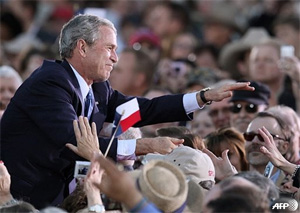 In the 20-20 vision of hindsight, the Iraq War looks like a mistake, triggered by faulty intelligence about weapons of mass destruction (WMD). But the mostly left-leaning media who have forged a culture of hatred for the Bush administration consistently underplayed other valid premises to the war.
These premises are worth reviewing to show the willful and selective forgetfulness of our opinion makers: There were Saddam's proven history of using chemical weapons against Iranians and Kurds, and his cat-and-mouse game to fake and hype his WMD readiness. There were his willingness to kill hundreds of thousands at home and action to invade a country.
There had been 19 UN resolutions on Iraq since 1980s, during Saddam's reign, mostly against Iraq's aggression and use of chemical weapons. These included four resolutions since the end of the first Gulf War, leading up to the unanimously-approved Resolution 1441 warning of the "final opportunity to comply with its disarmament obligations" in 2002. (The US-led coalition, however, failed to get a "final, final" authorisation due to the opposition of France and Russia who were cozy to Saddam and arms trades.) The military force sent into Iraq in March 2003 was multilateral. US voters deemed it rational to re-elect Bush with a greater margin in late 2004.
Any disgust with President Bush needs to be balanced with these premises. To hate him so much as to uncritically transfer that hatred to McCain raises questions about the integrity or rationality of the world's pundits, intellectuals, and media led by their favorite source of quotations - the New York Times .
Opinion makers outside the US seem to have a great inclination for double standards, selective perception, hypocrisy, and self-contradictions. For example, we all want the US military security umbrella, just not to contribute money and soldiers. We wanted communism to stop at Vietnam and have counted ourselves lucky not to become Cambodia, just not to have to feel grateful for the peace and prosperity fought with young American lives.
We take the soul searching in American war movies as admission of guilt and definitive proof that the Vietnam war was a wrongful war. Many world racists detest Jewish influence, yet ignore the fact that Obama relies closely on Jewish strategists (which is nothing wrong and his right to do so), apparently because the world racists hate Bush more. Honest recent elections in Iraq don't count against Saddam's winning sham elections by 100% of votes. Shoe throwing is a black mark on Bush image, but not on journalist bias and activism.
To these opinion makers, it's fine to remain silent on terrorism, when any US military transgression becomes justification to incite hatred against the "hegemony." That is fair game even if the American scandals are exposed, investigated, adjudicated, and remedied. These are, of course, civilized procedures not trusted, and not encouraged to be trusted by governments, in Asia. The US courts hold its own country to a higher standard, but the court of world opinions seems to absolve all standards for the ladies with the hidden bomb (and their handlers).
An Asia led by intellectuals exhibiting such double standards, self-contradiction, hypocrisy, and selective perception would seem a long way from autonomous growth and sustainable peace.
Conversely, wild popularity is not proof nor requirement for statesmanship or good economic helmsmanship. Truman was a highly unpopular war-time US president; Reagan was constantly reviled. Yet today they rank as some of the greatest US Presidents. Kennedy, Reagan, Clinton, Obama all spoke at Brandenburg Gate in Berlin. Guess who was booed and protested? Reagan, who stood up to the USSR and saw to the fall of Berlin Wall.
It should have been worrying that Obama is too popular outside of the US. It reminds me of bubbles – of the political kind.
Isn't it strange that nearly half of American voters (46%) voted for McCain, while it appears 100% of the world's pundits are rooting for Obama? What do Americans know that we don't? They have to live and die right where they vote. We foreign pundits are probably a bit naive in seeing Obama as the heroic icon of the era.
Wealth: spread it or grow it?
The third problem about Obama is his Democratic Party's policies. Obama and his party's policies are counter productive to growth. His tax "breaks," if implemented as promised during the campaign, would legislate a spreading of wealth, rather than encourage the creation of wealth.
We know well what has happened to all socialist policies (including Malaysia's New Economic Policy) that tried to spread rather than grow wealth. Not only did they bring economic failures, they necessitated state intervention and oppressive laws, led to government cruelty, and in the end, fascism.
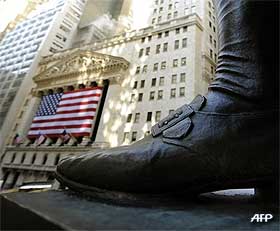 Obama's protectionist campaign stance against free trade, Nafta, and China should scare the world. It probably has - as world financial markets seeming cannot find bottoms. While mighty governments announced grandiose bail-outs of mortgage agencies, insurers, banks, home owners, and stimulus plans, the markets plunge without end.
Obama's supporters and high-profile financiers console themselves that Obama's protectionist stance is all just campaign posturing, and that he would move to the center as the president. I sincerely hope they are right. But his campaign debt to the left has piled too high, and his fundamental lack of commitment to free trade is too deeply rooted.
World trade failure is about the only development powerful enough to turn today's financial tsunami into a real, prolonged, depression. Trade failure is also the most powerful fuel for world wars. The US Smoot-Hawley tariff converted the 1930's financial crisis into full-blown, cross-Atlantic, protectionism and depression, which gave birth to fascism in Germany, Japan, and Italy, and World War II.
The pro-trade observation that "when goods don't cross borders, armies will" by 19th-century French economist Frederic Bastiat should have become the adage of our time. Instead, our intellectuals and left-leaning media who grew up in the comfort and low-cost life style of free trade advocate restricting trade freedom for the next generations.
Conversely, free trade is the most ingenious invention since "roti canai." Free trade will deliver the kind of peace that starry-eyed New Year Eve revelers and beauty pageant contestants can only wish for so romantically.
In fact, free trade has delivered. For the past 60 years, free trade has turned deadly foes (US, Germany, Japan, China) into allies, felling USSR without the launch of a nuclear missile, and raising billions of lives from abject poverty to historically unseen prosperity in Asia, South America, and Eastern Europe. What else can deliver that?
Our best hope is for President Obama to surprise us all on trade policies, and for India and Brazil to be scared by Obama and the financial tsunami into compromising on WTO negotiation.
But how can it be wrong to try to spread wealth?
See Part 2 of this article, which will be published tomorrow, about the ideological war between love and trade.
CHEAH KAH SENG considers himself a student of the Austrian School of libertarian economics. An investment analyst who has watched financial bubbles build and burst since 1987, he feels contrarian opinions can be upsetting but still valuable.


