




Change is coming to Malaysia
Roger Fisk was hired as the National Director of Special Events in what would become a history- making finance department. Here he managed a nationwide grassroots fund-raising team that revolutionised modern political fund-raising, totaling US$100 million in 11 months while building the largest donor base in American history.
Fisk supervised teams in 32 states with direct managerial responsibility for event and advertising budgets, site selection, appropriation of staff resources, cultivation of targeted free media, coordination of web outreach, and collaboration with local, state and national elected officials.
Roger Fisk was hired as the National Director of Special Events in what would become a history-making finance department. Here he managed a nationwide grassroots fund-raising team that revolutionised modern political fund-raising, totaling US$100 million in 11 months while building the largest donor base in American history.
Fisk supervised teams in 32 states with direct managerial responsibility for event and advertising budgets, site selection, appropriation of staff resources, cultivation of targeted free media, coordination of web outreach, and collaboration with local, state and national elected officials.
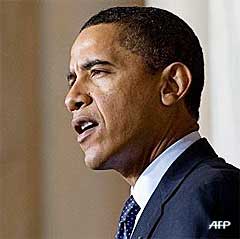 He also served as principal liaison with US Secret Service and local law enforcement, and was directly responsible for coordinating and managing the media's coverage of over 150 events across the country.
In the fall of 2007, Roger was asked to focus on a critical early state, becoming the Director of Scheduling and Advance in New Hampshire where Senator Obama was behind significantly. Here he managed a full-time staff and was in charge of creating, promoting and implementing the NH trips of Senator Obama. He also oversaw the schedule and staffing of trips with Mrs Obama and together the whole NH Team closed a 20 percent deficit to 2 points in two months.
Fisk coordinated trips for surrogates such as Senator Ted Kennedy and rap impresario Russell Simmons while coordinating Senator Obama's appearances on ‘Larry King Live’, ‘60 Minutes’, ‘Good Morning, America’ and ‘The Daily Show’.
Roger concluded his service to the campaign by returning home to Massachusetts as State Director where he hired and managed a full time staff with oversight of all political relationships, press activity, field activity and exporting of thousands of volunteers a week to New Hampshire and other battleground states.
Question: When you first started working on Obama's campaign at its infancy, did you ever think that he will be the 44 th president of the United States?
Fisk: I did believe he would be president. To work this hard for anyone it must be based on a two-tiered belief; first; that they can win and second; that they can do the job. I was convinced of both very early on.
What was the most crucial factor that gave Obama the edge?
We never had to wonder what our message was as Senator Obama always knew exactly what he wanted to say and where he wanted to take the country. We also had no history or past so we knew we had to work and earn anything we would get. Plus there were the unprecedented numbers of volunteers, old and young.
Fund raising was key, how did this campaign manage to gain so much of support?
Throughout 2007, we spent a lot of time doing open-press low dollar events that basically looked like rallies. This was without precedent in American politics; the idea that you could do rallies that generated thousands of dollars of free press while having enough people attend and donate small amounts of money that the rally not only pays for itself but actually generates a profit.
Add to that our intense data collection at all our events - which was a huge priority to make sure we could follow-up with anyone who came to an Obama event, and our single visit low-dollar donor very quickly became a supporter who we could tap once a month with little more than an e-mail. That is the foundation of our low dollar donor base
Many people who observed the campaign highlighted Obama's oratory strength as the number one winning factor, what are your thoughts on this?
Certainly his speech at the Democratic National Convention in 2004 launched his national profile, but without a plan and an organisation the meaning of a good speech is basically over when the speech is over. A good speech opens the door-a good organisation takes that opportunity and turns it into more opportunities.
Obama was considered very tech-savvy, with his campaign team going digital and working on ground breaking new media avenues, how did this come about?
Critical to understanding the entire campaign is the faith the campaign had in the American people. Our on-line tools were open to everyone and through mybarackobama.com people were able to invent their own organizing tools, be it a holiday weekend barbeque where people came to a house party and gave US$10 dollars to the Obama campaign on through artists doing open gallery shows with the proceeds helping the campaign. We were intent on having everyone ‘be the campaign’.
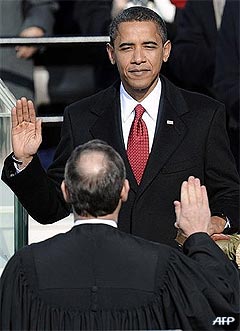 Hope and 'Change We can Believe In' are two of Obama's campaign slogans. In your view what did it mean to the people throughout his campaign?
Hope meant the first time in a long time that people could be for a candidate rather than choosing someone who signified what they were against . This is critical. ‘Change We Can Believe In’ signified the strength of the ground movement - especially once we won Iowa, meaning that not only was the campaign idea-driven but it had traction on the ground as well.
How big was the team working on Obama's presidential campaign? Tell us about some endearing personal moments you've shared with President Obama.
When I joined the campaign the people travelling the country could be counted on both hands. In the end there were over 2,500 employees. I was with Senator Obama in some very special moments. I saw him with the families of soldiers who had died in Iraq and watched as he comforted them and listened to their stories.
I was with him when we did a surprise appearance on ‘Saturday Night Live’ and we each laughed to ourselves about how much fun it was to do something like that in secrecy.
Barack Obama is now a 'brand', a 'brand' synonymous to Change and probably a New World Order. How much of Change is Obama going to bring to Americans and the World?
He clearly spoke about changing our role in the world and already - by appointing special envoys to the Middle East and other areas, he is following through on that. How much change is brought to the world will depend on the working relationships with other countries and the success of their collaboration on global issues.
How often did Obama meet his campaign team and what were the key things discussed during these meetings?
The Chicago headquarters had staff meetings weekly if not daily, but most of us were spread across the country. While travelling, the Senator would conduct rolling conversations with those of us on senior staff about how that state was going, how the other candidates were doing and where their events were, how well attended, etc. We would speak many times throughout a day of events.
Obama's chief speech-writer, Jon Favreau was 26 years old when he was writing those inspirational speeches for President Barrack Obama. How did this come about?
They met during the 2004 convention when Jon worked for John Kerry, whom I also worked for at the time. They struck up a personal relationship and the trust form that became the foundation of their work together now.
President Obama is viewed as the new voice for the young, and his story and speeches are currently being used to motivate kids in schools. He is probably one of very few individuals who is able to positively impact a young mind. Why?
I think people see him as a product of the country rather than a product of Washington, and that is key to people's ability to relate to him. He can speak directly about having kids while still paying student loans. That sounds simple but it puts him on equal footing with millions of Americans who struggle with those same responsibilities.
In a larger tonal sense, he is the first post-Baby Boomer candidate, so he was liberated from much of the social baggage from the 1960's that defined most of the previous presidential races for 25 years (where you were when you were young, did you sign up to serve, were you drafted, stands on social issues of 1960's).
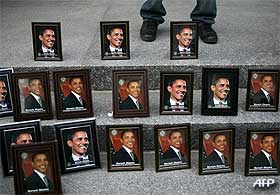 All these things used to dominate presidential campaigns and Senator Obama was the first truly viable candidate that was a child during those times rather than being a young adult expected to be defined by that era.
In your view, how will President Obama's economic plan impact the current situation?
Ultimately, the economy is based on confidence so having an engaged president who embraces these challenges will probably be the most important component to re-gaining market confidence. In the short term, the stabilisation efforts should make this period as short as possible.
Having spent 22 months with the now president of the United States, in your view what are the attributes of an effective leader?
He can speak clearly and honestly to the American people. He can use his life experience as a valuable lens through which he can empathise with Americans of all backgrounds as well as people around the world. He also is willing to meet and listen to people with whom he does not agree, so that will open up a whole new dialogue with the world.
What are the key branding and media values you learnt on the Obama for America campaign?
Be open. Tell the truth. Trust people. Work as hard as you can. It is really that simple.
HARMANDAR SINGH is regional CEO of Sledgehammer Communications (M) Sdn Bhd.


