


/file/publisher-c1a3f893382d2b2f8a9aa22a654d9c97/2025/09/9136b819e05e2e9f231a6b30b00dab04.jpg)

e-Invoicing for Malaysian Retailers: Managing High-Volume, Low-Value Transactions
Malaysia is implementing a nationwide e-invoicing system, known as MyInvois, which will significantly transform how businesses document and report their transactions.
This transition presents challenges and opportunities for retailers dealing with high volumes of low-value transactions.
This guide provides practical strategies for complying with Malaysia's e-Invoice requirements while minimising operational disruption.
Understanding Malaysia's e-Invoice Requirements
The e-Invoice implementation in Malaysia follows a phased approach based on annual revenue:
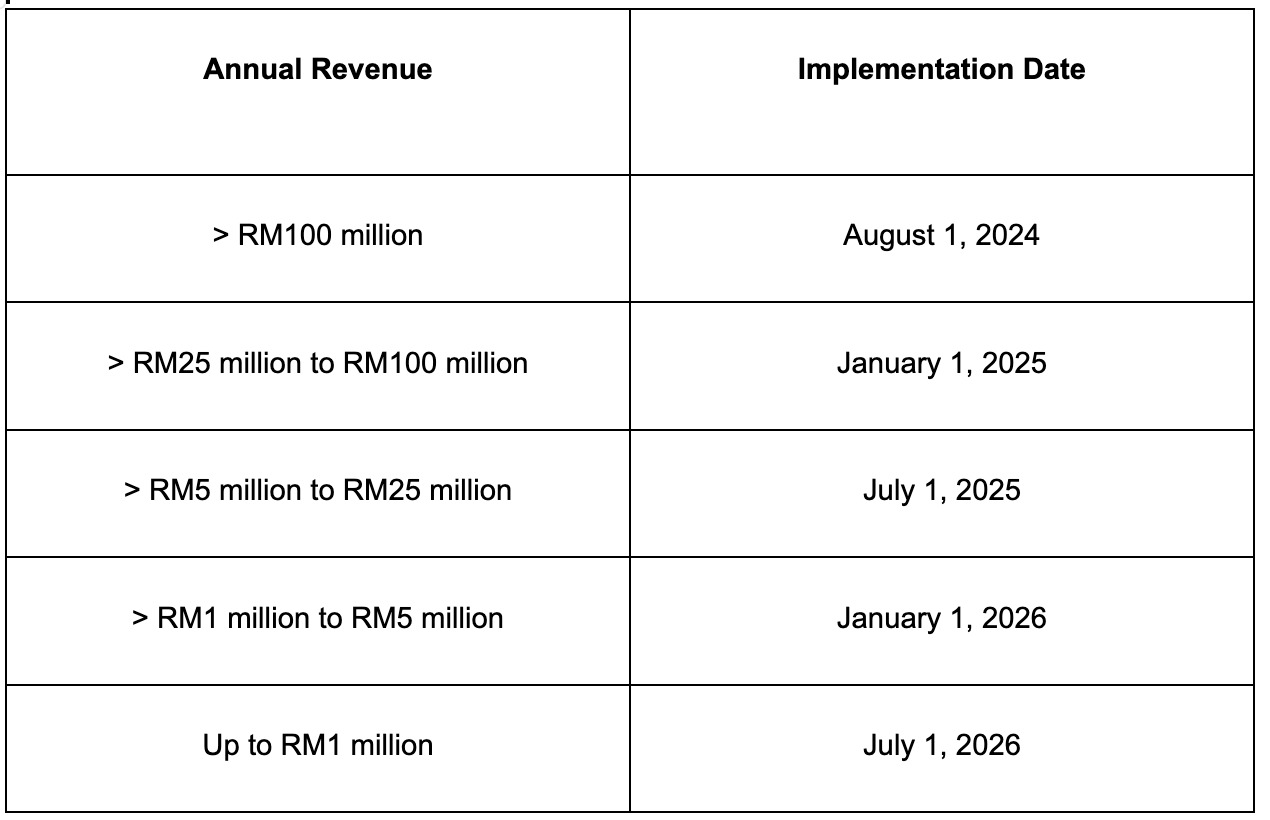
Businesses with an annual revenue of below RM500,000 are generally temporarily exempt.
Key Requirements for Retailers
1. Individual vs. Consolidated e-Invoices:
When customers request an e-Invoice at the point of sale, retailers must collect the required customer details and issue an individual e-Invoice.
For transactions where customers don't request e-Invoices, retailers can submit consolidated e-Invoices to LHDN monthly (within 7 days after month-end).
2. System Requirements:
Maximum size of 5MB per submission
Maximum of 100 e-Invoices per submission
Maximum size of 300KB per e-Invoice
3. Submission Methods:
MyInvois Portal (web-based)
API integration with existing POS/ERP systems
Practical Strategies for Retail Implementation
1. Assess Your Transaction Volume and Pattern
Before implementing any solution, analyse your:
Average daily transaction count
Peak period transaction volumes
Percentage of customers likely to request e-Invoices
Current receipt numbering system
2. Choose the Right Submission Approach
For Small Retailers (< 100 transactions daily)
The MyInvois Portal may be sufficient
Use the batch upload functionality for consolidated e-Invoices
Create individual e-Invoices on demand when customers request them
For Medium to Large Retailers
API integration with your POS system is recommended
Consider working with technology providers who offer ready solutions
Ensure your POS system can collect customer details efficiently when needed
3. Managing Consolidated e-Invoices
For transactions where customers don't request e-Invoices (typically the majority in retail):
Organise Your Receipt Data:
LHDN allows three methods for consolidated e-Invoices:
Present each receipt as a separate line item
List receipts in continuous receipt number chains
Submit by branch/location using either of the above methods
Develop a Month-End Process:
Extract relevant receipt data from your POS system
Format according to e-Invoice requirements
Submit within 7 days after the month-end
Split into multiple submissions if exceeding size limits
4. Managing Customer Requests for e-Invoices
When customers request e-Invoices:
a) At Point of Sale:
Collect mandatory customer details:
- Name
- Address
- Contact number
- Either TIN or MyKad/MyTentera number (for Malaysian individuals)
- Either TIN or TIN with passport/MyPR/MyKAS number (for non-Malaysian individuals)
- Submit an e-Invoice for validation
- Share a validated e-Invoice with the customer
b) After Transaction (but within the same month):Implement a system for customers to request e-Invoices after purchase
Options include: Web portal, Mobile app, Customer service counter.
The process must verify purchase details and collect required customer information
5. Technology Solutions to Consider
POS System Upgrades:
Work with your current POS provider to add e-Invoice functionality
Ensure integration with LHDN's API specifications
Add fields to capture customer details when needed
POS systems such as AutoCount POS 4.0 come with built-in e-Invoice features, allowing users to effortlessly submit consolidated e-Invoices to LHDN .
Middleware Solutions:
Consider specialised e-Invoice middleware that sits between your POS and LHDN.
Can handle receipt data aggregation and conversion to required formats
Manages submission scheduling and error handling
Customer-Facing Options:
Self-service terminals for e-Invoice requests
QR codes on receipts linking to an e-Invoice request
Mobile app functionality for registered customers
Implementation Checklist
✅ Determine your implementation deadline based on annual revenue
✅ Map your current receipt/invoice processes
✅ Choose between MyInvois Portal or API integration
✅ Train staff on collecting customer information when e-Invoices are requested
✅ Develop processes for consolidated e-Invoice preparation and submission
✅ Implement customer-facing solutions for post-purchase e-Invoice requests
✅ Test your solution before the mandatory implementation date
✅ Prepare for record-keeping of both e-Invoices and traditional receipts during the transition
Common Challenges and Solutions
Challenge 1: Customer Wait Times for e-Invoice Requests
Solution: Implement a phased capture approach where basic transaction details are processed first, allowing the customer to leave while detailed information is processed later.
Challenge 2: High Volume During Peak Periods
Solution: Consider a hybrid approach – collect customer information during peak times but process e-Invoice submissions during quieter periods (still within the same day).
Challenge 3: Multiple Store Locations
Solution: Each store can manage its own consolidated e-Invoices or implement a centralised system with branch identification.
Challenge 4: System Integration Costs
Solution: For immediate compliance, start with the MyInvois Portal while planning a phased integration with your POS/ERP systems.
The transition to e-invoicing represents a significant change for Malaysian retailers, but with proper planning and implementation strategies, businesses can minimise disruption while gaining benefits from increased digitalisation.
By understanding the specific requirements and leveraging appropriate technology solutions, retailers can establish efficient processes for managing both individual and consolidated e-Invoices.
For the latest information and updates, retailers should regularly consult LHDN's official resources and consider working with tax professionals and technology providers specialising in e-Invoice implementation.
About the Author
Mr. Chin Chee Seng is the Independent Non-Executive Director of AutoCount and the Founder of CCS Group.
This e-Invoice News series is a collaboration with AutoCount.


