




Time to recognise M'sian heritage buildings in UK
There are buildings where Tunku Abdul Rahman, the country’s first prime minister. had lodged at in 1919, the 1920s and the 1940s when he was in England to study at Cambridge and in London. I discovered the three buildings while doing a documentary recently.
The first building is called The Old Rectory in Little Stukeley in
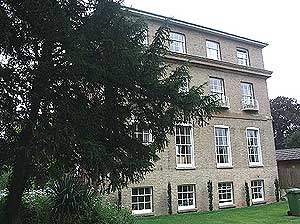 Combs, one hour from Cambridge where Tunku had first come to England in 1919 at the age of 16 to receive tutorship from a priest. It was near a church which is now no more there. And not so far away from Little Stukeley is a race course, so now everybody knows where Tunku might have acquired his passion for horses and horse-racing from.
And I was told they also rented rooms to students from abroad till after the 1940s, although no one in Little Stukeley would remember Tunku. The new owner of the four-storey building just bought the property three years ago and set out to refurnish it, after managing to buy it. The local authorities had wanted to condemn it for demolition.
And Carmilla Payne was kind enough to allow us to film the building from the outside but forbid us from entering the house because her husband had not returned from work. I was still delighted to be able to see The Old Rectory intact like what it was when Tunku was lodging there, and was amazed at the sight of how it was the focus of Tunku's earlier life.
I was not sure if the building was still standing when I drove from Cambridge with my nephew Shahreza and our friend, Ajar Mohammed, a Malaysian now residing in Hitchin, England. But to my surprise, it was still there waiting for us to record it on tape in the cool and sunny summer last July, for the documentary
Tunku then got admission to St Catharine's College which he
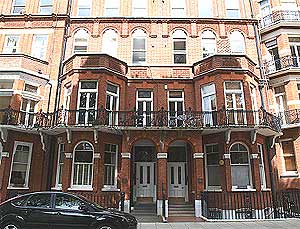 described as a small college of Cambridge University and lodged at another building in Grange Road, near the campus, from where he could walk across in a few minutes and get to the college. It is a large house which is now divided between three owners. Tunku had rented a room on the top floor on the back, in the 1920s when he studied at St Catharine's College from 1922 to 1926.
And near the building along Grange Road is a football field for the Cambridge University football club. And it was also where Tunku had spent a lot of his leisure time playing football with the other students until he made it to the team. It was not a small feat for a small Malay boy from so far away to be able to make it to Cambridge University and into their football team where he managed to score goals for it, too, which means that he was such an accomplished player himself.
And it was also the main reason why Tunku still carried on with his sports activities after returning to Malaya then, becoming presidents of national sports teams.
The third building which Tunku had mentioned in his writings and
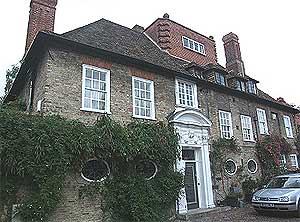 memoirs is located in Barkston Gardens is near the Earl's Court station in London. It was where Tunku had rented a room in the 1940s when he returned to study law in London.
Are these not heritage buildings of Malaysia then? I hope the government and the ministry of information, communication and culture will seriously consider classifying them as heritage buildings and do something to give due recognition to the owners of the buildings by placing plaques on the walls like the other heritage buildings in London and all over England called the 'Blue Plaques'.
I am forwarding a Blue Plaque to commemorate Sir William Sterndale Bernard who lived in a building right across from the Dewan Malaysia in Bayswater in London. A special event can be held at the Dewan Malaysia in London which I am sure can attract the attention of the local media, especially if they know how close Tunku was to Queen Elizabeth.
I was surprised to receive a letter of thanks in July from Buckingham Palace to say how the Queen was happy to receive a copy of ‘The Residency Years’ coffee table book on Tunku and his family that were taken by his nephew/adopted son, Syed Abdullah Barakhbah which I sent to her.
The owners of the buildings can also be given some souvenirs related to Tunku and be invited to come to Malaysia to visit the Tunku Abdul Rahman Memorial and other places related to him, so they know how important their buildings are.
And I am sure the local heritage authorities in England can take attention of this and also place the 'Blue Plaques' on the walls of the buildings so the owners can feel more proud of their properties.


Are you sure you want to delete this comment?
This action cannot be undone.