


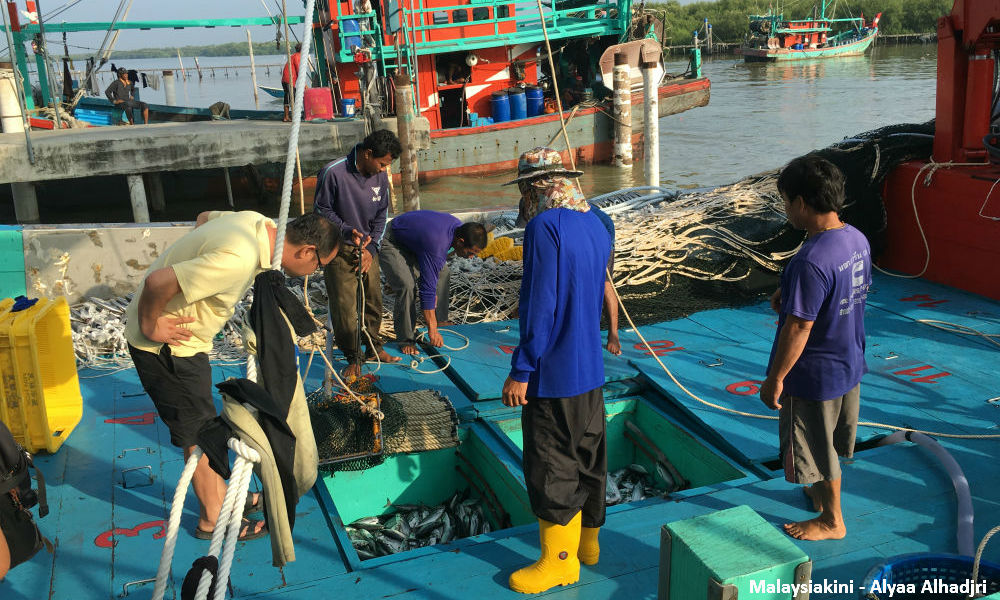

Sg Besar fishermen need social safety protection, not band-aid
One would think that the twin by-elections in the country would provide a platform to debate critical issues affecting the country, including livelihoods of impoverished communities.
But the by-elections have been successfully transformed into ‘buy-elections’ by exchanging money and food in exchange for votes, thereby dismissing crucial issues affecting the people and shirking state responsibility.
In the last few days, federal ministers have tripped over each other to give out election goodies to fishermen in Sungai Besar - money, food, walkie-talkies and promises of a higher income.
But these handouts are not durable solutions to the plight of the 3,000 fishermen, one of the most impoverished communities in the country.
Their problems are structural and require a multi-dimensional approach to its resolution.
The fishing community is considered one of the most vulnerable communities in the country. Recent studies indicate that 50.1 percent of all fishermen have an average monthly income below the Malaysian poverty line.
Essentials like health services, insurance, education and proper sanitation remain inaccessible for a large part of this community.
For example, 57.4 percent of all fishermen do not have health insurance and have to fork out huge sums of money to access basic health services. This eats into their already low monthly income.
Then, there is a massive problem of educational poverty, especially among women.
And Malay fisherman are the most poor when classified along ethnic lines.
Middlemen contribute to the fishermen’s poverty. Huge chunks of their income go to middlemen, who also control the prices of fish.
The government therefore, needs to put together a social safety net to protect the interests of fishermen, especially given the uncertain nature of their income.
This includes retraining the fishermen to develop community-level markets from catch to retail: fish marketing and trading, fish farming and food retailing.
Throwing cash and other benefits to temporarily appease them for votes is insulting.
Our political system has to work for all, especially the poor and marginalised. The state players cannot continue to use its ‘buy-elections’ for vested interests and political survival.
CHARLES SANTIAGO is Member of Parliament, Klang.


Are you sure you want to delete this comment?
This action cannot be undone.