



Attitudes toward torture must change
In January, seven prison detainees stepped out of the shadows to tell the world of the horrendous ill-treatment they suffered while in detention at the Sungai Buloh Prison and in Bukit Aman, the police headquarters.
From being made to perform degrading acts such as kissing a dirty floor, stripping, forced to watch pornography and perform sexual acts in the presence of the authorities, these seven detainees were not alone in their revelations. A week later, another six detainees revealed that they had been subjected to similar torment.
All 13 detainees were held under the Security Offences (Special Measures) Act 2012 (Sosma) - one piece of legislation in the arsenal of human rights-unfriendly laws which includes the Prevention of Terrorism Act (Pota) and Prevention of Crime Act (Poca). Concerns abound as these laws permit varying periods of detention without trial and give room for torture and ill-treatment to take place.
According to Suaram figures, there were 31 Sosma cases in 2014, a figure which ballooned to 110 last year. Sosma allows for a 28-day detention without trial before a two-year extension may be imposed. This is echoed in Poca, which also allows for detention without trial of up to 60 days after which a Poca board may at its discretion extend the sentence for two years or longer.
According to the Home Ministry, 975 individuals have been arrested and/ or investigated between April 2014 and October 2015 under Poca, including 143 who are detained.
Laws such as Sosma, Poca and Pota set a dangerous precedent for physical, mental and emotional abuse as they are wide, arbitrary and do not accord a detainee rights that are guaranteed under the Federal Constitution and international human rights law and standards. The revelations by the Sosma 13 have already proven this.
Suaram also reported that in 2015, there were 11 deaths in police custody, three each in police lock-ups and police stations, and one in a detention centre. In addition, several weeks ago, 27-year-old Azri Mohamed was beaten so severely while detained at the Pengkalan Chepa Prison that he had ruptured intestines. He died in surgery.
Torture, abuse and ill-treatment happen away from the public eye. It could happen to anyone. Just because an individual is arrested does not mean they are guilty of a crime. When someone is in detention, they are the responsibility of the authorities - police, prison, immigration and ultimately the Home Ministry - who have a duty to protect their charges, not mistreat them.
While most countries have condemned and criminalised torture, Malaysia remains one of very few countries that has yet to commit to becoming a torture-free nation. This gives rise to a plethora of questions with the most important one being, “Is Malaysia condoning torture?”
Case files and victim testimonies from all over the world prove one thing: a person having his testicles electrocuted (Ali Aaras, Morocco), being sexually abused (Loretta Ann P Rosales, the Philippines), being forced to drink his own urine (Anonymous, Malaysia), having his head smashed against the wall (Justine Ijeomah, Nigeria), being raped (Isis Goldberg, Mexico) or having her headscarf forcibly removed (Dilorom Abdukadirova, Uzbekistan) would likely say anything to stop the pain. Forced confessions are not (supposed to be) admissible in court.
Yet it happens, which raises the twin issue of the credibility of a country’s criminal justice system.
The United Nations Convention Against Torture (UNCAT) is an international human rights contract which aims to prevent torture and acts of cruel, inhumane, or degrading treatment or punishment. Upon signing and ratification, member states are expected to undertake effective measures to prevent torture.
Malaysia yet to ratify UNCAT
Malaysia is one of 28 countries that has yet to ratify and sign the UNCAT. The hesitance to do so puts us among the ranks of other nations known for committing grave human rights atrocities including China and the Central African Republic. Countries which have ratified the convention include Sierra Leone, Pakistan, Swaziland, Rwanda and Saudi Arabia.
While there are credible mechanisms such as the Human Rights Commission of Malaysia (Suhakam) and the Enforcement Agency Integrity Commission (EAIC) in place to monitor the authorities’ wrongdoings, these are far from adequate in terms of resourcing, funding and the ability to prosecute.
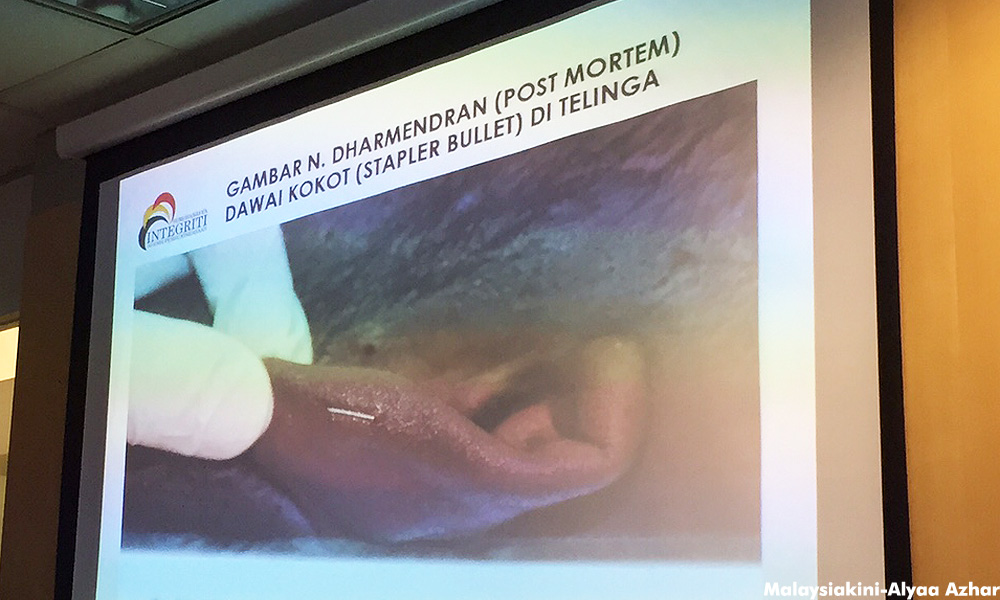
For example, the EAIC had concluded that four police officers beat N Dharmendran while he was in detention and went on to fabricate evidence to cover up the act which eventually led to his death. However, the same four police officers were twice acquitted by the courts. What recourse is left for the family?
Our ignorance and silence threaten to protect this culture of impunity. To break this silence, Amnesty International Malaysia joined forces with Suhakam, the Bar Council, Suaram and Lawyers for Liberty to campaign for the government to ratify the UNCAT. This campaign promotes awareness on the evils of torture and enlists public participation to sign the petition targeted to the Malaysian government on amnesty.my.
We, all of us, need to remind the authorities that it is not okay to staple someone’s ears to his head, to kick him in the stomach repeatedly or to make him wash his hands in dirty water before he eats.
This campaign may not completely eradicate impunity overnight but it will certainly lay a platform towards putting a stop to torture. And above all, it will hold the Malaysian government and its agencies accountable for their actions.
SHAMINI DARSHNI KALIEMUTHU is executive director, Amnesty International-Malaysia.


