


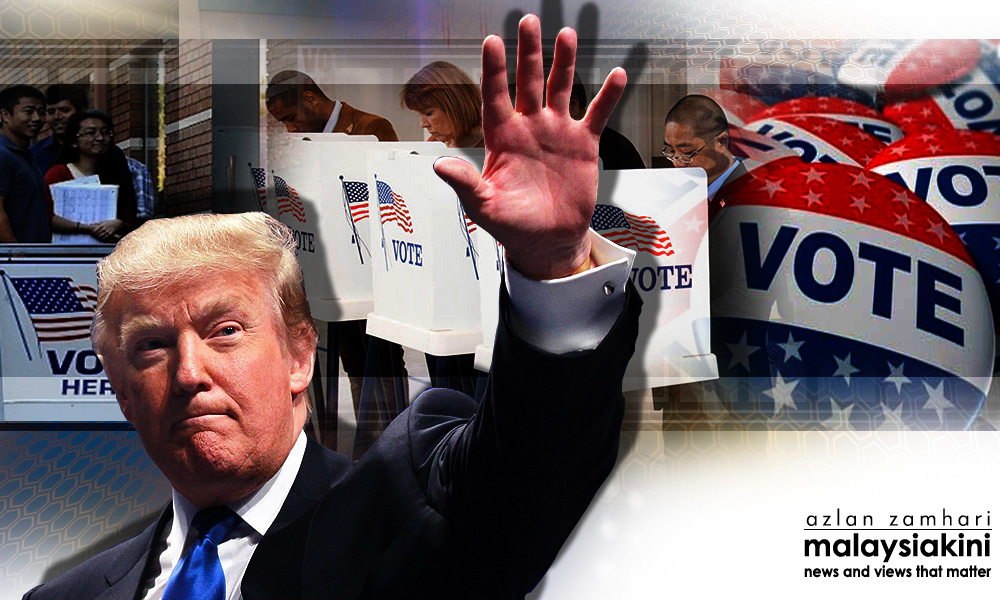

How it feels to put a Trump presidency into context
Upon mailing my absentee ballot back home to the United States, I was excited to fulfill my civic duty and vote for the first time in a presidential election. However, the result of this week’s election has produced a different type of feeling for me. My initial shock transformed into anger and fear, then turned into shame and helplessness.
The worst has been brought out of the American people during this extremely polarised election cycle, but physically ill does not begin to describe how it feels to put a Donald Trump presidency into context.
My name is Ben Rissler. I am a 21-year-old American temporarily residing and working in Kuala Lumpur in-between my studies. This is what the 2016 US presidential election means to me and many others who share my concerns.
I have been fortunate enough to grow up during a period of immense progress toward equality in the United States. The Barack Obama administration has shown considerable progression for the preservation of human rights and equality for all American citizens. For a country that prides itself on diversity and freedom, traditionally marginalised communities are only now beginning to see noticeable change.
However, how sustainable will this be with the election of an unpredictable, rash president?
As major media outlets predicted a close race in favor of Hillary Clinton, a lot of Americans are trying to fathom the repercussions of a Trump presidency. Traditional swing states held extremely high stakes over the course of the election, and Trump’s marginal victories, such as a 1 percent win in Florida, flipped the script for the 2016 presidential election.
What was originally perceived as a half-hearted hoax in the early stages of his campaign is now a reality, a reality that has grave implications for not only the American people, but for the international community as well.
The election of Donald Trump as the next president of the United States shows worrying signs of an increasing global trend. The European migrant crisis jumpstarted widespread xenophobia across Europe and the United Kingdom’s Brexit vote to leave the European Union had traces of anti-immigration sentiment, but what does a resurgence of nationalism mean for the United States?
The president-elect urged unity during his acceptance speech. “I say it is time for us to come together as one united people... I pledge to every citizen of our land that I will be president for all Americans.” However, the definition of the word all is inclusive of everyone, every American, and every human being. Discriminatory undertones, misogynistic remarks, and hate speech rhetoric have dictated the narrative of his campaign, as detailed throughout the media.
Make America great again? The people of the United States live in a world characterised by unprecedented levels of gun violence, rampant police brutality against unarmed people of colour, pervasive xenophobic sentiment, and the normalization of sexual assault against women. When exactly was America great? Subjectivity cannot mask the truth, and the reality is that immense progress still needs to be made.
When Trump stated he would be a “president for all Americans” in his victory speech, who is he referring to? He has continually shamed and degraded women, spoken strongly against the country’s large immigrant population, urged a ban on Muslims entering the United States, mocked disabled Americans, his vice-president is a strong advocate for “conversion therapy” for LGBTQ+ youth, and his comments are dangerous to people of colour.
Massive disconnect
Perhaps this is an issue of framing, but no matter how one interprets his statements, there is a massive disconnect between his proposed policies and the well-being and safety of minorities in the United States. Without extensive public trust, what will governmental legitimacy look like?
We are all biologically the same, but social constructs separate us by placing people into categories. People rationalise the concept of ‘the other’ based on their own identity, perceptions, and experiences. The ‘us versus them’ dynamic poses a great threat to civil society around the world, especially the future of the American political climate.
People tend to express interest in policies that directly affect them, but might not have the capacity or desire to be able to see the same policy from another perspective. Everyone is entitled to their own opinion, but what is the threshold between personal belief and collective bigotry? Intolerance won in this presidential election.
A little girl deserves to grow up knowing she can become president because women are equally as capable of being leaders as men. A teenager questioning their sexuality or gender identity needs to know that there is nothing wrong with them because suicide among LGBTQ+ youth should not be four to six times more likely.
Muslims should never feel afraid to go out in public for fear of being labeled a terrorist because closed-minded Americans control the narrative of their religion. Racism and stereotypes must be abolished because black Americans have been killed by police officers at disgustingly alarming rates. Immigrants must not fear deportation or forced separation from their families because nationalistic reforms target them.
All Americans deserve to live in a world that embraces diversity and preaches acceptance rather than hate; freedom and inherent rights cannot be compromised any longer.
What I have expressed here is not dictated by hate, but by profound, heartfelt concern. This has been a troubling, emotional time for many Americans, but the resilience of the people will prevail in a time of despair. The current circumstances create an optimal opportunity to amplify the voice of change throughout the nation. Words will turn into actions, and actions must inspire change.
Today, we fear for the future. Tomorrow, we must start the fight to preserve the inalienable rights of all Americans. One man will not destroy us; he will bring us closer together.
BENJAMIN RISSLER is a summer research intern with the Centre for Public Policy Studies.


