



Is tit-for-tat fair play?
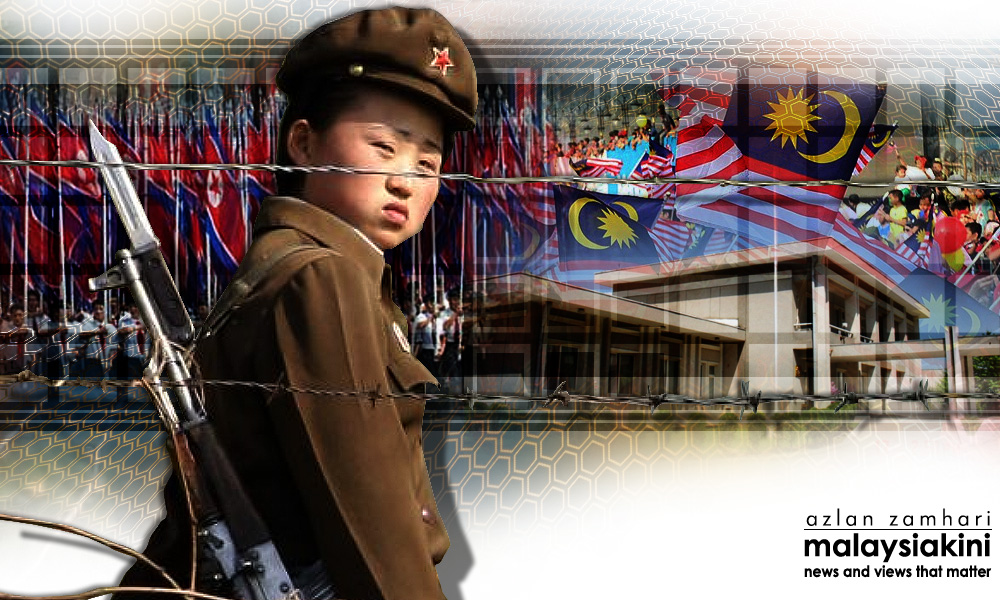
“I will only do this if you do that; if you stop doing what I expect of you, I will stop doing what you expect of me.” Such an argument does not only appear in fights between couples but also in inter-state conflicts, as exemplified in the recent diplomatic conflict between Malaysia and North Korea that escalated dramatically resulting from the case of Kim Jong-Nam.
North Korea has barred Malaysians from leaving the country. Subsequently, Prime Minister Najib Abdul Razak announced the banning of North Koreans from leaving Malaysia in response to North Korea’s move. As a consequence, both countries are having tit-for-tat exit bans.
In fact, a tit-for-tat strategy is nothing new; and it is often applied by state actors in the world of international politics. For instance, in the recent past, then-US president Barack Obama had expelled Russian diplomats in retaliation for US election ‘hacking’.
Apart from that, does it mean the act of retaliations are permissible and equitable? Personally, I think this is a question worth pondering. In international law, basically there are three types of forces can be used by states, (i) retorsions (ii) reprisals (iii) self-defence. The Malaysia/North Korea tit for tat exit bans belongs to the first category.
Retorsions are a lawful means of expressing unfriendly and harmful acts at another state’s injurious activities, such as the severance of diplomatic relations and the expulsion or restrictive control of aliens, as well as various economic and travel restrictions. Although the unfriendly and discourteous acts are considered as legitimate, they might be unfair or even inequitable.
Furthermore, the act of retorsions must be terminated immediately once the opponent states stop the injurious activities. To validate whether the acts are considered as retorsion or not, it requires justifications on the case itself.
By looking into the case concerned, both countries are restricting the other’s citizens from leaving and holding them as ‘hostages’. Obviously, North Korea’s move has outrightly disregarded international law and diplomatic norms, which should be condemned by all.
On the other hand, the retaliations by Malaysia may be legitimate and permissible under international law but using innocent people as bargaining chips in a state conflict seems to have violated human rights principles, hence it might be an inequitable one for both countries.
The fundamental purpose of international law is to maintain the peace and international order. As stated in the United Nations Charter, for all disputes and conflicts, solutions shall first be sought in a peaceful manner. Collective efforts should be made by international communities to ensure fair play, and those who violate this will receive punishment.
However, not to forget that the international system is anarchic where there is no supreme authority, while the sovereign state is the principal actor. This means states will prioritise their national interests and use all tools to achieve it. Consequently, how to win the game will be the primary concern of a state instead of following the rules of fair play.
LIM PAU HUA is a final year International Relations (Diplomacy and International Law) student at Universiti Utara Malaysia and a former student representative in the UUM students council.


Are you sure you want to delete this comment?
This action cannot be undone.