



LETTER | Bank Negara should intervene more
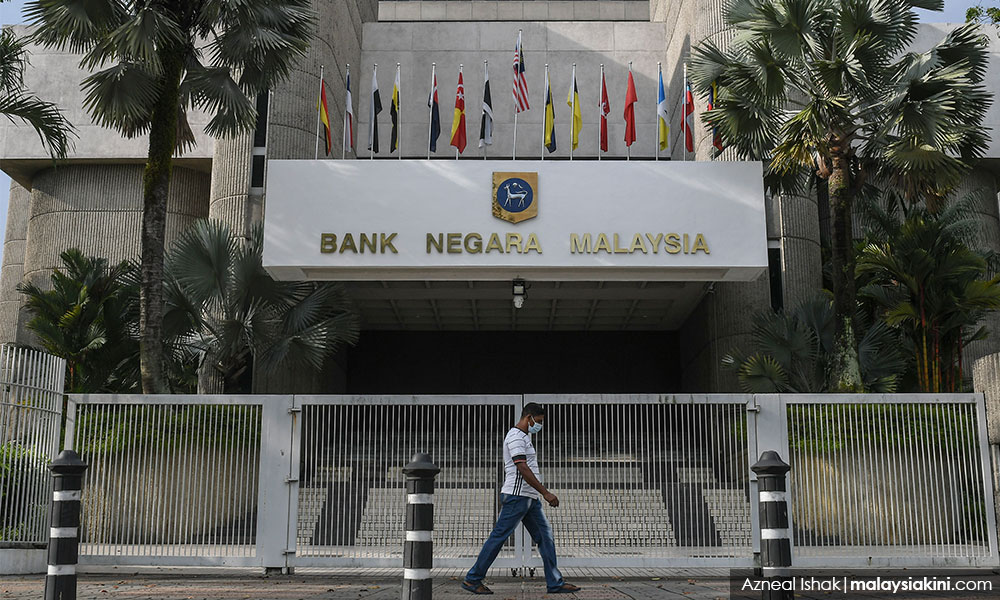
LETTER | Recently, it was reported that the Prime Minister said Bank Negara Malaysia (BNM) is working on increasing the allocation for the Disaster Relief Facility (DRF) 2022 from RM200 million to RM500 million based on the current needs and a repayment assistance scheme for flood victims with housing or property loans, car loans, credit card and personal loans.
The scheme includes deferment or reduction of instalment payments for up to six months.
Instead of being a mere bystander, it is praiseworthy to note that BNM moved swiftly and immediately went to work, among the first responders.
LETTER | Recently, it was reported that the Prime Minister said Bank Negara Malaysia (BNM) is working on increasing the allocation for the Disaster Relief Facility (DRF) 2022 from RM200 million to RM500 million based on the current needs and a repayment assistance scheme for flood victims with housing or property loans, car loans, credit card and personal loans.
The scheme includes deferment or reduction of instalment payments for up to six months.
Instead of being a mere bystander, it is praiseworthy to note that BNM moved swiftly and immediately went to work, among the first responders.
While this flood may be considered a one-off shock to the country’s economic activities, with the ongoing pandemic, the duration and breadth of which are still unknown or unquantifiable, BNM appears to have demonstrated stamina and adroitness in cohesively coordinating multiple policies.
While the pandemic has hit two flanks of the financial system.
Firstly, it is financially, with the loss of liquidity as well as a decline in asset value in light of the drag on economic activities.
Secondly, it is operationally, as health risk threatens the delivery of financial services, disrupting people’s lives, facilities, processes and technology, the recent flood affects the financial sector both directly and indirectly.
Direct costs include loss of life and illnesses or injuries of people in the financial industry, and damages to fixed assets and capital, or physical infrastructure. Indirect costs, which usually constitute a large share of the total damages, pertain to the loss of economic activity and the foregone production of goods and services.
Substantial reconstruction spending, together with a possible reduction in tax revenue from the disruptions in economic activity, could endanger the government’s already weak fiscal position and lead to higher government debt.
Of direct relevance to the financial system, there may be deterioration of deposits, loan growth and quality, along with lower profitability of banks.
The indirect costs of this flood pertain to the loss of economic activities – which at the household level, reduced economic activity translates to unemployment and, subsequently, loss of income – and the foregone production of goods and services.
The shortfall in production stems from the damages to physical infrastructure.
These indirect damages also include the added costs of employing alternative and possibly inferior means of production and distribution to keep the economy afloat and continuously supply the demand for goods and services with post-disaster recovery efforts likely to crowd out other productive expenditures such as education, health and infrastructure, which may have severe implications in the country’s recovery effort from the pandemic.
This recent flood has shattered a lot of lives, damaging homes and properties – meaning big bills for the rakyat who suffered.
Capital assets and infrastructure such as housing, schools, factories and equipment, roads and bridges in all the areas that were flooded are lost. Proportionately, the poor suffer the most from the loss of economic assets.
Those affected by the flood are likely to have their savings concentrated in their homes. They may be forced to sell off assets to meet basic needs.
As they are less able to replace these assets, they may fall into long-term poverty traps, from which they would be unable to emerge harming generations. School enrolment may fall as parents pull children out of school to help boost family income.
Even if this is intended to be temporary, it can become permanent.
Destroyed assets need to be rebuilt and replaced. As families affected by the flood struggled to pay for home repairs and get back to work, they may begin to fall behind on house payments, seek loans to repair flood-related damages, or become unemployed.
This can lead to ballooning credit card debt. Missing mortgage payments can lead to foreclosure on their homes.
Even though there is no universal blueprint for recovery, aside from the above measures announced, swift and effective measures are needed to ease the suffering of individuals and communities directly affected by this flood.
Devising and implementing policy and action for economic recovery in the wake of this flood could be messy and complicated.
Nevertheless, it is time BNM depart from its usual gradualist approach to prevent the onslaught from the worse flood ever to hit the country from damaging the financial system by introducing temporary small scale unconventional measures that are targeted and time-bound, buying time for the government to rescale and redesign its recovery plan post this flood.
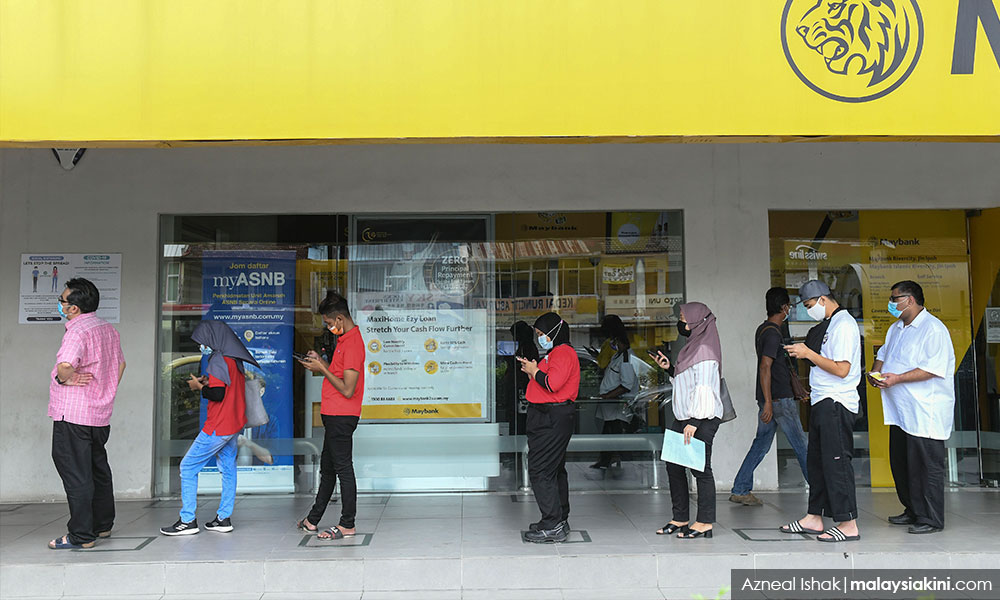
BNM should look into granting financial institutions a wider range of regulatory and operational relief measures such as:
• Reduce reserve requirements for the most vulnerable sector, the micro, small and medium enterprises (MSME) loans to qualify as compliance with the required reserve ratio e.g temporary reduction in the credit risk weight of MSME loans and assignment of zero percent risk weight for MSME loans covered by guarantees.
Cognizant of their economic contribution, BNM and the financial institutions should extend assistance to allow MSME to survive the after-effects of this flood.
These MSME have limited access to coping strategies and are generally unprepared to confront adverse events. They play a significant role in the economy.
They comprise more than 97.2 percent of total business establishments with micro enterprises accounting for 78.4 percent of total in the country as well as provide 48 percent or 7.25 million of total employment in 2020,
• Ease the real estate loan limit of commercial banks but maintained the soft limits on real estate risk exposures that banks can demonstrably manage
• Excluding existing loans of borrowers in affected areas from the computation of past-due ratios,
• Reduction of general loan-loss provisions,
• Non-imposition of penalties on legal reserves deficiencies of said banks,
• Booking of allowance for probable losses on a staggered basis
• Non-imposition of monetary penalties for delays in the submission of supervisory reports.
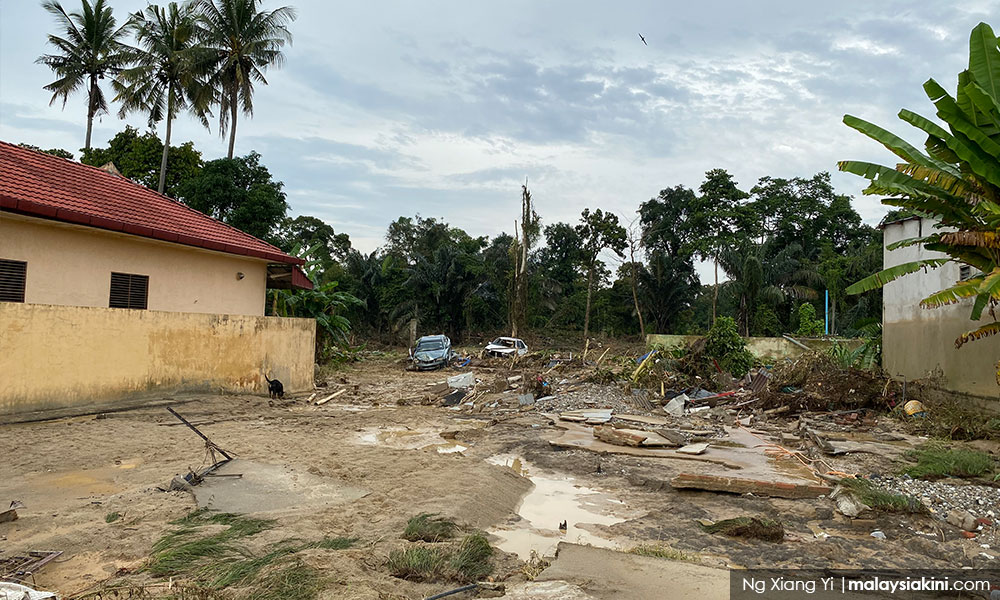
The speed of recovery matters. When post-flooding reconstruction is slow, the economic pain and deprivation of families and communities are deep and long-lasting and it can alter or create new social and economic inequalities.
The aid offered by the government through other agencies may not be effective and its ability to reach its desired target is questionable.
Past experiences have shown that the rakyat with lower incomes and in poverty tends to face barriers such as lack of knowledge of the systems through which `survivors’ receive aid, discomfort with these systems, issues in getting to and from the designated assistance centers, such as transportation, child care, and work schedules in interacting with bureaucratic systems in receiving aid.
And as fraud is common after disasters, these portion of the rakyat affected by the floor will tend to fall prey to scammers who could pose to offer these survivors to get them a loan modification or do home repairs for an upfront payment.
Sometimes, a scammer will even pose as someone from a bank or as a government employee.
BNM must not wait for the next crisis to occur before preparing for it. Candidates for the next crisis include those caused by debt overhang, massive cyberattacks, geopolitical events, climate change or even another pandemic.
BNM has a responsibility to support and implement broader efforts to mitigate the socioeconomic impact of this flood on Malaysian households and businesses.
The views expressed here are those of the author/contributor and do not necessarily represent the views of Malaysiakini.




Report this comment
Are you sure you want to delete this comment?
This action cannot be undone.