


/file/publisher-c1a3f893382d2b2f8a9aa22a654d9c97/2022/09/9d43fa4dee86c05d946f13ef22a5c781.jpg)

LETTER | Better governance via coordination, accountability
LETTER | The article “Local councils steadily losing power” paints a grim picture of urban governance in Malaysia, highlighting legitimate concerns about consultation, local autonomy, and service delivery.
Yet, it misses a critical point: centralised oversight, when properly designed with accountability mechanisms, can be the very tool needed to fix the systemic inefficiencies it laments.
1. Central coordination can fix decades of fragmentation
It would be unfair for the writer to claim that the performance of local councils in Selangor has declined since 2008, as the state government changed at that time for the first time, with many new policymakers and local councillors being sworn into the new government and local councils with a loose coalition at the time called Pakatan Rakyat.
From what I gather, at that time, it had taken some time for the politicians within the government to work together with the government servants on new policy implementations.
It is important to take note that, at the time, the relationship between the federal and Selangor state governments was sour due to political differences.

By 2011, governance started moving smoothly despite the federal-state relationship; the Pakatan Rakyat state government was managed better.
We have come a long way since 2008. There were technological advancements, more channels were open to voice out opinions, advancements on social media, we had improved freedom of information for the state, and most importantly, the population of Selangor grew.
With a higher population, we expect more demands for housing, urban public transportation, improved connectivity, and better municipal services. This would also mean that the frequency of complaints being made would increase, which is inevitable.
The challenge of any level of government is to manage complaints and expectations with improved customer service and continuous engagement with various stakeholders.
Urban Malaysia has long suffered from siloed planning among local councils, state authorities, and federal agencies. Projects like MRT1, MRT2, and LRT3 faced integration challenges precisely because local, state, and federal bodies were not working under a single coordinated framework.
The Urban Renewal Act (URA) could correct this by giving the federal government the ability to unify planning standards, accelerate approvals, and ensure urban redevelopment meets national sustainability and infrastructure goals.
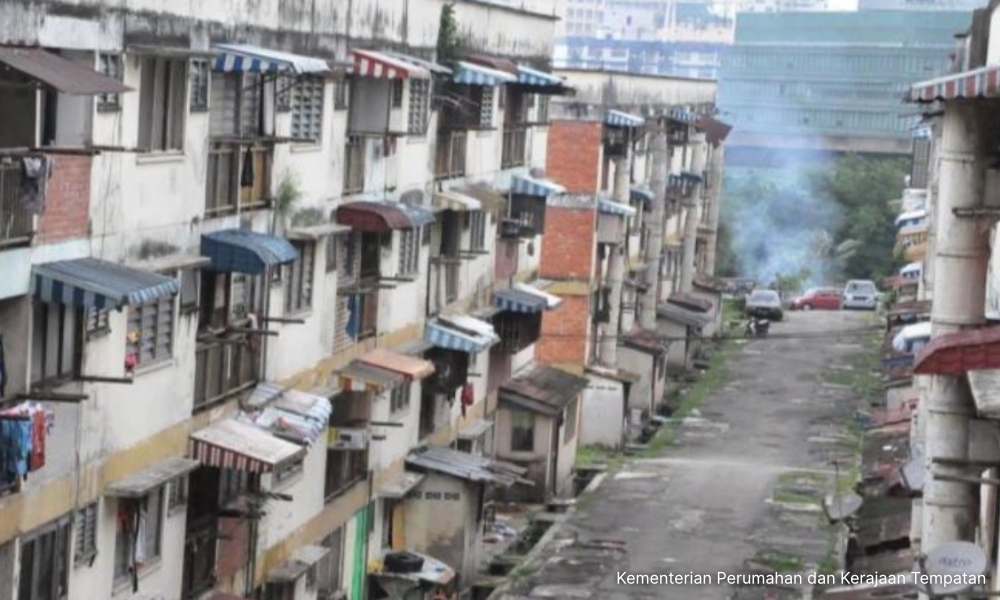
The solution is not less coordination but better governance frameworks - clear guidelines, transparent reporting, and citizen participation must accompany federal oversight.
Nevertheless, with the second reading of the bill being postponed, let's give the Local Government Ministry and PlanMalaysia time to work on the gaps raised by various parties.
Perhaps the writer should seek more information on consultations previously made by the ministry before this bill was tabled.
2. Performance-based governance already being introduced
The Housing and Local Government Ministry recently rolled out a “traffic light” system for local councils, tying funding to performance. Councils that perform well will receive more resources, while those that underperform face budgetary scrutiny.
Rather than weakening local councils, this approach forces accountability and incentivises service delivery improvements. This is something that critics rarely acknowledge.
3. Local empowerment comes from capacity, not just autonomy
The writer calls for “stronger, more autonomous local councils”. Autonomy without capacity, however, often leads to administrative paralysis and poor service delivery.
The cooperation between federal agencies and local councils does play a role, as federal and council laws are intertwined with each other.
For example, licensing terms disallow foreigners operating stalls without a local license holder; this is where cooperation with the Immigration Department comes into play in managing illegal immigrants.
With regard to concerns about transit-oriented development (TOD), it is important to note that projects such as the Shah Alam City Centre redevelopment in Section 14 by PKNS and the Kwasa Damansara development in Sungai Buloh demonstrate how TOD can be effectively implemented. These projects incorporate green spaces, improved infrastructure, and design features that enhance the overall quality of life.
As state-linked initiatives, they are structured to deliver long-term benefits to both the state and its people. In addition, the approval process involved extensive focus group discussions with stakeholders, ensuring that community input was taken into account.
Experience has also shown that large-scale transit investments such as the LRT and MRT can integrate well with surrounding communities.

Areas like Subang Jaya and Petaling Jaya provide clear evidence that with careful planning, transit projects can support residential and commercial growth.
At the same time, the government remains committed to listening to feedback from the public and is open to continuous improvements.
Modernising and enhancing parking
On parking management, privatisation within Selangor councils has been in place for over 20 years.
The state’s latest appointment of a private operator is intended not only to manage operational costs, including salaries, allowances, and bonuses for parking attendants, but also to ensure that gazetted parking spaces are properly painted, numbered, and maintained.
The concessionaire is also expected to invest approximately RM200 million in infrastructure, including the installation of about 1,800 CCTV cameras across participating councils.
It should be emphasised that the appointed concessionaire is a publicly listed company. As such, it is required to adhere to established standards of corporate governance and operational due diligence, while generating sufficient revenue to cover maintenance and service delivery for the councils.
In the end, the goal is not less power for local councils, but smarter coordination and stronger accountability.
When state, federal, and local bodies align under clear frameworks, urban governance can deliver what matters most -better services, liveable cities, and long-term benefits for the people.
The writer is a Shah Alam City Council (MBSA) councillor from DAP.
The views expressed here are those of the author/contributor and do not necessarily represent the views of Malaysiakini.
/file/publisher-c1a3f893382d2b2f8a9aa22a654d9c97/2025/08/43bbc3b3ff4abb224edc76224ad96bc2.jpg)
/file/publisher-c1a3f893382d2b2f8a9aa22a654d9c97/2023/05/676797a0131254fd3e4a823daa47f3b3.jpg)
/file/publisher-c1a3f893382d2b2f8a9aa22a654d9c97/2023/05/6d70371f87af8754ac95be4a1e6e16b6.jpg)
/file/publisher-c1a3f893382d2b2f8a9aa22a654d9c97/2023/09/d14e065d91543d7670a1192be485f983.jpg)


Report this comment
Are you sure you want to delete this comment?
This action cannot be undone.