
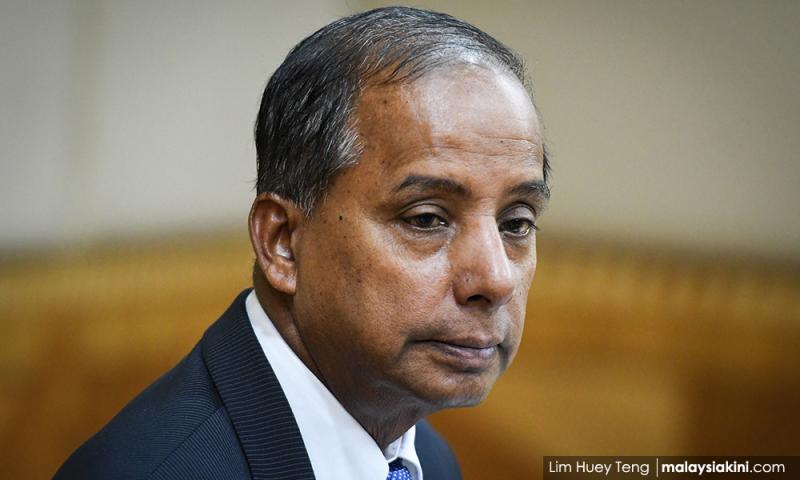

LETTER | Let’s go back to 2017, just before the 14th general election (GE14). DAP MP M Kulasegaran and several anti-MIC leaders made headlines by claiming that 300,000 Malaysian Indians were stateless.
The figure wasn’t just tossed around locally; it was even taken to the UK Parliament, where it was alleged that hundreds of thousands of Indians had been denied citizenship and mistreated in Malaysia.
This number became a rallying cry in political speeches and media campaigns, used to paint a picture of systemic neglect and demand reform.
But here’s the truth: the figure was never backed by verified data. It was a political grenade, designed to stir outrage and discredit the ruling coalition in 2017.
The claim was dramatic, emotional, and explosive, but ultimately, baseless.
The issue of stateless Indians was played up by Kulasegaran, DAP assemblyperson P Ramasamy, and other opposition leaders during ceramah sessions before GE14 to fan the fire of the Indian community.
In 2018, both Kulasegaran and Hindraf chief P Waythamoorthy were appointed ministers. With access to government machinery and authority, they had the power to act.
But did they deliver?
The Home Ministry later confirmed that only 3,853 stateless Indians were officially registered.
And long before Pakatan Harapan came to power, the MyDaftar programme launched in 2010 had already processed 7,261 applications, most of which were resolved.
So why did Kulasegaran and his team claim there were 300,000 stateless Indians? Where did that number come from?
The government asked opposition leaders to bring forward those individuals. But no response.
It’s clear now that the exaggerated numbers were a ploy for political support, not a reflection of reality.
Governance cannot be built on emotional manipulation and fabricated statistics. We must rely on facts, not fiction.
The promises made by anti-MIC leaders to visit estates and plantations, meet the people, and resolve documentation issues have largely gone unfulfilled.
The community was promised action but received little more than rhetoric.
Now, with Indian ministers and deputy ministers in government, there’s a real opportunity to craft meaningful strategies from resolving statelessness to improving education, digital access, and economic opportunities.
But the Indian community is watching. They’re asking. What have our leaders done for us? Where is the progress? Where is the justice for those who’ve contributed so much to this country?
It’s time to bring the voices of the poor and marginalised to the forefront. It’s time to ensure that Malaysian Indians receive their rightful place in society, not just during election season, but every single day.
We call on Kulasegaran and Ramasamy. Do you both still stand by your claim that 300,000 Indians in Malaysia are stateless?
Would Kulasegaran dare to repeat that statement today?
A total of 23 foreign-born footballers have been granted Malaysian citizenship through the naturalisation process, including seven newly approved players currently representing the national team.
Citizenship is not just a legal status; it is the highest honour conferred by the Malaysian government, enshrined as a constitutional right.
Meanwhile, countless Malaysian Indians continue to suffer in silence, trapped in statelessness.
Their lack of documentation denies them access to education, healthcare, and basic services, crippling their ability to move forward in life and causing generational hardship.
For many in the Indian community, it’s deeply painful and difficult to accept that foreign athletes are granted citizenship with ease, while they themselves are left to struggle for recognition in the very country they were born and raised in.
The writer is an aide to MIC deputy president and Tapah MP M Saravanan.
The views expressed here are those of the author/contributor and do not necessarily represent the views of Malaysiakini.
