


/file/publisher-c1a3f893382d2b2f8a9aa22a654d9c97/2024/09/8a3e6f9f66a77f3cc871994ec2a97743.jpg)

LETTER | PM at 3 years: Prioritise a path towards truth, togetherness
LETTER | Prime Minister Anwar Ibrahim’s completion of three years in that highest elected political office went unheeded more than a fortnight ago.
In rapid succession after that anniversary, he had an exasperating and unsettling time with his prospective Pakatan Harapan/PKR expectations completely dashed in the recent Sabah election.
That Nov 29 election must not be allowed to assume watershed significance. It showed dissatisfaction, distrust, and definite division with the meddling by particular peninsula personalities. That perception must be rejected and repaired, not reinforced.
Most of the challenges facing the Anwar administration were undeniably inherited ones, but he seems to have magnified some of them or added new ones to the list. He has, however, reduced the fiscal deficit somewhat and has maintained the peace and stability so important for Malaysia’s growth and vitality.
Yet, Malaysia now enters 2026 in a fluid, fitful, and extremely fragile state of flux, although the obvious government-orchestrated optics seek to suggest confidence, continuity, and customary constancy.
The political alignments that were conveniently created at the inception of the federal government in November 2022 seem to be fraying and fracturing with fractious and fresh elements of fervent but legitimate demands.
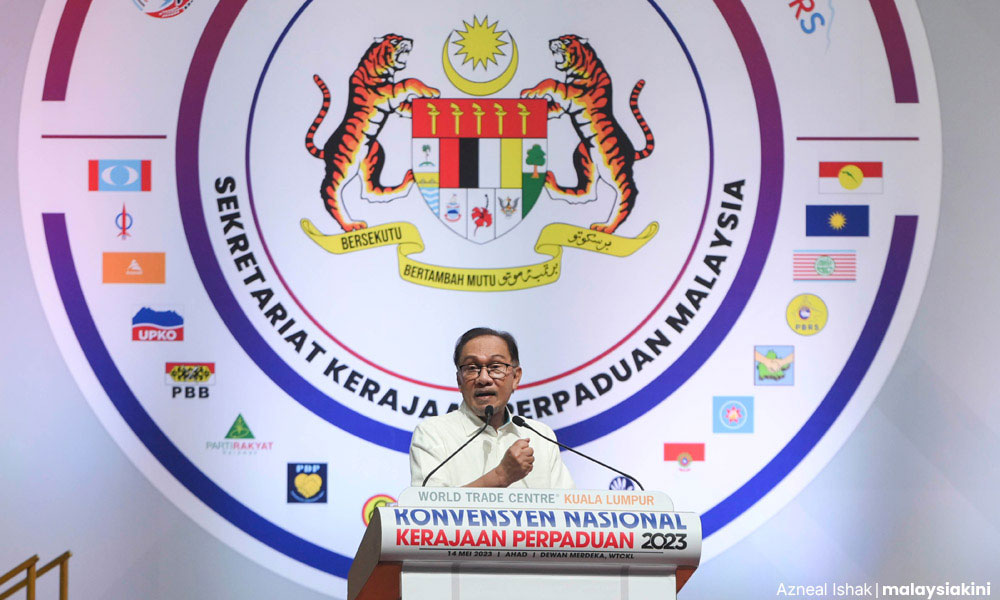
Anwar’s PKR is a mangled museum piece. The remarkable Rafizi Ramli, Invoke’s intrepid innovator and rainmaker, was dethroned as deputy president of PKR seemingly for desired dynastic delusions, dreams, and dynamics.
Rafizi, an erstwhile enthusiast of the 10th prime minister (PMX), has now joined a burgeoning bastion of Anwar’s critics.
Unease in unity
The seemingly invincible but diminished bulwark of the BN that was a pivotal key to PMX’s government is now in a pathetic, perilous predicament. It is a residual remnant of the BN. A tainted Umno with some of its key heavyweights in limbo is posturing pretentiously as BN.
Umno has taken undue advantage of PMX’s undisguised and overriding focus on securing a solid peninsula Malay support base.
PMX seems to be riding the ageing Umno lion, smothering it with DNAAs for criminal activity instead of consolidating his base by working more closely with the reform-minded components of the government. He has to pay particular attention to bolstering Amanah, DAP, and PKR.
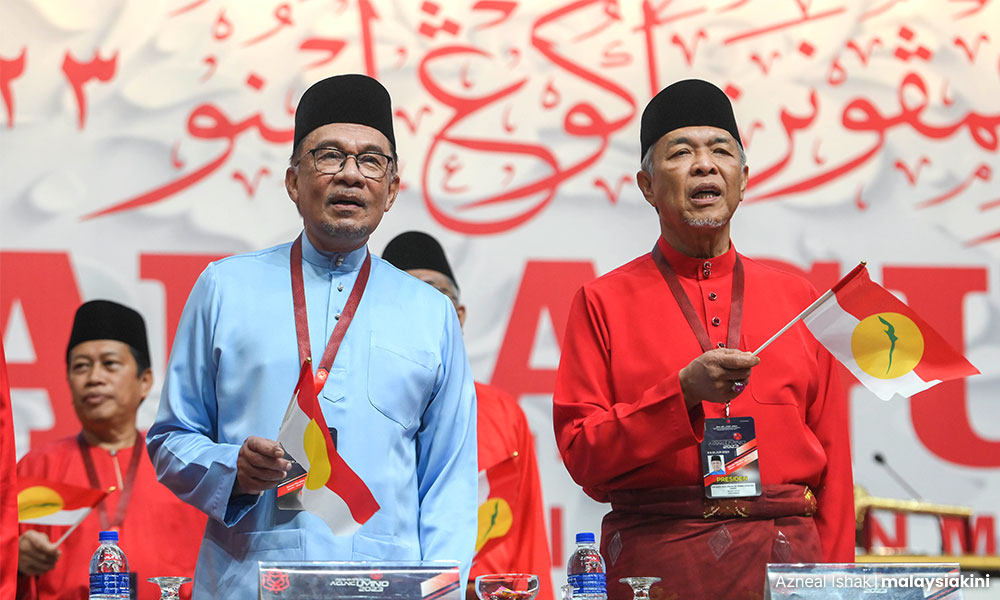
The asymmetrical Umno-led BN coalition that former prime minister Abdul Razak Hussein had put together painstakingly in June 1974 has been butchered and is being buried.
It has its diehard stalwarts and sceptics. Former prime minister Najib Abdul Razak turned it into a sordid septic tank aflush with slush funds, sleaze, and sensational spheres of private asset accumulation.
That BN coalition was designed and carefully created after Razak’s highly successful groundbreaking visit in May 1974 to formally normalise diplomatic relations with the People’s Republic of China in the post-May 1969 period.
It won him plaudits and praise from the nation’s various communities, especially those of Chinese origin. That photographed handshake with former CCP chairperson Mao Zedong captured it all.
In the immediate aftermath of that visit, BN did extremely well in the August 1974 election, securing 135 out of the 154 seats in Parliament.
Although PAS was expelled from BN in 1977 by Razak’s successor, Hussein Onn, that coalition was the mainstay of the ruling government till 2008. Then BN lost the government in 2018, and the first signs of the centrifugal forces at work emerged.
Since May 2018, BN has lost its gravitas by first shedding the once important and integral Penang-based Gerakan. The allies in Sabah and Sarawak have also deserted BN.
Today, BN’s staunchest, stoic, and longest-standing allies from 1954 through 1974 and beyond - MCA and MIC - that gave it its much-needed all-embracing national multiethnic character, are posturing to escape from a badly broken-down burning boat.

The DNAAs involving Umno leaders in the Madanitopia (amalgamation of Madani and utopia, no offence intended) era are without doubt a betrayal, blow, and a burden on the administration’s advertised reform credentials.
Bureaucratic benedictions & blues
Beneath these tenuous political alignments, the elephant in the room is the state’s bureaucracy. This bureaucracy, in the pre-sloganeering era of the 1950s to the early 1980s, had been a first-rate institution, the best in the region.
It had been instrumental in building the basic infrastructure of the newly independent country by providing exceptional services in respect of education, health, housing, judicial functions, law enforcement, road and rural development, security, and other vital socioeconomic support.
The Foreign Service, with a small number of exceptional officers, also played a significant role in promoting the nation’s interests. Today, the bureaucracy is a humongous behemoth and a perceptible power centre which functions at different speeds, states of accountability, efficacy, and efficiency.
The behemoth assumes multiple roles, including some highly controversial, politicised, sensitive, significant, as well as symbolic responsibilities. These roles and responsibilities can be fulfilled fairly reasonably, delayed, or deferred indefinitely.
Any observer or affected person waiting for a decision, declaration, or a dispensation from the bureaucracy would be entitled to be impressed, frustrated, or depressed by these often blurred bureaucratic processes.
Civil servants are required by convention to be impartial, efficient, objective, and facilitative, but there is an unacknowledged scope for them to be somewhat benign or biased, discriminatory, and obstructive.
It is often the case that a civil servant who does not perform to a high or set standard is still able to survive. Dismissals and prosecutions of civil servants are rare.
In this mix of highly dedicated and distinguished civil servants, there are the normal run-of-the-mill bureaucrats, some laggards, and not deadly but dull and nondescript deadwood, both men and women.
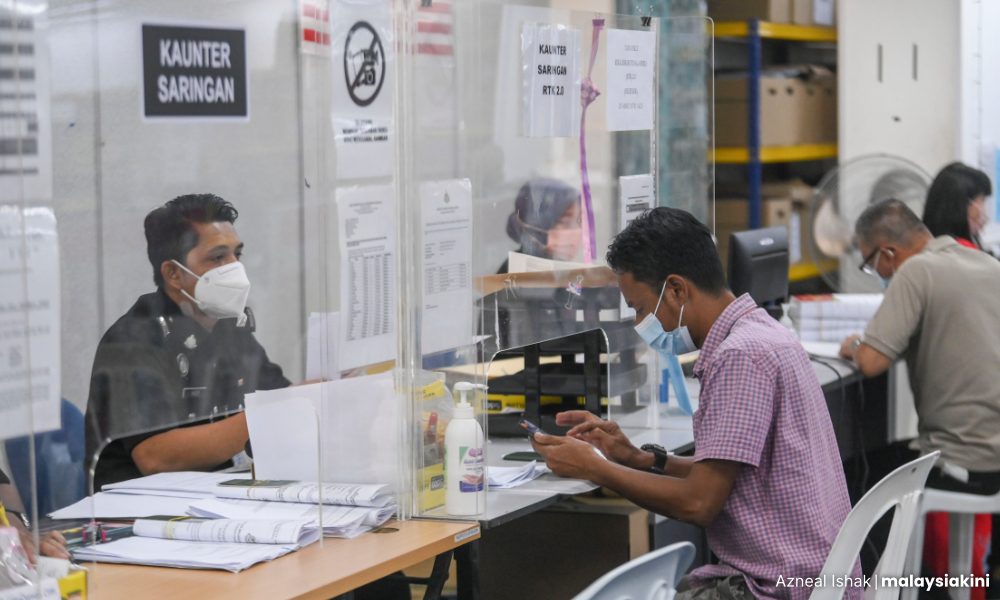
This last group of dedicatedly perfunctory functionaries do not qualify for disciplinary action, warnings, or other penalties, but their promotional prospects may be slower than those of their cohorts.
They often survive partly because they are not offensive, officious, or corrupt. They are neutral in office politics, not too concerned about corruption and remain unobtrusive and largely go unnoticed.
The professional, semi-professional, and administrative system in Malaysia is theoretically not an outrageously tribal one, but its tenets seem to allow for perversities, peccadillos, passionate in-office illicit romances, and small acts of belligerence. Belligerence can be perceived as manifest bullying, being bypassed for promotions, or out-and-out backstabbing or betrayal.
Civil service promotions have not quite acquired the obvious quality of open, authentic accountability, measurable means, and transparency, and they seem to be influenced often, but not necessarily always, by one’s immediate superiors and the ultimate unassailable authority, which is the Public Service Department (PSD).
That department is an anachronistic authoritarian holdover from the colonial era, when it went by the anodyne appellative of the Federal Establishment Office (FEO) but completely controlled the entire bureaucracy.
The PSD needs to be dismantled as there are sufficient resources within federal agencies to assume its functions. It made an unforgivable blunder when it deprived government pensioners who had retired before 2013 of their legitimate pension. The matter is under adjudication.
The system would have one believe that anonymous letters are not entertained or acted upon, but they are an integral, intriguing, and often entertaining feature of life in the public sector.
Anonymous letters are resorted to when no other foolproof means of whistleblowing are available to correct an irregularity, injury, or illegality.
To claim that the Malaysian bureaucracy works harmoniously, honestly, or honourably would be misleading or stretching the truth because there have been some well-known instances of egregious violations and variations of what is deemed acceptable, ethical, legal, moral, or proper conduct.
A few extreme examples can be provided.
Flagrant and bizarre cases
The most flagrant one involved the head of the civil service - the key advisor to the government and ultimate authority on disciplinary matters, promotions, training, and policies regarding the civil service - the fiefdom head or chief secretary of the government.
One of these chief secretaries is on record for having admitted that he received a monthly allowance of RM30,000 from the infamous 1MDB operation, although he had no part in the heist. To his credit, he had declared that income and paid the necessary income tax incurred.

The second case was more bizarre, even brazen and brutal. Two police officers from an elite VVIP protection outfit were charged, convicted, and given the harshest possible sentence for the murder of a Mongolian national who had hobnobbed with key personalities of the country. No motive for the murder was established.
The third despicable episode involves a High Court judge who made startling disclosures in an anonymous letter. He was privy, but did not participate, in irregular activities and procedures that involved “fixing” judges with particular dispositions to hear certain cases.
The allegations made at the height of the hype of Vision 2020 being achieved before that date were never proven, but they were not investigated either. The status quo of the judiciary was left intact. The judge, Syed Ahmad Idid, who comes from a distinguished family, was pressured to resign. There was no alternative to that option.
So he lost his gratuity and pension benefits for an act of sacrifice to the cause of justice, fairness, and transparency.
Syed Ahmad’s case highlights the then prevailing dictum: Immobilise, injure the innocent informer, immortalise the immoralist. The antics and atrocious conduct of the judiciary were later highlighted in the Lingam Tapes public hearings years later.
The fourth case is of the most recent origin. A senior political secretary to the serving prime minister had to resign following some allegations of corruption involving some Sabah assets.
A diminished PMO
The prime minister’s office (PMO) is an institution that is almost always featured or mentioned in the public domain for the most important and respectable reasons. There have been only two instances in the past when the PMO gained some degree of indiscreet or inappropriate fame.
In July 1981, a senior aide of the deputy prime minister was arrested under the Internal Security Act for an alleged espionage and corruption offence which impinged on national security. The second instance was when the PMO gained rather unusual scrutiny and spotlight for its overreaching and flawed fourth-floor fame.
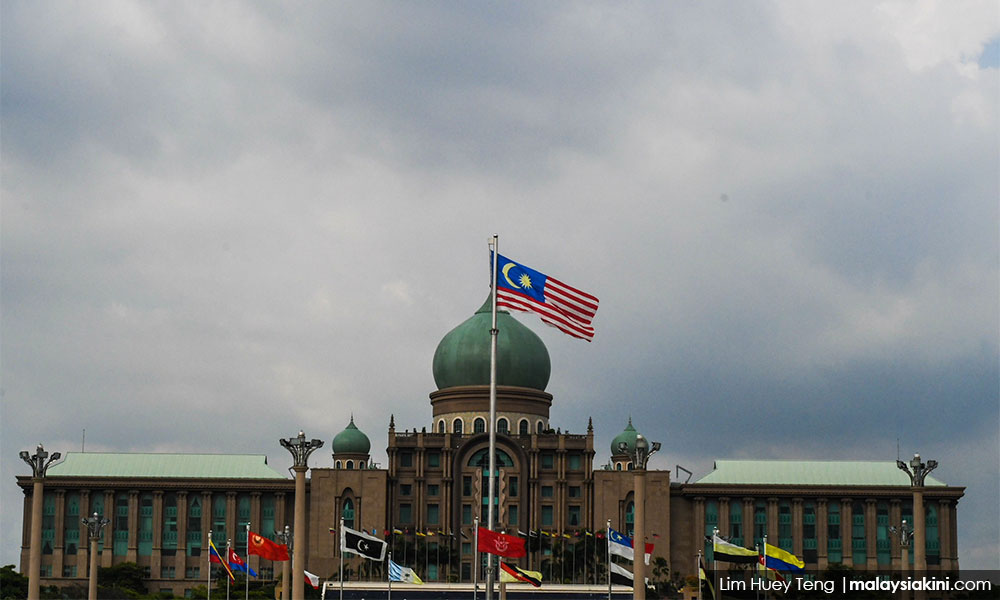
The PMO that Anwar has headed since November 2022 is a manifestly diluted, diminished, and dicey one, as his three immediate predecessors had relatively short tenures of 22 months, 17 months, and 16 months, respectively, due partly to lost confidence and shifting political alignments.
Another of his predecessors started serving a long jail term ninety days before Anwar assumed office.
Completing three years, given this unexceptional record, is an achievement in an office shorn of its old glory and greatness.
PMX would be familiar, over this three-year stint, with the inbuilt vulnerabilities and weaknesses in our country. They are probably not alien to the other operating systems in most developing countries.
Corruption in the public sector
There is another highly significant, enmeshed, and entrenched problem involving corruption within the public sector. The corruption issue needs particular attention because it not only involves the regular salaried employees but also political appointees to top public sector positions.
The quantum of money involved in these corruption cases is never fully disclosed, and prosecution officials rely on relatively small amounts of corruptly transacted amounts. When the corporate sector becomes a participant in these corruption scandals, the figures involved can be mind-boggling.
There was one case where the agreed amount of the bribe was RM187.5 million. It was a solemn, mutually acceptable, and procedurally smooth negotiated arrangement where the perpetrators, both the giver and receiver, must have been assuredly certain that there was no wrongdoing or danger of being exposed.
The trouble was that it did get exposed. There was the implicit immaculate safety net, a sort of warranty and trust that the transaction, although illegal, was not entirely irregular. It did not, however, in this instance, follow the pattern of concealed or covered-up corruption.
There is another aspect of corruption that has to be addressed. It is certainly widespread, although it seems to affect certain public sector organisations more than others. The public sector in Malaysia is huge, with nearly 1.6 million employees and a further 400,000 or so in the GLCs, GLICs, and statutory bodies.
Interestingly, the finance minister II made an announcement recently that for GLCs, the minimum living wage was RM3,100, substantially higher than the mandatory minimum wage of RM1,700.
This huge public sector is apparently seen more as a vote bank for the ruling, sometimes ailing political coalition, than an indispensable public goods and service provider. It is entirely possible, but perhaps far-fetched, to suggest that a zero-tolerance policy on corruption might not gel well with this vote bank, as corruption seems to sit well within its ranks.
Further, some ambiguity on this issue of corruption has been introduced by the present administration. The prime minister has been quoted as implying that if someone is caught for corruption, if the person involved returns the sums involved, it would somewhat exonerate him.
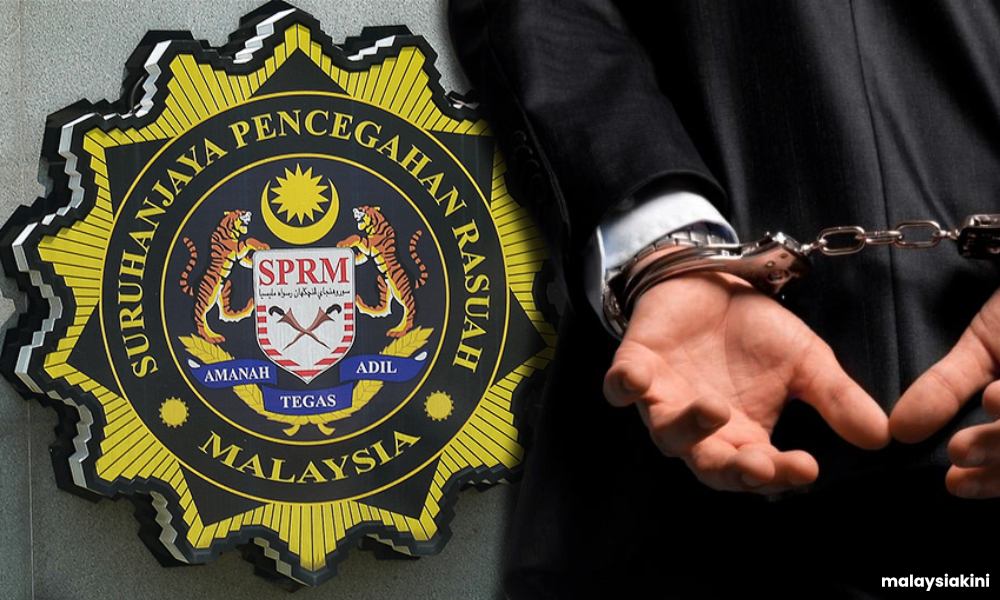
This is not the law, but it suggests the flexibility and the rather creative refinement involved in implementing the anti-corruption law.
The role of the anti-corruption institution is, for this reason, placed in a tricky and untenable position. This is an unnecessary imposition on the course of law enforcement, and it suggests unwarranted interference in the anti-corruption agency’s functions.
Critical challenges
Corruption is one of Malaysia’s most serious challenges alongside extremism, intolerance, and intimidation. It is obvious in issues like these that there has to be clarity to create both transparency and trust.
To prevent ambiguity and achieve clarity, the nation’s leaders must act, operate, and speak on the same wavelength as the law enforcement and regulatory authorities.
They must also realise their own limitations.
In the reporting on the recently released “Albatross File” papers of Singapore, there is a quote that has its poignant place in the current situation facing Anwar.
The reporting on the Albatross File, which recorded the sequence of separation as seen by Singapore leaders, highlights a quote about Tunku Abdul Rahman, the country’s first prime minister. He was quoted as saying that he was himself “not strong enough to control the situation”.
Through all the trauma and turmoil of pressures from his most trusted cabinet colleagues to accept the need to eject Singapore in June 1965, the Tunku retained his sense of honour, honesty, and humour by stating the obvious that he could not control the obstreperous oddities in his own political backyard.
The Tunku believed Malaysia and Singapore should go their own separate ways peacefully without rancour, regret, or retribution.
Low-hanging fruit
Anwar can draw a lesson from this much-forgotten episode.
He is in the line of fire for his defence of the education minister, the anti-corruption chief, and the former international trade and industry minister. He cannot ignore or stop the barrage of criticism and chastisement of these three personalities.
For Anwar to ride through this storm and still complete his five-year parliamentary mandate meaningfully, he has to act promptly on some of these issues.
Civil servants from Sabah and Sarawak must be given the opportunity to head federal departments. There should be at least three such federal ministry heads to give them a sense of belonging. PSD is the stumbling block as it has been working with its outdated pre-Merdeka 1954-57 blinkers, ignoring the merit of these patriots from the Borneo region. They have to be absorbed into the highest levels of the civil service.
The Constitution provides for the Malay rulers to decide on issues relating to the official religion. The civil service bureaucracy created by political leaders to administer religion at the federal level must be dismantled and surrendered to the rulers. That would enable the civil service to focus on providing proper education, health, and socioeconomic development.
Thirdly, the “Look East” policy has to be dismantled to enable the country to focus more holistically on the development of a unified multicultural country. To look at the work ethos of Japan and South Korea while ignoring the commendable and consummate colossus of a phenomenal China suggests we are not keeping up with changed realities. Dumping the “Look East” policy would show PMX dares to break with what Dr Mahathir Mohamad started, obviously without much foresight and insight into his people’s inclinations. The PSD, with its blinkers again, has not channelled the right research and resources to benefit from sending students to study in the best institutions of higher learning in Japan and Korea. Both Japan and Korea, because of linguistic barriers, are unable to permit real immersion for Malaysian officials in their work culture.
Fourthly, any fresh increase in the budget for education must be all-inclusive, especially to encourage a sense of Malaysian nationhood in the peninsula, Sabah, and Sarawak. Hopefully, with this reform, the outgoing exodus of qualified Malaysians seeking job opportunities abroad can be stemmed
Fifthly, the prime minister must empower his Foreign and Trade ministries to enhance bilateral cooperation with the Asean region, particularly and the unstoppable wider Asian region.
Sixthly, the political leadership has to be transformed from its demeaning, dynastic, and geriatric provincialism to include those youthful leaders with authentic animal instincts for the nation’s advancement. Rafizi should be rehabilitated the way Deng Xiaoping was rehabilitated by Mao and Hua Guofeng so that he can be part of a dynamic team that builds a great nation.
The above list is by no means an exhaustive one of the tasks that PMX must attend to as a matter of priority.
One-pointedness needed
There cannot be two or too many nuanced narratives on the issue of corruption, crime, discipline, extremism, intolerance, and intimidation. Mutual respect, inclusiveness, increased opportunities for all, innovation, integrity, and industriousness constantly need to be reiterated. The nation must graduate confidently from the silos of the colonial past.
Clarity, consistency, and confidence about the government’s policies on these issues and on other key areas of multiculturalism, other domestic policies, and on our foreign policy are clearly needed.
The prime minister cannot possibly handle all these issues without the participation and full support of his cabinet colleagues and senior civil servants.
With three years at the helm behind him, the prime minister has to show that he can entrust and share these important responsibilities by delegating authority to fit and proper persons.
New policies have to be formulated for real, rather than cosmetic reform. PMX’s three years in office must be remembered for his good leadership, not just for the DNAAs granted to his Umno-affiliated political allies.
There are undoubtedly the rather specific and specialised roles of other ministries and agencies with their technocrats in all areas of governance. Putrajaya’s collaboration with Sabah and Sarawak also requires careful, considerate, and respectful management with teamwork.
As the prime minister enters his final two years in this parliamentary cycle, he should seriously consider entrusting and steering more resources to his ministers to pursue not just better efficiency and transparency, but the immediate implementation of long-overdue reforms.
With the elephant in the room and the dinosaurs in the political constellation, he should avoid attracting an albatross.
M SANTHANANABAN is a former ambassador with 45 years of public sector experience.
The views expressed here are those of the author/contributor and do not necessarily represent the views of Malaysiakini.
/file/publisher-c1a3f893382d2b2f8a9aa22a654d9c97/2025/06/458c75f8b4873612da6e856ebea7e0c0.jpg)
/file/publisher-c1a3f893382d2b2f8a9aa22a654d9c97/2025/11/9e9b56f330733c4a841969a228361302.jpg)
/file/publisher-c1a3f893382d2b2f8a9aa22a654d9c97/2025/10/39c109e17630d18a8977b34126891019.jpg)
/file/publisher-c1a3f893382d2b2f8a9aa22a654d9c97/2024/03/6608477a89acc436d4c3d6eb405bd33a.jpg)


Are you sure you want to delete this comment?
This action cannot be undone.