


/file/publisher-c1a3f893382d2b2f8a9aa22a654d9c97/2021/08/76b66ce9cf46e36fbb6d269b429227c2.jpg)

LETTER | Limiting PM's term is not enough
LETTER | Recently, Azalina Othman Said, minister in the Prime Minister’s Department (Law and Institutional Reform), proposed a constitutional amendment to limit a prime minister’s tenure.
MCA Youth wishes to emphasise that genuine democratic progress is not determined solely by the length of a prime minister’s tenure, but by the effective implementation of the separation of powers and the prevention of excessive concentration of authority.
During general election campaigns, Pakatan Harapan had rallied for the implementation of several reforms, including ensuring that the prime minister would not concurrently hold any other cabinet portfolio, especially that of the finance minister.
This is to prevent the concentration of policy-making, execution, and supervision powers in a single individual.
However, after assuming office, Anwar Ibrahim chose to concurrently serve as finance minister, a move that contradicts both the election manifesto and the stated reform agenda, raising public doubts over Harapan’s integrity and commitment to reform.
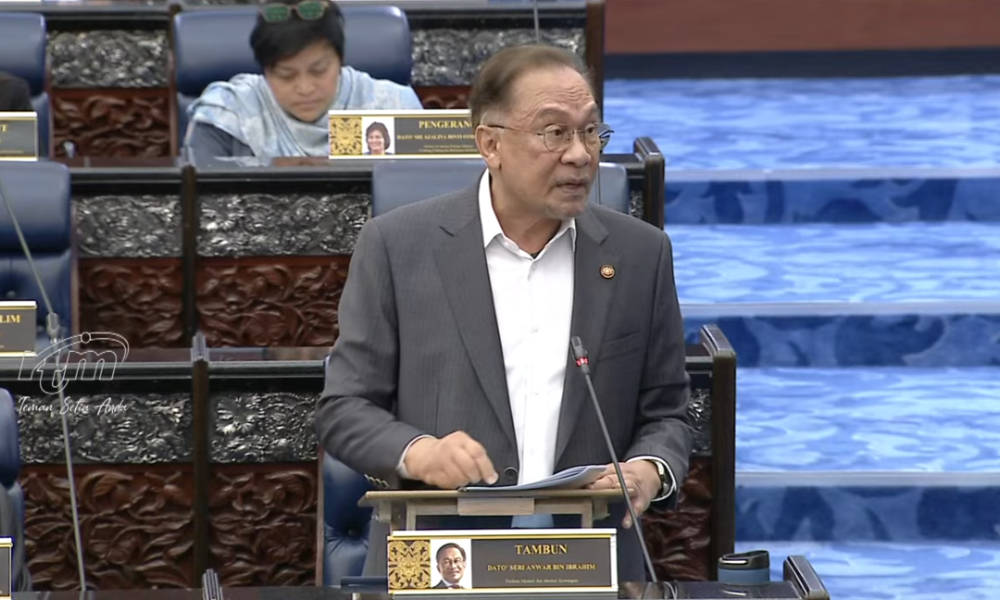
The current situation in which the prime minister acts simultaneously as policymaker, executor, and overseer must be criticised, as this concentration of powers inevitably raises concerns over transparency and accountability.
Look at Anwar’s predecessors
In contrast, after former prime minister Najib Abdul Razak stepped down in 2018, subsequent premiers - including Dr Mahathir Mohamad, Muhyiddin Yassin, and Ismail Sabri Yaakob - did not concurrently hold the post of finance minister or other ministerial portfolios.
This stark contrast between pre-election promises and post-election conduct highlights actions that contradict earlier positions, with leaders who once insisted that the prime minister must not concurrently serve as finance minister now choosing to remain silent.
Anwar’s decision to hold both offices not only violates Harapan’s election manifesto but also contradicts the reform objectives he continues to advocate.
This raises concerns about the continued expansion of personal power and weakens the significance of institutional development. While limiting the prime minister’s term may reflect democratic progress, it represents only one component of a much broader reform agenda.
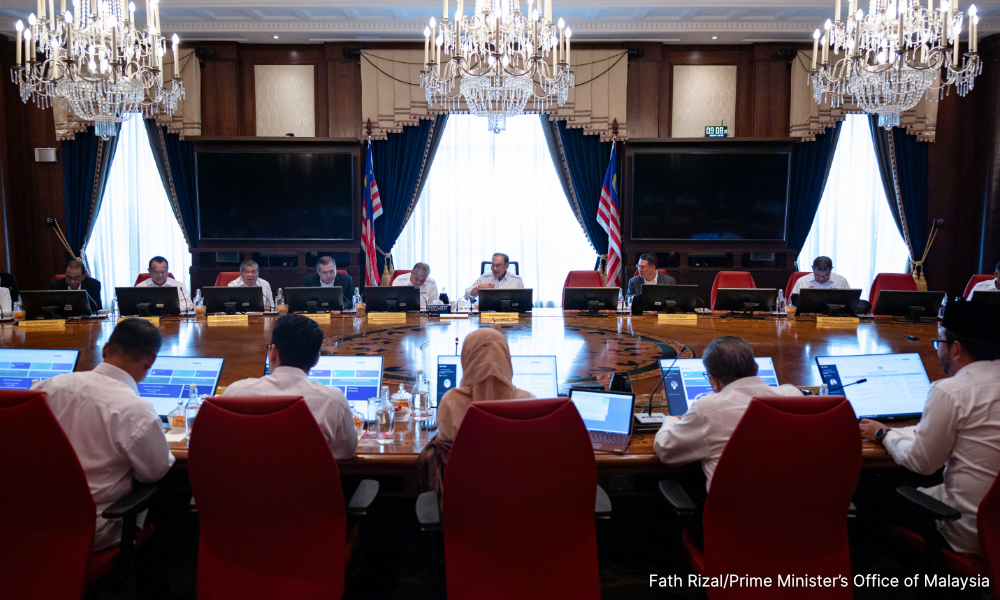
Without institutional measures such as strengthening parliamentary oversight, implementing a clear separation of powers, and enhancing transparency and accountability mechanisms, constitutional amendments to impose term limits alone will not resolve fundamental issues.
True reform must be pursued across multiple sectors and from multiple angles, with sustained efforts to strengthen institutions.
Otherwise, term limits risk remaining nothing more than a political slogan, incapable of delivering meaningful democratic progress.
Writer is the MCA Youth deputy chairperson.
The views expressed here are those of the author/contributor and do not necessarily represent the views of Malaysiakini.
/file/publisher-c1a3f893382d2b2f8a9aa22a654d9c97/2022/12/90868d306b36e4877d34002d68a8bf31.jpg)
/file/publisher-c1a3f893382d2b2f8a9aa22a654d9c97/2019/07/3eb16e45370c53eff358a2b0542218b5.jpg)
/file/publisher-c1a3f893382d2b2f8a9aa22a654d9c97/2020/10/0b58ceb8a0736b50e49b15b5446f4a00.jpg)
/file/publisher-c1a3f893382d2b2f8a9aa22a654d9c97/2026/01/fb3be76dcc391f522a762fa78693b9d4.jpg)


Report this comment
Are you sure you want to delete this comment?
This action cannot be undone.