


/file/publisher-c1a3f893382d2b2f8a9aa22a654d9c97/2024/10/1223d6ef7a823432d5fb583e7fbb8c35.jpg)

LETTER | 'Third force' must champion different political, economic ideals
LETTER | In our current political climate, many actors are scrambling to occupy what they call the “third force” space.
Every election cycle, when public frustration with the dominant coalitions rises, a new brand appears promising to be the alternative.
Let us be clear: the third force is not a waiting room for those who failed to capture first or second place. It is not a consolation prize for displaced elites.
A genuine third force must represent a fundamentally different political and economic imagination. If the policies, economic worldview and class alliances remain the same, then calling yourself “third” is merely cosmetic. You are repainting the same house whose foundation is cracked.
For me, the question is not about occupying a label. It is about defending a political space that has always belonged to the common people, and that space rests on three uncompromising principles, as follows:
Anti-neoliberal, anti-rentier
Why does a modest flat in Petaling Jaya cost RM2,000 a month to rent? Why do young workers with stable jobs still struggle to own a basic home?
The answer lies in an economic model that treats housing as an asset rather than a social necessity. Since the global shift toward deregulation and privatisation associated with leaders such as former UK prime minister Margaret Thatcher and former US president Ronald Reagan, markets have been elevated above public planning, and speculation has been normalised.
In Malaysia, this has produced a rentier economy. Wealth increasingly flows to those who own land, concessions, platforms, and financial assets rather than those who produce goods and services.
Homes are built to be flipped. Infrastructure is privatised for guaranteed returns. Profits are secured through ownership, while workers struggle through wages.
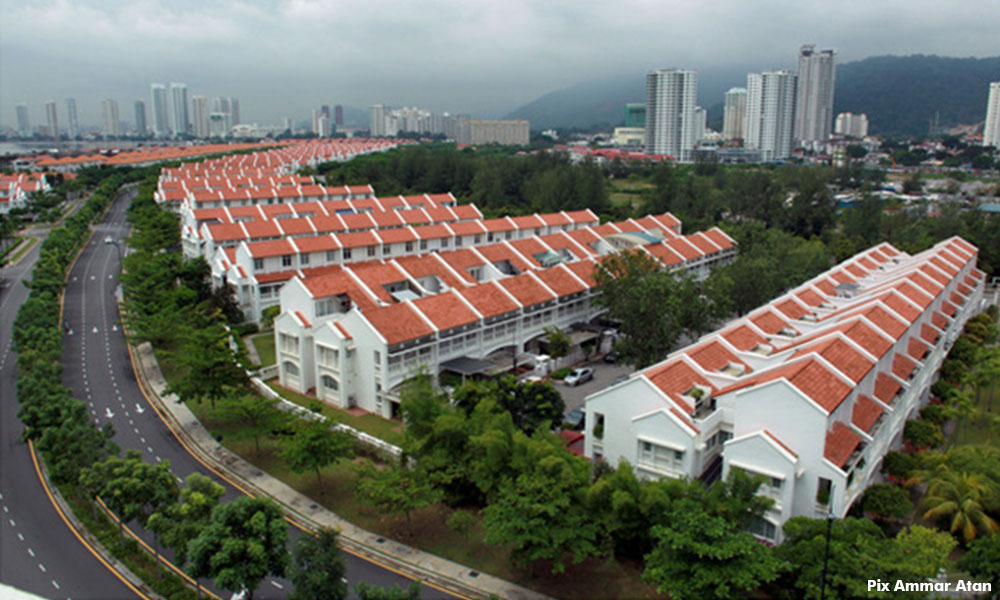
PSM has consistently argued that housing should be built to live in, not to speculate on. Public transport, healthcare, and utilities must be treated as social goods, not revenue streams.
A third force that is unwilling to confront rent-seeking and financialisation is not offering change. It is merely promising cleaner management of the same system.
Third force must be anti-racism
When the economy falters, ordinary people suffer in similar ways. A Malay rider, a Chinese factory worker, and an Indian technician face rising prices, insecure employment and limited bargaining power.
Yet political narratives often redirect frustration along racial lines. While communities are encouraged to compete over identity and entitlement, wealth continues to be concentrated at the top.
Class reality cuts across ethnicity. A millionaire politician, regardless of race, shares more material interests with other millionaires than with workers of his own community.
Recognising this does not deny historical inequalities; it refuses to allow race to be weaponised to protect elite interests. A genuine third force must build solidarity across communities and defend policies that uplift the bottom majority: higher wages, stronger unions, better social protection, and more progressive taxation.
Without rejecting racial scapegoating, there can be no meaningful alternative politics.
Understanding neo-colonial economic structures
Like many countries in the Global South, Malaysia entered the world system as a supplier of raw materials and cheap labour.
Political independence did not automatically dismantle that hierarchy. Over time, rubber and tin were replaced by export manufacturing and subcontracting, but the structure persisted.
High-value design, intellectual property, and strategic control remain concentrated in advanced economies, while countries like ours compete to attract foreign investment through tax incentives and relatively low labour costs.
This model has generated growth, but it has also entrenched dependency. We assemble products we do not design and manufacture components for brands we do not own.
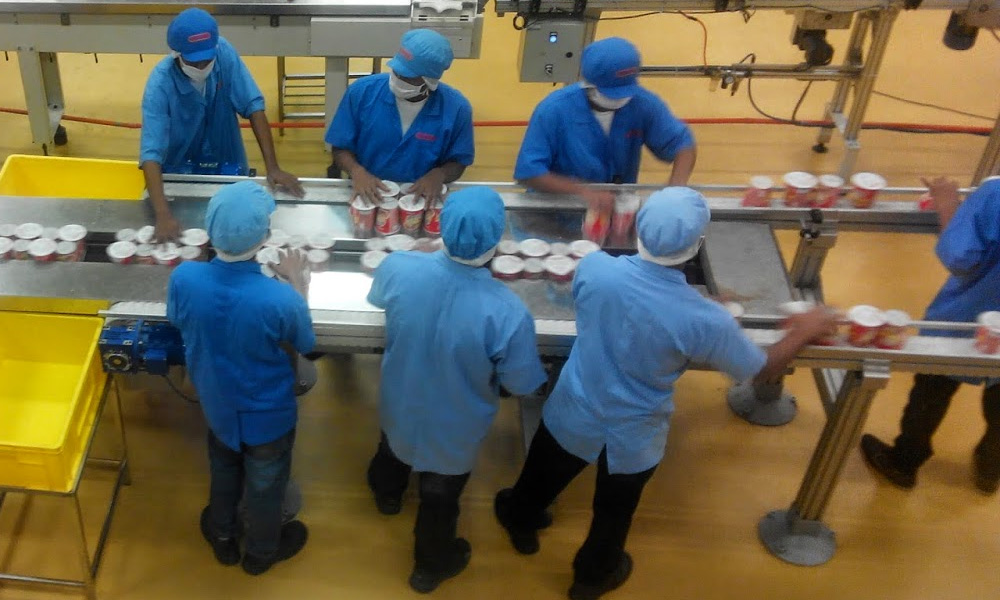
When multinational corporations relocate, workers bear the cost. At the same time, underemployment among graduates remains high, and wage growth lags behind living costs.
An economy positioned as a cost-efficient production site will inevitably produce cost-efficient jobs.
A genuine third force must therefore ask how Malaysia can move beyond being a source of relatively cheap labour in global supply chains.
Economic sovereignty does not mean isolationism. It means ensuring that integration into the global economy serves national development rather than locking us into subordinate roles.
Without such a shift, we will continue celebrating employment numbers while tolerating low-quality work and persistent underemployment.
The third force, then, is not defined by its distance from the two main coalitions. It is defined by whether it challenges the underlying structure of inequality: neoliberal policies that privilege capital, racial politics that divide common people, and a development model that locks our country into dependent integration.
Writer is a PSM central committee member.
The views expressed here are those of the author/contributor and do not necessarily represent the views of Malaysiakini.
/file/1350/a59048940402f69b52cd726f71422fc5.jpeg)
/file/publisher-c1a3f893382d2b2f8a9aa22a654d9c97/2020/08/05b73e1fca87f7160e80484f2d95913b.jpg)
/file/publisher-c1a3f893382d2b2f8a9aa22a654d9c97/2023/10/12474d65554532806d6d0ef9addb22ac.jpg)
/file/publisher-c1a3f893382d2b2f8a9aa22a654d9c97/2024/10/4d93d7e33e0560166432ac4c20c7ba8c.jpg)


Are you sure you want to delete this comment?
This action cannot be undone.