


/file/publisher-c1a3f893382d2b2f8a9aa22a654d9c97/2025/08/4faeec267f4e6f4ef86e50f07e38614f.jpg)

LETTER | Accessibility a legal obligation, not a personal matter
LETTER | Minister in the Prime Minister’s Department (Federal Territories) Hannah Yeoh, we thank you for raising issues related to the registration and accessibility of people with disabilities in your recent remarks on Jan 1, 2026, as reported by Malaysia Gazette and in the accompanying YouTube link.
Your comments have sparked an important public conversation, one that highlights the deep-rooted misconceptions that have slowed Malaysia’s accessibility progress for decades.
These misconceptions continue to shape decisions, policies and urban planning that the disabled live with every single day.
As disability rights advocates and organisations working closely with people with disabilities, we wish to offer clarification and context so that the public narrative on accessibility remains aligned with Malaysia’s legal framework, human rights commitments, and the lived realities of disabled people.
1) Accessibility is not a welfare matter
There is a common assumption that any issues about disabled people fall under “kebajikan masyarakat”.
This is inaccurate. Accessibility is infrastructure, covering both physical and communication.
Physical accessibility covers walkways, kerb ramps, tactile blocks, slopes, pedestrian crossings, station access, and accessible links to bus stops that ensure a continuous, safe, and usable pathway for all.
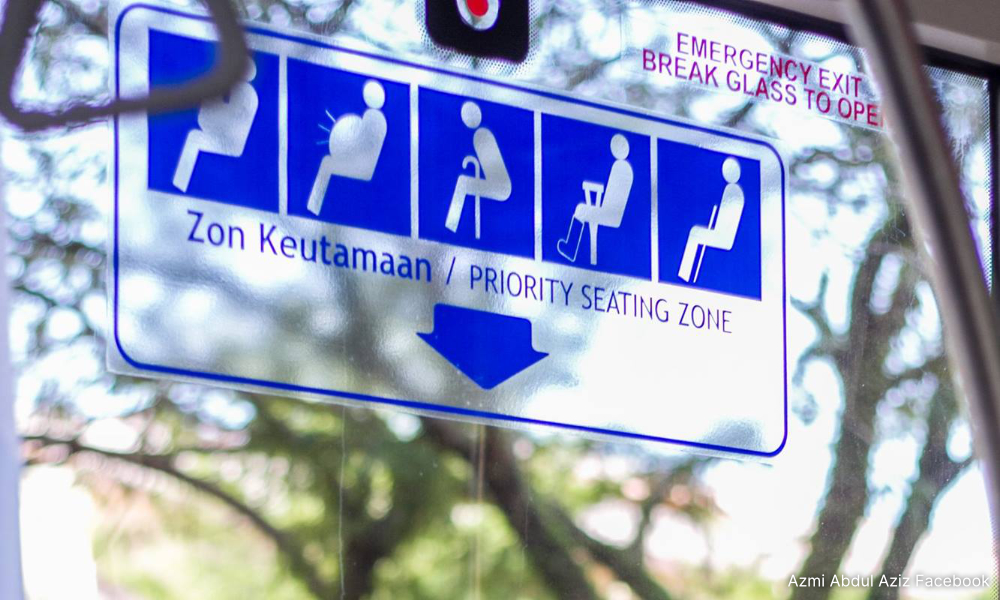
Communication accessibility is essential to ensure equal access to information for blind and low-vision persons, and for deaf and hard-of-hearing persons.
It includes tactile wayfinding, Braille labelling, clear high-contrast signage, visual display systems, audio announcements, and other communication aids required for independent navigation.
These elements are not welfare services. They are essential components of an inclusive built environment and fall under the responsibility of local authorities, such as the Kuala Lumpur City Hall (DBKL), and built-environment agencies.
The Public Welfare Department’s role is to provide social welfare and support services. It has no enforcement power over infrastructure or city planning.
It is crucial that accessibility is not viewed or treated as a welfare matter, as this misconception can weaken accountability, perpetuate inaction and delay meaningful progress.
2) Accessibility cannot depend on disability statistics
We understand the importance of data. However, linking infrastructure to “how many registered disabled people” creates a misconception that facilities are built only when the numbers justify them.
A city does not build safe walkways only when “enough” disabled people appear in a registry. Accessibility is a right, not a quota.
3) Accessibility is not specialised; it is universal
Accessibility is often misunderstood as “specialised facilities only for people with disabilities,” when in reality it is about universal access for everyone.
Universal design focuses on creating infrastructure, products, and services that prioritise safety, usability, and dignity for all people.
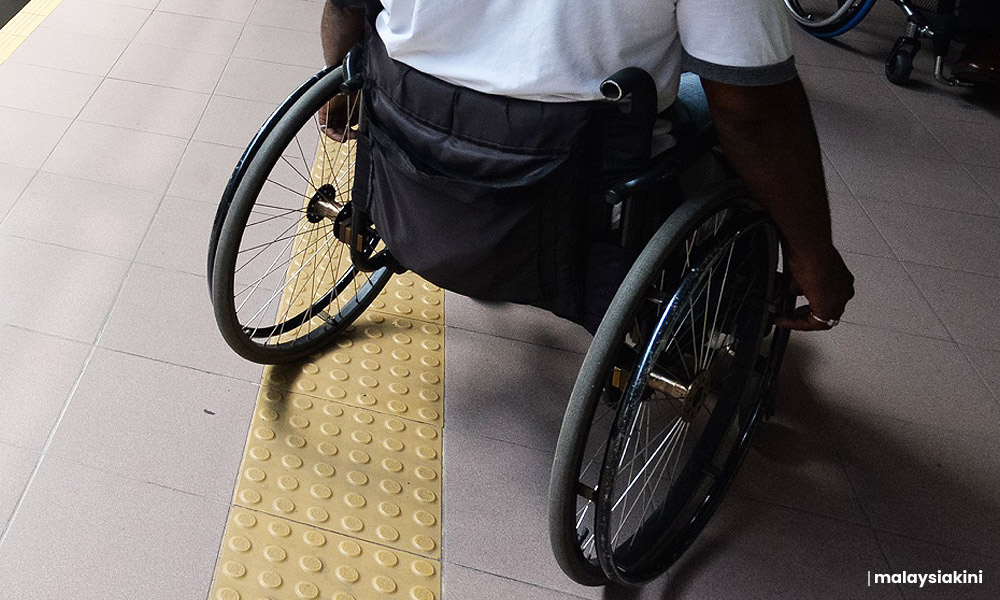
When applied, it benefits everyone, including persons with disabilities, seniors, parents with strollers, pregnant women, tourists, people with temporary injuries, and all pedestrians.
Universal access is not a niche requirement; it is the foundation of a safe, inclusive, and liveable city for every resident and visitor.
4) People with disabilities do not move within a single postcode
Accessibility discussions should not focus on any particular location, as it does not reflect the lived reality of people with disabilities.
We do not move within a single postcode or locality. We travel across the city every day, just like everyone else.
A city cannot be accessible in one neighbourhood and hazardous in another. It must be consistent across the whole built environment.
5) Accessibility is a legal and governance obligation
Malaysia already has strong legal and policy frameworks mandating accessibility.
They include:
Malaysian Standard on Universal Design and Accessibility (MS1184)
Uniform Building By-Laws 34A (UBBL34A)
Persons with Disabilities Act 2008 - Section 26 (Access to public facilities, amenities, services and buildings)
UN Convention on the Rights of Persons with Disabilities (CRPD) - Article 9 (Accessibility)
These obligations apply across all areas, regardless of registration figures. Accessibility must be planned, constructed and enforced in full compliance with the provisions of the law.
However, the real barriers are structural: persistent non-compliance with standards, weak enforcement, fragmented responsibilities, and the absence of a coordinating authority and oversight committee.
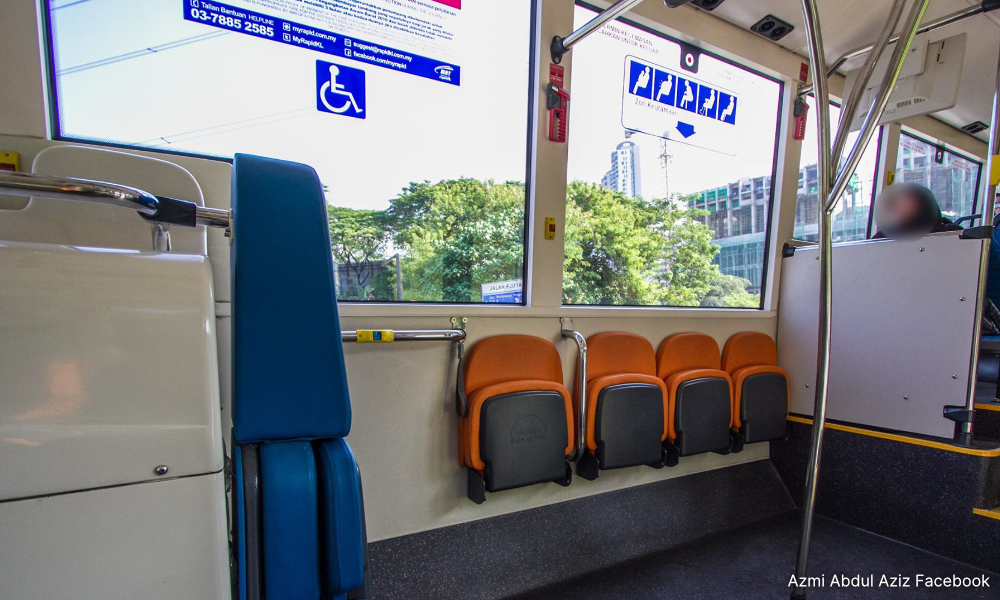
The challenge lies not in data, but in strengthening governance and enforcement.
6) Accessibility is a basic human right
It is a fundamental right that shapes every other right, including education, employment, healthcare, and social participation.
When access is denied, safety is compromised, and exclusion becomes inevitable, leading to long-term marginalisation.
Accessibility is also formally recognised as a cross-cutting human-rights principle underpinning the protection and fulfilment of all other rights.
For the disabled community, accessibility is about navigating safely, living independently, and communicating equally.
It reflects our identity, our rightful place in society, and the affirmation that we are equal in dignity and humanity.
For the authorities, ensuring equal access is both a moral duty and a legal obligation. It is not negotiable, not optional and not something that depends on “pendaftaran” (registration) to justify our worthiness.
A structural solution is urgently needed. We believe Yeoh’s leadership and influence can help reset longstanding misconceptions and steer Kuala Lumpur toward becoming an exemplary accessible city where equal access is seen not as a matter of numbers, but as a matter of rights.
We therefore reiterate our call for the establishment of a Walkability, Accessibility & Connectivity Committee under DBKL, as previously proposed.
Without a formal body empowered to coordinate, enforce and monitor standards, accessibility will remain fragmented, inconsistent and years behind global norms.
This letter is issued by:
Christine Lee, wheelchair user, advocate and co-founder of Barrier-free Environment and Accessible Transport (Beat)
Murugeswaran Veerasamy, president of Damai Disabled Person Association Malaysia
Pua Ghin Chu, executive director of Beautiful Gate Foundation for the Disabled
Nadhir Abdul Nasir, chairperson of Communication, Advocacy & Human Rights Committee Society of the Blind in Malaysia (SBM)
Endorsed by the following CSO:
Damai Disabled Person Association Malaysia
Beautiful Gate Foundation for the Disabled
Malaysian Council for Rehabilitation (MCR)
Selangor Cheshire Home
Dual Blessing Berhad
Pertubuhan Advokasi dan Kesejahteraan Pekak Malaysia (Dawn)
Asia Pacific Network on Accessible Tourism (APNAT)
Persatuan Kebajikan Masyarakat Permata Warga Istimewa Malaysia
The views expressed here are those of the author/contributor and do not necessarily represent the views of Malaysiakini.
/file/publisher-c1a3f893382d2b2f8a9aa22a654d9c97/2020/11/3604c1dc1a038fa73bf877e84349728a.jpg)
/file/publisher-c1a3f893382d2b2f8a9aa22a654d9c97/2025/08/4faeec267f4e6f4ef86e50f07e38614f.jpg)
/file/publisher-c1a3f893382d2b2f8a9aa22a654d9c97/2025/10/5536e4507befa62a63b6c7ed5d69f0ab.jpg)
/file/1293/9409c34efb35c9a50ee6de5b2ea18ed3.jpeg)


Are you sure you want to delete this comment?
This action cannot be undone.