


/file/publisher-c1a3f893382d2b2f8a9aa22a654d9c97/2020/10/1e0b10c0339170beb05039afd89dbcca.jpg)

LETTER | WFH may ease traffic pressure, but for how long?
LETTER | Prime Minister Anwar Ibrahim’s announcement that the public sector and GLCs will start working from home (WFH) starting April 15 underscores the seriousness of the global energy crisis triggered by the West Asian conflict.
One can debate its effectiveness, but it signals that the government is being proactive and leading from the front.
Transport Minister Anthony Loke has already declared that the country is in “crisis mode” following the war in Iran. The impact on citizens is clear, from higher fuel and food prices to mounting inflationary pressure and potential strain on infrastructure.
The shift towards WFH inevitably brings back memories of the pandemic, when roads were largely empty. Yet the more relevant lesson lies in what happened after.
Once restrictions were lifted, traffic returned quickly and, in many cases, worsened. The TomTom Traffic Index found that by May 2022, congestion in Kuala Lumpur had already exceeded pre-pandemic levels following the easing of WFH arrangements and the reopening of schools.
A June 2021 McKinsey report similarly observed increased car usage during the pandemic, even among public transport users.
There is little reason to expect a different outcome this time. When the current crisis stabilises, and WFH arrangements are scaled back, traffic across the Klang Valley and other major urban centres is likely to surge again.
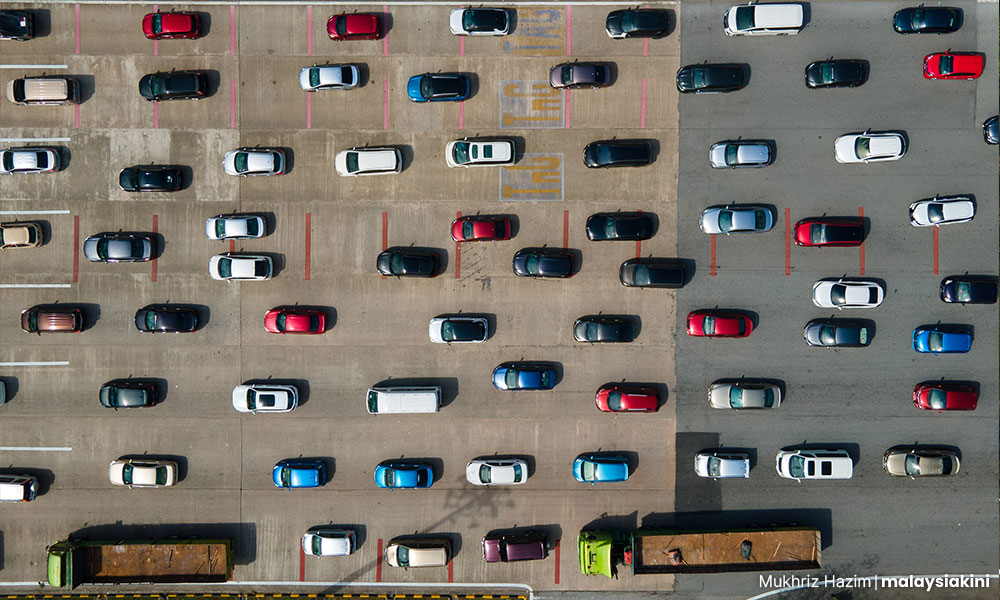
The scale of this challenge should not be underestimated. During last year’s Hari Raya Aidilfitri, the Malaysian Highway Authority estimated more than 3.49 million vehicles on major highways during peak travel days.
This offers a glimpse of the pressure our road network faces when mobility rebounds.
If such a surge is almost inevitable, the more pressing question is whether we are preparing for it.
Managing bottlenecks
One area worth closer attention is the management of bottlenecks, particularly at toll plazas. Technologies such as Automatic Number Plate Recognition (ANPR), which underpin the broader Multi-Lane Free Flow (MLFF) concept, can play a meaningful role in improving traffic flow.
For example, the use of AI-driven licence plate recognition systems linked to online payment options can help address this problem.
The endgame will be to remove the plazas altogether, the way Singapore does with its Electronic Road Pricing (ERP). In effect, it is the MLFF that we’ve all been hearing about.
There have already been early steps in this direction. Plus Malaysia has been trialling ANPR-linked features via its JustGo app along the Hutan Kampung-Sungai Dua stretch, enabling more flexible, lane-agnostic payment options.

While still limited in scope, such efforts demonstrate how technology can reduce friction and ease congestion.
Therefore, there’s an urgent need to bring ANPR/MLFF technology across Malaysia, especially in KL and the wider Klang Valley.
The economic case is equally compelling. The North-South Highway is a key national artery, and reducing delays at toll points can lower logistics costs, improve connectivity, and support the more efficient movement of goods and people.
These gains will be particularly important as Malaysia navigates the post-crisis recovery period.
It also raises a simple question: why is such technology not being deployed more widely in the areas where congestion is most acute and the benefits most immediate?
Crises are often described as opportunities. The current global situation has prompted us to think more seriously about energy use, mobility, and resilience.
While planning will not eliminate congestion entirely, it can make the next surge far more manageable.
The views expressed here are those of the author/contributor and do not necessarily represent the views of Malaysiakini.
/file/publisher-c1a3f893382d2b2f8a9aa22a654d9c97/2022/06/c6c80481bd307d8ebb058165908e41c0.jpg)
/file/publisher-c1a3f893382d2b2f8a9aa22a654d9c97/2025/11/5e6b75f7247881960379d76a7331b8ef.jpg)
/file/publisher-c1a3f893382d2b2f8a9aa22a654d9c97/2020/10/001a2b3449d04c63ab832a6700224097.jpg)
/file/publisher-c1a3f893382d2b2f8a9aa22a654d9c97/2023/02/0b8dfa651f551f26d7e4a97fee080c53.jpg)
/file/publisher-c1a3f893382d2b2f8a9aa22a654d9c97/2025/10/7c8e6781aa9e552138b012ea4a41989d.jpg)


Are you sure you want to delete this comment?
This action cannot be undone.