


/file/publisher-c1a3f893382d2b2f8a9aa22a654d9c97/2023/11/c34dada36ebd33f394e075c941bba6ab.jpg)

LETTER | Bear trap: Rohingya crisis without easy exit for anyone
LETTER | For decades, the Rohingya population in Myanmar has faced layers of discrimination that tragically escalated in scale following the outbreak of violence in Myanmar in 2017.
The Rohingya population is considered an out-group in the state where they call home, due to their religious identity that became an exploited cleavage for the predominantly Buddhist state.
The tension between these two different religions is almost irreconcilable in Myanmar, and the takeover of the military junta in 2021 has only made the state more lawless and violent towards the minority population. As a result, millions of them are displaced across the world, scattered across countries like Bangladesh and Malaysia.
The sufferings of the Rohingya warrant a humanitarian response, but is liberating Malaysian borders and accepting unvetted refugees or asylum seekers unconditionally the solution to the problem, or is it a form of unsustainable relief designed to avoid a diplomatic crisis?
Where it all started
How did we get here? "The world cannot just say 'look, it is not our problem'. It is our problem," former prime minister Najib Abdul Razak told thousands at the solidarity rally in Kuala Lumpur in December 2016.
Since then, Malaysia has welcomed the Rohingya refugees with open hands, with the Rohingya refugee population in Malaysia totalling more than 160,000 by early 2019.
However, when the pandemic struck, with a swift shift in tone and policy, Malaysia started turning away Rohingya refugees, with former defence minister Ismail Sabri Yaakob saying that Rohingya refugees arriving by boats are not welcomed to Malaysia. Amongst all the chaos, xenophobic sentiment rose, and hostility towards the Rohingya erupted.
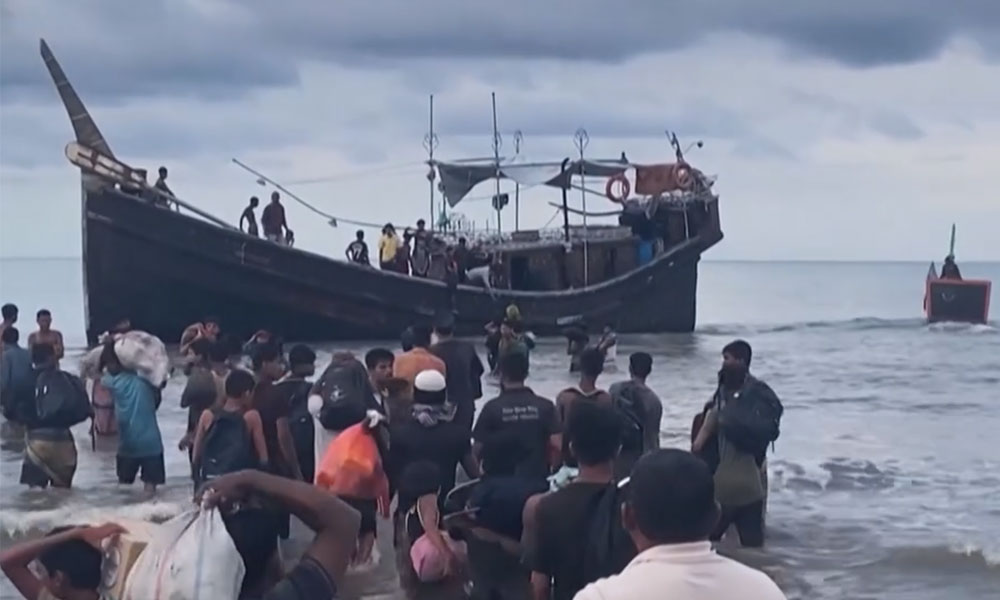
The problem is this: Malaysia accepted thousands of refugees, more than 200,000 as of now, whilst being a non-signatory of the 1951 UN Refugee Convention nor its 1967 Protocol.
This means Malaysia does not formally recognise the rights of refugees and asylum seekers; the government is maintaining a front of accepting refugees for humanitarian reasons whilst simultaneously being unable to provide basic human rights to refugees within the country, whether out of unwillingness or political and economic hurdles.
The opaque approach the Malaysian government has been adopting for years is not a form of kindness; it is a bear trap that has brought significant benefit to none. This has culminated in problems like the erection of illegal settlements, uncertainty for both refugees and asylum seekers, as well as a continuing rise in xenophobic sentiment.
So, what now?
Over the years, a myriad of policy proposals have been suggested in relation to immigration control, particularly for Rohingya refugees, but not every suggestion is viable nor popular.
Think tanks such as Ideas have suggested granting refugees currently working in Malaysia the right to work. Research done by Ideas has shown that the refugee population are contributing positively to the economy by broadening labour supply and, if legally recognised to work, would lead to an estimated total of RM53 million each year in direct and indirect taxes.
The prevalent argument that Rohingya refugees are chipping away at job opportunities is debatable. The majority of refugees are working in the 3D “dirty, dangerous, and difficult” sectors that Malaysians are avoiding; hence, they’re merely filling a gap, not creating it.
Besides, with the demographic shift to an ageing population, formalising the employment of refugees with sector restrictions would serve the economic interest of Malaysia. From a humanitarian lens, sector restriction risks creating permanent inequality between citizens and asylum seekers or refugees, but mercy in this context is a mixture of raison d’etat and morality.
Malaysia is in a difficult position of balancing its interests and upholding humanitarian assistance; any form of mercy it could offer would put either side at a disadvantage.
Beyond the economic argument, adopting a completely intolerant attitude towards refugees would only expose Malaysia to intense scrutiny by international actors, especially the UNHCR.
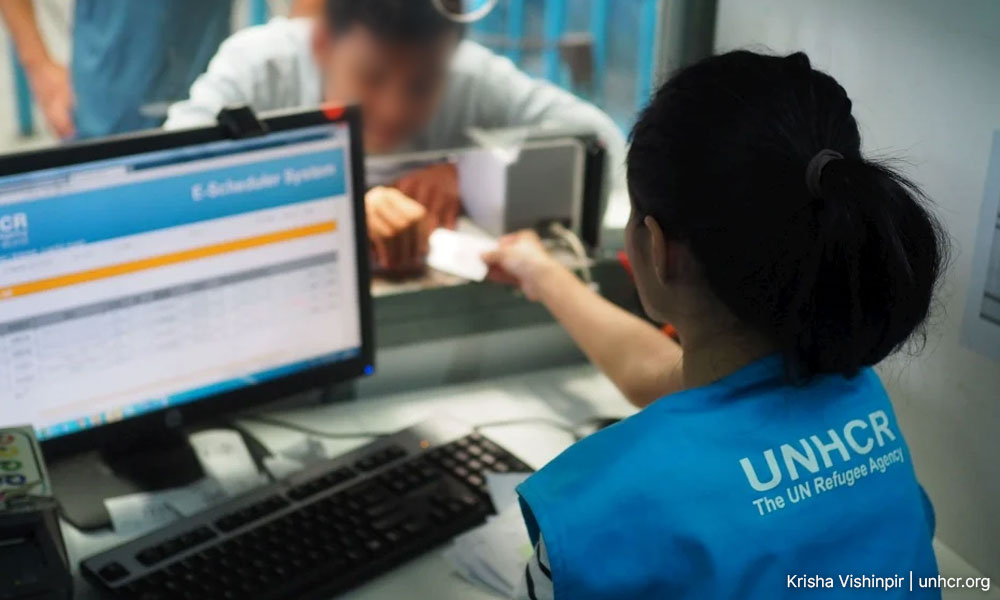
Malaysia does not have the full-fledged capability to defy the liberal international order, not only because of ethicality, but also because its middle power status renders it incapable of doing so.
There is an important caveat, however: legalising the employment of refugees does not mean having an open border or tolerating illegal settlements that border lawlessness. In fact, if the government intends to maintain public favour, it has to strengthen border control and set up larger but humane refugee settlements.
Limiting immigration or cracking down on illegal settlements are both controversial from a humanitarian lens, but Malaysia is incapable of and shouldn't tolerate an influx of unvetted asylum seekers.
A flimsy immigration policy is unsustainable and would only invite thousands into a limbo where they are trapped in constant fear of being deported and left susceptible to economic exploitation while instilling hostility within the Malaysian public.
However, any approach will not address the root cause if the persecution of the Rohingya population persists, and it is likely to.
Malaysia is unlikely to solve the crisis unilaterally: the Five-Point Consensus dictates non-intervention amongst Asean countries, Myanmar’s closed economy allows it to resist economic sanctions, and the military junta in power is unwilling to receive the Rohingya refugees, nor is it safe for them to return.
Malaysia has been engaging with Myanmar bilaterally and multilaterally through Asean, with limited results.
This will be a long process with an uncertain road ahead, but right now it seems like all roads lead to a dead end. The most obvious option for Malaysia is to strengthen its border control, but what about the refugees or asylum seekers that have already settled here?
The author is a student at the London School of Economics interning at Pulau Tikus assemblyperson Joshua Woo's office.
The views expressed here are those of the author/contributor and do not necessarily represent the views of Malaysiakini.
/file/publisher-c1a3f893382d2b2f8a9aa22a654d9c97/2025/09/b409fa6de153844a5536ef49c47da4bc.jpg)
/file/publisher-c1a3f893382d2b2f8a9aa22a654d9c97/2026/06/4679f7a096a369d3c73030ffabd08df5.jpg)
/file/publisher-c1a3f893382d2b2f8a9aa22a654d9c97/2025/01/a6b3192f60263d75ff0deb5e7044e624.jpg)
/file/publisher-c1a3f893382d2b2f8a9aa22a654d9c97/2020/04/610b659030f0d2edbe55db0d5e793623.jpg)
/file/publisher-c1a3f893382d2b2f8a9aa22a654d9c97/2020/04/9fdbc37d0719f61a7c4f62a44d5a5ca0.jpg)


Report this comment
Are you sure you want to delete this comment?
This action cannot be undone.