


/file/publisher-c1a3f893382d2b2f8a9aa22a654d9c97/2026/06/60e8f41c6a291971e398f083e3bd3f4a.jpg)

LETTER | LRT3: Sorry tale of mismanagement, incompetence, short-sightedness
LETTER | I refer to columnist P. Gunasegaram’s opinion piece, “LRT3 Shah Alam line welcome but questions on costs, delays remain.”
In the article, he notes, “It’s not clear why these changes in 2018 resulted in a delay of the project from a completion date of 2020 to 2024 and then subsequently to 2026.”
As a resident of Klang and a keen observer of this project, I can offer several critical insights into this timeline.
For the long-suffering residents of Klang, the launch of the LRT3 line on Aug 24, 2016, by former prime minister Najib Abdul Razak was music to our ears.
The 37km-long line was designed to connect Klang with Shah Alam and Petaling Jaya.
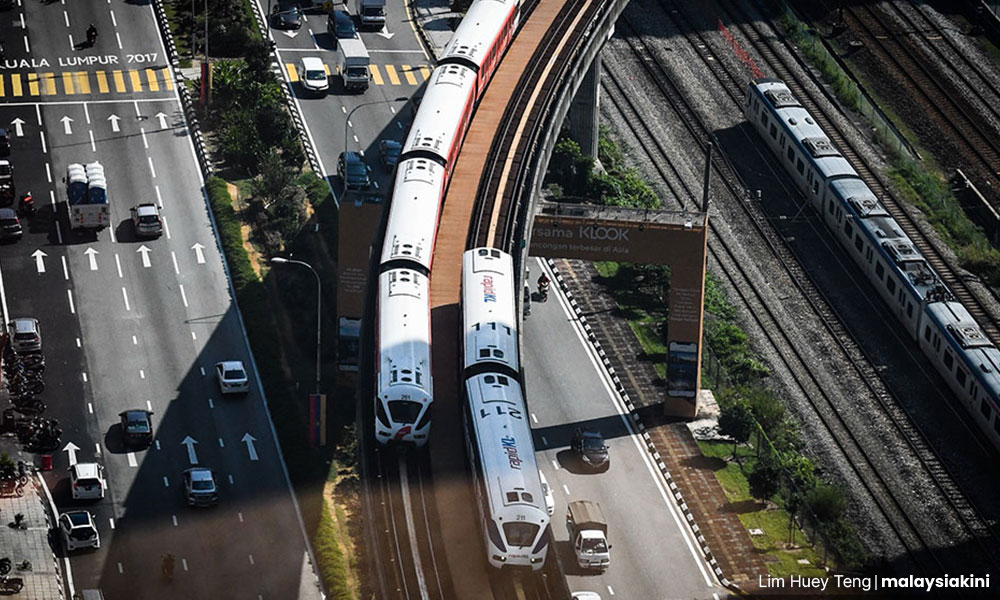
Construction was scheduled to commence in early 2017 and wrap up by Aug 31, 2020. The original blueprint featured 26 stations (including one underground station) at an initial projected cost of RM9 billion.
Unfortunately, the project soon spiralled into a saga of delays and cost overruns, leaving residents of Klang and Shah Alam to watch helplessly.
The first major disruption occurred in May 2018, when the Pakatan Harapan government halted the project for a review, citing fiscal constraints.
Led primarily by then-finance minister Lim Guan Eng and his aide, Tony Pua, the review resulted in drastic changes to the scope, station sizes, train configurations, and frequency.
Strangely, while the government claimed to slash costs by 47 percent to RM16.63 billion, it remains mathematically baffling how a project initially budgeted at RM9 billion ended up with a revised, “downsized” bill of RM16.63 billion.
Alongside this ballooning budget, the operational date was pushed back four years to 2024.
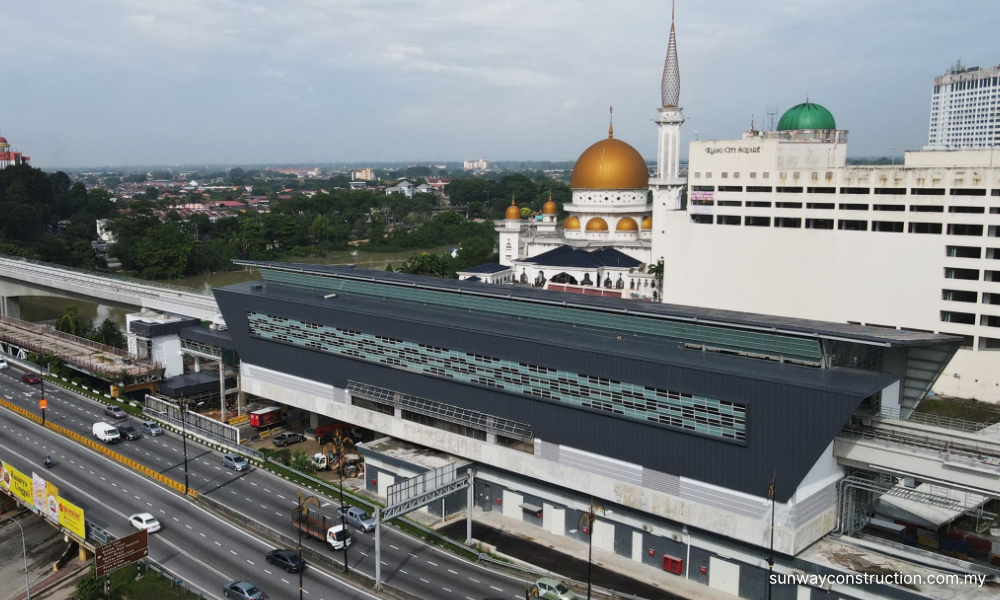
Though the main contractor, MRCB-George Kent Sdn Bhd, received approval to resume work in October 2018, structural issues persisted.
In 2020, media reports revealed that political appointees within the project owner, Prasarana Malaysia, attempted to influence subcontractor selection.
When MRCB-George Kent refused to comply, RM700 million in payments was withheld.
This cash flow bottleneck prevented the main contractor from paying smaller subcontractors, forcing many to halt operations and causing further systemic delays.
While these financial disputes were eventually resolved, more policy pivots followed. During the tabling of Budget 2024 in October 2023, Prime Minister Anwar Ibrahim announced the reinstatement of the five previously shelved stations at a cost of RM4.7 billion.
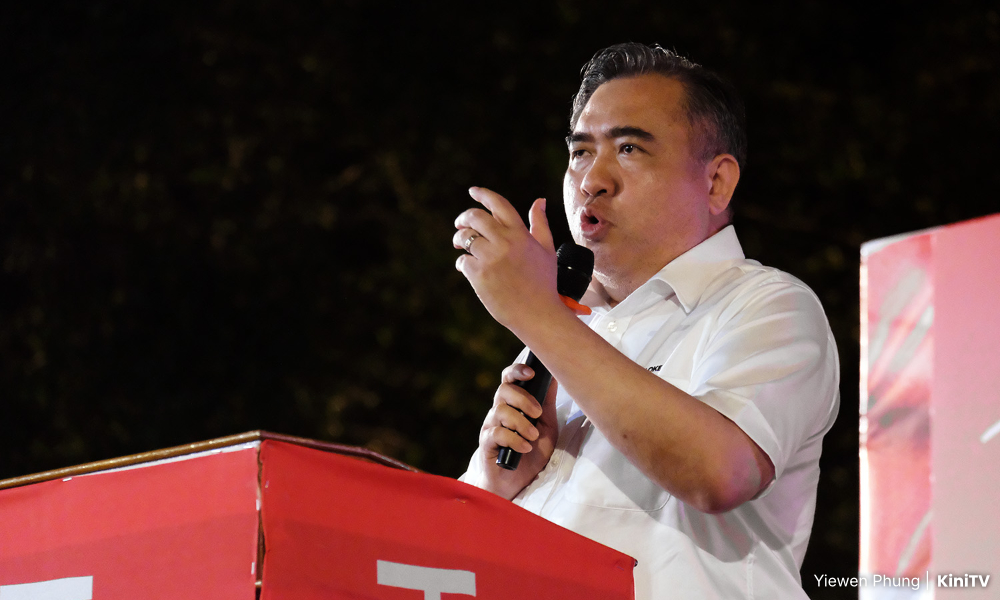
Transport Minister Anthony Loke subsequently assured the public that building these stations would not stall main operations, promising a launch in March 2025, with the additional five stations opening by the second half of 2027.
Instead, the public was met with successive, poorly explained delays. The service finally commenced at the end of June 2026 - marking a total delay of nearly six years, with total costs reportedly ballooning to RM22 billion.
The compounding delays since 2022 fall squarely on the current administration and reflect poorly on Loke’s leadership. The Selangor ruler is far from the only one frustrated by this mismanagement; His Royal Highness’s critical comments are entirely spot on.
Furthermore, the operational quality of the finished line has drawn severe public criticism.
Shockingly, despite years of extra time, several stations lack safe, proper pedestrian walkways.
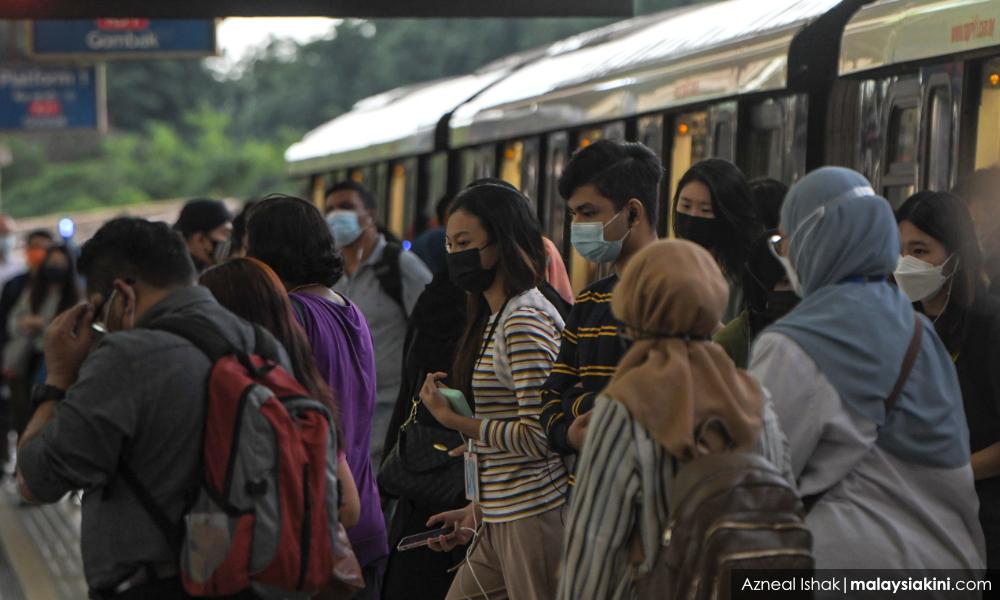
The train frequency sits at a sluggish eight minutes - far longer than other Klang Valley rail lines - and passengers are already vocal about the lack of designated women-only coaches.
While Pua defends his 2018 austerity measures by claiming the final bill is RM9.72 billion, his mathematical justifications were unconvincing then, and they hold even less water today.
The original cost-cutting measures were short-sighted and will haunt commuters for years.
Replacing 42 sets of six-car trains with just 22 sets of three-car trains, slashing commuter parking spaces from 6,000 to 2,300, and doubling headway times from four minutes to eight are moves that actively sabotage public transport efficiency.
The recent suggestions by Loke to turn car parks into high-density “affordable” housing projects are not just laughable but alarming.
Looking forward, the planned expansion faces a highly sceptical public. There are still no signs of a request for quote (RFQ) being called for the five reinstated stations.
Personally, I suspect this expansion will never materialise, and the funds will instead be quietly diverted to cover up past fiscal errors.
There are also serious questions regarding the RM4.7 billion allocation for these five stations, a figure that has mysteriously climbed to RM5.3 billion.
Industry experts have rightly flagged this as an astronomical and exorbitant amount for an add-on phase, yet no official rationale has been provided.
The public in Klang and Shah Alam deserves accountability. We hope Loke will soon deliver a transparent, exhaustive explanation on a matter that impacts our daily lives so deeply.
The views expressed here are those of the author/contributor and do not necessarily represent the views of Malaysiakini.
/file/publisher-c1a3f893382d2b2f8a9aa22a654d9c97/2026/07/144c4c875f9cf3a97a322766be5f7911.jpg)
/file/publisher-c1a3f893382d2b2f8a9aa22a654d9c97/2024/04/a0bb7115e25714eb3de72ad0c967fd33.jpg)
/file/publisher-c1a3f893382d2b2f8a9aa22a654d9c97/2023/10/c97d49d179dc1ca4e000cd9a452827a8.jpg)
/file/publisher-c1a3f893382d2b2f8a9aa22a654d9c97/2026/06/cff447dc281965d2e6b97d3e26bcd821.png)
/file/publisher-c1a3f893382d2b2f8a9aa22a654d9c97/2026/06/5e390feddb5994036db71c46ad9b14de.png)


Are you sure you want to delete this comment?
This action cannot be undone.