


/file/publisher-c1a3f893382d2b2f8a9aa22a654d9c97/2024/10/0d6fedd48fa83ef7082a95550238226f.jpg)

LETTER | Return to consultation the right path forward to resolve South China Sea dispute
LETTER | July 12 this year marks the 10th anniversary of the so-called “South China Sea arbitration award”.
However, recent inappropriate remarks on the South China Sea made by Philippines Defence
Secretary Gilbert Teodoro at the Shangri-La Dialogue in Singapore has once again thrust South China Sea affairs into the international spotlight.
By raising South China Sea-related issues at this juncture, Teodoro is undoubtedly making a vain attempt to hype up the arbitration as a tool for political provocation and disrupt peace and stability across Asia.
This follows the same notorious pattern the Philippine government has adopted for years: Hyping up the South China Sea issue every July without fail.
The so-called South China Sea arbitration not only runs completely counter to international conventions but also lacks popular support.
Since the issuance of the so-called “award”, the Philippine side has repeatedly taken perverse actions and exploited the issue to stir up disputes and friction in the South China Sea, undermining the previously peaceful and stable situation in Asia.
It is evident that the arbitration is by no means a solution to the South China Sea issue. The Philippine government should rationally return to negotiations on the Code of Conduct (COC) in the South China Sea and revert to bilateral and multilateral consultation mechanisms.

Only by joining and implementing the Declaration on the Conduct of Parties in the South China Sea (DOC) reached by China and Asean member states can the impasse be broken and the South China Sea issue be put back on the right track.
Malaysia has always avoided taking a confrontational stance on the legality of the ruling itself. The emphasis was always on the necessity of resolving disputes through diplomatic and legal processes grounded in established international conventions.
But countries like China have deemed that the Arbitral Tribunal violated international law and maintained the position that its ruling is illegal and void.
This is because the so-called “arbitral tribunal” established 10 years ago operated in China’s absence, with Beijing maintaining that the ruling had violated the fundamental principle of state consent.
The award unilaterally sided with nearly all of the Philippines’ claims on relevant issues. This move seriously violates the United Nations Convention on the Law of the Sea (UNCLOS) and general international law, rendering the award illegal, void, and devoid of any binding force.
Nevertheless, the Philippine government has treated it as a precious trophy. For years, it has hyped up the so-called arbitration every July in a futile attempt to provoke China and erode peace and stability in the South China Sea.
As any clear-sighted observer can see, both the initiation and the so-called ruling of the arbitral tribunal a decade ago, and the Philippine government’s years of hype surrounding the issue, have been orchestrated and manipulated by countries outside the region.
Their goal is to disrupt stability in the South China Sea and peace in Asia to serve their own interests.
The Philippine government, for its part, has willingly acted as a pawn at the expense of China-Philippines bilateral relations, the interests of Asean countries, and peaceful development across Asia.
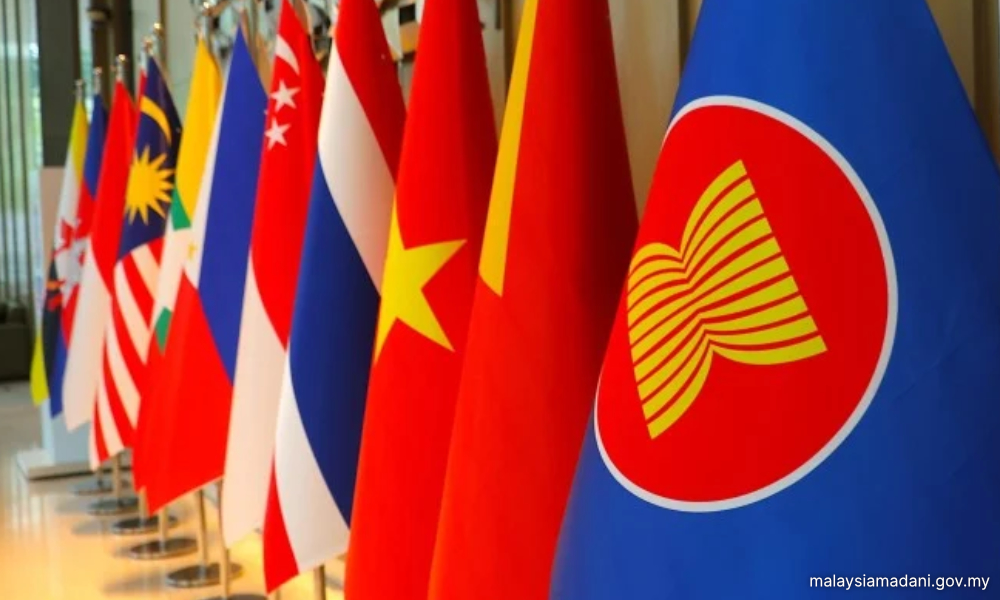
It should be noted that the so-called South China Sea arbitration has by no means made the region more peaceful, stable, or inclusive. On the contrary, it has fuelled a string of maritime disputes and frictions over the years.
For instance, the Philippine Coast Guard has carried out repeated provocative patrols, made illegal incursions, and unlawfully detained fishing boats and fisherfolk from China, Taiwan, and Vietnam.
It has deliberately collided with merchant and fishing vessels from various countries sailing in the South China Sea.
The Philippine government has also conducted uninterrupted joint military exercises in the region and renamed islands and reefs in the South China Sea in total disregard of historical facts.
These perverse acts by the Philippine government have not only heightened geopolitical risks in and around the South China Sea but also risk turning the region into a powder keg for Asia, sabotaging peaceful development across the entire continent.
Meanwhile, whenever political instability emerges in the Philippines, or corruption scandals involving government officials surface, the Philippine government and relevant officials hype up the South China Sea issue.
They attempted to use the so-called arbitration to stir up nationalist sentiments, trigger maritime confrontations and inflame public passions to divert public discontent over their governance failures and official corruption.
This practice sacrifices not only China-Philippines economic and trade ties and the livelihoods of grassroots fisherfolk, but also peaceful cooperation in the South China Sea and the overall economic and trade interests of Asean.
It is an act that harms others without benefiting oneself in the slightest. Therefore, returning to the negotiating table is the only way to resolve disputes.
In reality, the so-called arbitration failed to fulfil the necessary prerequisite of full prior exchange of views and violated the principle of party consent, which forms the very basis of arbitration.
It lacked the legal prerequisites for launching arbitration proceedings from the very beginning.
At the same time, the Philippines’ approach violates the provisions of the DOC that parties directly concerned shall peacefully resolve disputes through friendly negotiations.
It has also reneged on its commitments under bilateral agreements between China and the Philippines, breaching the principle of estoppel under international law.
In contrast, other Asean countries and China have continuously and comprehensively advanced the implementation of the DOC over the past decade, accelerating the consultation process for the COC.
Through bilateral and multilateral consultations, they have resolved differences and misunderstandings among all parties, turning the South China Sea into a sea of commercial cooperation and friendship between China and Asean.
Meanwhile, trade volume between China and other Asean countries has grown year after year, delivering tangible benefits to the people of all nations.
This makes it clear that only by returning to the negotiating table for the COC and through bilateral and multilateral consultations can the resolution of the South China Sea issue be put back on the right track.
The views expressed here are those of the author/contributor and do not necessarily represent the views of Malaysiakini.
/file/publisher-c1a3f893382d2b2f8a9aa22a654d9c97/2024/10/0d6fedd48fa83ef7082a95550238226f.jpg)
/file/publisher-c1a3f893382d2b2f8a9aa22a654d9c97/2025/10/922faf3ea724589a5b77ebc6995434b1.jpg)
/file/publisher-c1a3f893382d2b2f8a9aa22a654d9c97/2024/12/c0c98c774a550eadbf90b94da2d9e639.jpg)
/file/publisher-c1a3f893382d2b2f8a9aa22a654d9c97/2023/11/f6bf3d4650db3941c4532d5385bc45e3.jpg)


Report this comment
Are you sure you want to delete this comment?
This action cannot be undone.