


/file/publisher-c1a3f893382d2b2f8a9aa22a654d9c97/2020/10/c18473232beefad46a426bd9888dd5c5.jpg)

LETTER | Malaysia must protect trust sector amid regulatory reform
LETTER | As regulators move to strengthen oversight of Malaysia’s trust industry, there has been growing concern over the wide gap in capital requirements between trust companies and other non-banking financial institutions, such as fund management companies.
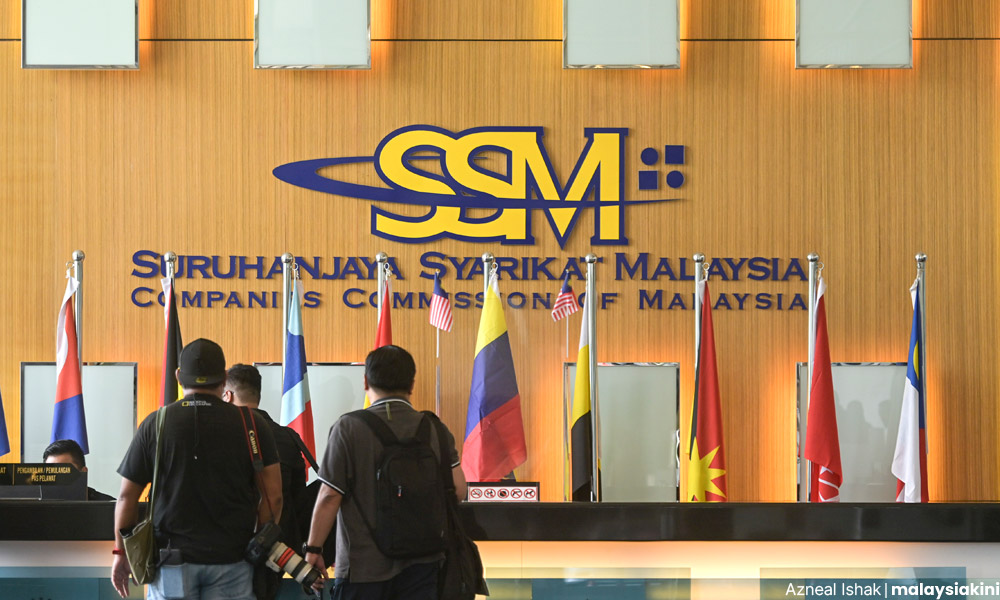
In trying to address regulatory gaps exposed by a small number of bad actors, we must be careful not to lose sight of the important role played by the trust industry. Trust companies provide essential services to the public and should retain their distinct regulatory identity under the Companies Commission of Malaysia (CCM).
Trust companies are part of Malaysia’s wider non-banking financial system. Along with other financial institutions, they provide services that contribute to the stability of the economy and help individuals and businesses manage their wealth and assets. Their role should not be underestimated.
One of the main issues being raised is the difference in capital requirements.
Trust companies are currently required to have paid-up capital of RM150,000, together with a RM100,000 security deposit with the accountant-general. In comparison, fund managers holding a capital markets services licence (CMSL) are generally required to maintain at least RM2 million in paid-up capital and shareholders’ funds.
Some have argued that the lower capital requirement for trust companies creates risks for investors. But this comparison does not take into account the very different nature of their businesses.
Trust companies primarily administer estates, assist with succession planning, and preserve wealth for beneficiaries. Their role is largely custodial. Fund managers, on the other hand, actively manage and invest clients’ money. They operate in a different environment and face different risks.
Capital requirements should reflect risk
It is therefore understandable that capital requirements for fund managers are higher. But this does not necessarily mean that trust companies should be subjected to the same requirements simply because both operate within the broader financial system.
The issue has come into sharper focus following recent action by the Securities Commission (SC) against trust companies involved in capital market activities.
On May 22, the SC issued a practice note stating that trust companies whose capital market activities are not solely incidental to their conventional trust business may be required to obtain a CMSL.
This followed amendments to the Capital Markets and Services Act 2007, which came into effect on Jan 1 and expanded the SC’s authority to determine which trust companies require a licence.
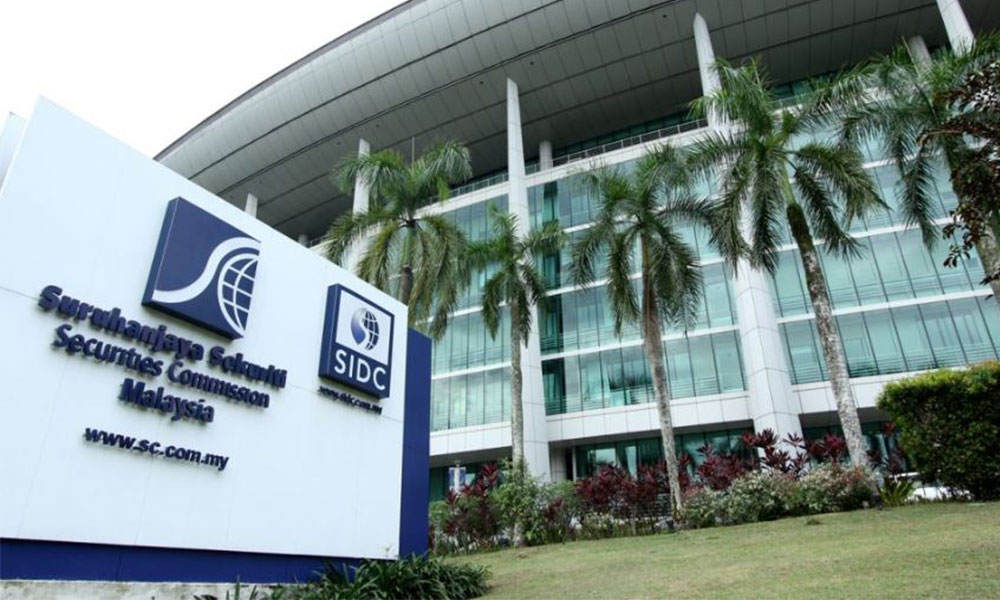
The Finance Ministry has also confirmed that the SC has prosecuted a trust company for carrying out unlicensed capital market activities and has investigated several others.
Cash trust schemes have attracted particular attention. These schemes are sometimes marketed to the public with promises of high annual returns. Earlier this year, several insurance companies also barred their agents from promoting such schemes.
That decision, however, should not automatically be taken as proof that cash trust schemes as a whole are inherently problematic.
Insurance companies may also have their own commercial reasons for restricting their agents from promoting products offered by trust companies, including protecting their own business interests.
That said, there is a legitimate concern where certain operators use regulatory gaps to market risky investment schemes to the public. Such conduct should be addressed through proper enforcement.
But enforcement against particular operators should not be confused with the trust industry as a whole.
Most trust companies operate legitimate businesses and provide important services in wealth preservation, estate planning and intergenerational succession.
Kenanga Trustees CEO Tan Ping Ying has highlighted that many Malaysians still do not fully appreciate the importance of this aspect of financial planning.
Pacific Trustees Group chairperson Paul Cheah has similarly described a strong trust industry as an important part of the financial sector and an important contributor to nation building.
The industry also manages significant assets and supports a wide range of financial and commercial activities. The top 10 companies in Malaysia’s trusts and funds sector generated US$3.57 billion (RM14.43 billion) in revenue in 2022, an increase of 10.5 percent from the previous year.
Pacific Trustees, for example, has provided services for more than 316 bond and sukuk issuers, representing a total fund size of approximately RM697 billion in nominal value.
These are not insignificant players. They are established institutions providing services to families, businesses, and the wider economy.
Trust companies need distinct framework
This brings us to a more fundamental question: where should trust companies sit within Malaysia’s regulatory framework?
The proposed Trust Companies Bill, which is expected to be tabled in Parliament this year, will replace the outdated Trust Companies Act 1949. The new law is expected to introduce clearer rules on permitted activities, beneficial ownership, governance and winding up.

The key point is that trust companies should continue to fall primarily under the CCM framework rather than becoming part of the SC’s regulatory system.
The existing 1949 Act has clear limitations. Its oversight is largely focused on registration, administration, and corporate governance. It does not provide comprehensive powers to monitor or enforce the conduct, activities, transactions, or investments of trust companies.
Those gaps should be addressed by the new legislation. The answer, however, should be stronger and more effective regulation rather than moving the entire trust industry into the capital markets regulatory framework.
Trust companies are fundamentally different from capital market intermediaries. Their core business involves estate administration, succession planning and legacy management. Their purpose is to protect and manage assets according to the wishes of the settlor and for the benefit of beneficiaries.
Even the SC’s own practice note recognises this distinction. Trust companies can continue to provide certain investment-related services without a CMSL where those activities are solely incidental to their conventional trust business.
For example, a trust company managing a family education trust or estate trust may need to provide financial planning, investment advice, or manage investments simply to preserve the value of the trust. That does not necessarily turn the trust company into a fund manager.
There are, of course, areas where the regulatory framework can be improved.
Capital requirements, individual accountability, compliance functions, and reporting obligations are among the areas that deserve closer attention. Where genuine gaps exist, they should be addressed.
But regulation should be proportionate to the risks involved.
The forthcoming Trust Companies Bill provides an opportunity to modernise the industry without undermining its role.
The government has indicated that the new legislation will introduce a more comprehensive framework covering permitted activities, mandatory registration, investment, beneficial ownership, governance, corporate rescue, striking off, winding up, and dissolution.
This is a sensible direction.
Malaysia needs a trust industry that is properly regulated, transparent, and accountable. At the same time, it needs to recognise that trust companies serve a different purpose from capital market intermediaries.
The Trust Companies Act 1949 was written for a very different era. It was largely designed around traditional trusteeship, including the administration of wills and estates. The regulatory framework now needs to reflect the much broader role played by trust companies today.
The SC’s practice note has also drawn an important distinction between legitimate trust activities and investment schemes that may effectively operate as unlicensed fund management businesses.
That distinction should be maintained.
The actions of a few operators should not be allowed to damage an entire industry. Where there is misconduct, the appropriate companies should be investigated and prosecuted. Where there are regulatory gaps, those gaps should be closed.
But regulation should not be driven by the assumption that every trust company presents the same level of risk.
As the new Trust Companies Bill takes shape, policymakers should consider raising capital requirements where necessary, strengthening governance, improving transparency, and ensuring greater accountability. At the same time, the distinct nature of trust businesses should be preserved.
The reported effort by the SC and CCM to develop a joint framework for the oversight of cash trust activities is therefore a positive step. Cooperation between the two regulators can help close regulatory gaps without creating unnecessary duplication or confusion.
The trust industry deserves regulation that is proportionate to the risks it actually presents. It also deserves recognition for the important role it plays.
As wealth continues to grow across Asia, the demand for proper estate planning, wealth preservation and succession planning will only increase. Malaysia has an opportunity to build a strong and trusted trust industry that can meet that demand.
The answer is better regulation, not dismantling an industry that has an important role to play in the Malaysian economy.
The writer is a practising lawyer based in Kuala Lumpur, focusing on general and corporate litigation.
The views expressed here are those of the author/contributor and do not necessarily represent the views of Malaysiakini.
/file/publisher-c1a3f893382d2b2f8a9aa22a654d9c97/2026/08/3d678b9c1c1526cf323a3e38d308f13a.jpg)
/file/publisher-c1a3f893382d2b2f8a9aa22a654d9c97/2026/07/713a95a3c468433b81380bba2e778dc3.jpg)
/file/publisher-c1a3f893382d2b2f8a9aa22a654d9c97/2026/08/e260f4d1713b360335df9c7eaaa543e3.jpg)
/file/publisher-c1a3f893382d2b2f8a9aa22a654d9c97/2024/10/5f974941cc2ff66676393e6f77c6e03a.jpg)


Report this comment
Are you sure you want to delete this comment?
This action cannot be undone.