




A gloomy outlook for the economy
Malaysia's gross domestic product (GDP) growth rate was forecasted to drop to zero percent as the global financial crisis evolved into a deepening sub-regional industrial crisis in Southeast Asia, according to the United Nations' regional arm, the Economic and Social Commission for Asia and the Pacific (Escap).
Malaysia's gross domestic product (GDP) growth rate was forecasted to drop to zero percent as the global financial crisis evolved into a deepening sub-regional industrial crisis in Southeast Asia, according to the United Nations' regional arm, the Economic and Social Commission for Asia and the Pacific (Escap).
In its annual Economic and Social Survey for Asia and the Pacific, Escap observed that the crisis has moved rapidly from its first stage of a financial crisis emanating from developed countries and causing contagion in Asia and the Pacific, to a second stage of crisis for the real economy in the region based on plummeting exports and curtailed domestic demand.
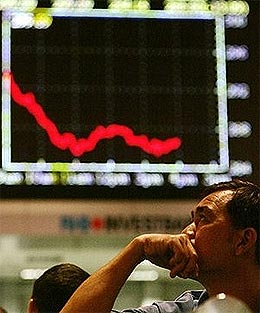 Depressed growth in the region now threatened a third stage of crisis of contagion spreading from the real sector back to the financial sector, where any increase in non-performing loans will put added pressure on bank balance sheets.
Malaysia's GDP grew at 4.6 per cent in 2008 - down from 6.3 per cent in 2007 - although record high prices of export commodities such as palm oil during the first half of the year eased the downfall.
In the fourth quarter of 2008, GDP growth rate fell abruptly to 0.1 per cent, reflecting both plunging commodity prices and the impact of the recession in the United States and other industrialised countries. The US dollar value of Malaysian exports contracted by 20.1 percent in December 2008 compared to the same month in 2007, and by 33.8 percent in February 2009, darkening the outlook for this year.
Data from the first few months of 2009 indicated a marked deceleration in manufacturing exports from Southeast Asia which has had an adverse impact on employment in export-oriented industries.
"Because the dramatic fall of exports took place at the end of 2008, it is not fully reflected in that year's rates of GDP growth. The brunt of its impact will be reflected in the 2009 growth rates. The downward risks are high for all countries and suggest that the worst is still to come," says Escap in a statement.
The organisation believed that Southeast Asia could be among the most affected by the crisis, given its integrated industrial production base and linkages to the global supply chain, thus deepening unemployment. It expected an overall economic growth rate of 1.2 percent for Southeast Asia this year, the lowest among the developing Asia Pacific sub-regions.
"The avenue that mitigated the 1997/98 economic crisis- boosting exports - has lost its prior effectiveness, and this is the region's most significant vulnerability. This is further exacerbated by calls for increased protectionism in recession-hit developed countries."
Infrastructure projects to face problems
The survey also cautioned that domestic demand was unlikely to compensate for the contraction in exports.
 "In open economies, domestic demand especially private consumption and investment is highly dependent on export demand and export prices. The rate of growth of private consumption in Malaysia declined gradually over 2008, from 11.7 percent in the first quarter to 5.3 percent in the fourth quarter. The rate of growth of gross fixed investment dropped abruptly from 3.1 percent in the third quarter of 2008 (year-on-year) to -10.2 per cent in the fourth quarter, averaging 1.1 percent for the year," the survey pointed.
Escap believed that foreign investors' financial difficulties will affect not only export-oriented projects but also projects in infrastructure and construction, thus further dampening FDI flows from both outside and within the region.
Increases in the prices of oil and food had an impact on Malaysia's inflation rate which increased to 8.4 percent in the third quarter of 2008 compared to the same quarter in 2007. However, with sharply lower commodity prices towards the end of the year, inflation rate eased to 3.9 percent in February 2009.
The survey maintained that the fundamentals of the Southeast Asian economies were stronger than during the previous 1997/98 Asian financial crisis, having instituted a wide ranging banking reforms, improved current account balances and built up a protective shield of foreign exchange reserves.
Malaysia held US$85 billion in foreign exchange reserves as of the end of February 2009, down from US$111 billion a year before.
To support the economy in the face of the deepening crisis, Malaysia's central bank cut its policy rate decisively, from 3.5 percent in November 2008 to 2 percent in February 2009.
The combination of drops in exports and cuts in interest rates contributed to a depreciation of the exchange rate from an average of RM3.2 per dollar in the first half of the 2008 to RM3.6 in the fourth quarter.
Bigger stimulus package
In January 2009, the government announced a fiscal stimulus package of RM7 billion (US$1.96 billion or 1 percent of the GDP) which will go toward the promotion of strategic industries, small-scale projects such as village roads and school repairs, and education and skill training programmes.
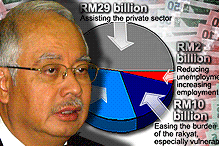 In March 2009, the government unveiled a second and much larger stimulus package of RM60 billion (US$16.2 billion or 8.6 per cent of the GDP) to be implemented over 2009 and 2010.
Malaysia's budget deficit widened from 3.2 percent of the GDP in 2007 to 5.1 percent in 2008, and is currently the largest among the Southeast Asian countries.
The release of the survey in Kuala Lumpur today was hosted by the United Nations in Malaysia and its findings were presented by the director general of Institute of Strategic and International Studies Dr Mahani Zainal Abidin and Dr Muhammad Hussain Malik of the Unescap's Macroeconomic Policy and Development division. Escap is based in Bangkok.


Are you sure you want to delete this comment?
This action cannot be undone.