




Clinton on surprise visit to Lebanon
US Secretary of State Hillary Clinton made a surprise visit to Lebanon today as the country prepares for legislative elections that could see the militant group Hezbollah emerge victorious.
Clinton was to meet with President Michel Sleiman and to visit the tomb of ex-premier Rafiq Hariri who was assassinated in a 2005 car bombing during her hours-long stay in Beirut.
US Secretary of State Hillary Clinton made a surprise visit to Lebanon today as the country prepares for legislative elections that could see the militant group Hezbollah emerge victorious.
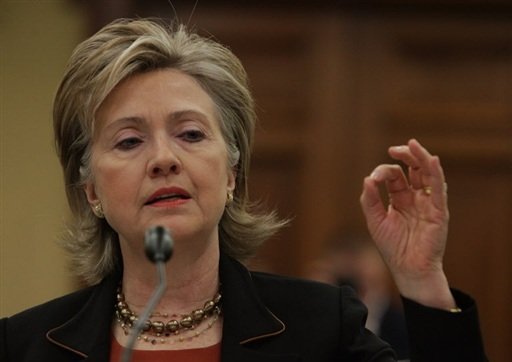 Clinton was to meet with President Michel Sleiman and to visit the tomb of ex-premier Rafiq Hariri who was assassinated in a 2005 car bombing during her hours-long stay in Beirut.
In a statement to reporters travelling with her, the top US diplomat stressed that Washington was hopeful that the June 7 parliamentary vote would proceed in democratic fashion, free of outside interference.
"The people of Lebanon must be able to choose their own representatives in open and fair elections, without the spectre of violence or intimidation, and free of outside influence," she said.
"We join the international community in supporting the Lebanese government's efforts to achieve that goal," she added.
"Beyond the election, we will continue to support the voices of moderation in Lebanon, and the responsible institutions of the Lebanese state they are working hard to build," said Clinton, who on Saturday was in Baghdad where she pledged that a fresh wave of violence would not disrupt war-torn Iraq's journey back to peace and prosperity.
Blacklisting of Hezbollah to remain
Clinton's visit, her first to Lebanon since taking office, comes amid growing signs the longstanding US-led boycott of Hezbollah is breaking down.
US officials have said the new administration will not end the terror blacklisting of the Shiite Muslim group first adopted in 1997 and Clinton was not expected to have any dealings with the Shiite militant group's representative in Lebanon's national unity government.
But key US ally Britain last month ended its ban on dealings with Hezbollah's political wing and Washington has yet to spell out what policy it will adopt if the group and its allies win the June 7 vote.
Hezbollah officials say they have received assurances that the West does not envisage imposing the same sort of boycott as it slapped on the Palestinians when a Hamas-led government took power in March 2006.
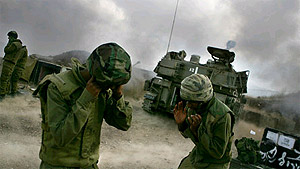 Testifying in Congress last month, acting assistant secretary of state for Near Eastern affairs Jeffrey Feltman, a former US ambassador in Beirut, "emphatically" rejected opening contacts with Hezbollah, which fought a devastating 34-day war with Israel in summer 2006.
But in an interview with AFP earlier this month Hezbollah deputy leader Naim Qassem said his group had received assurances that Washington would not boycott Hezbollah's coalition if it wins the vote.
US provides military assistance to Lebanon
"The ambassador of a key European country... informed us that the US will deal with any government, even though they are hoping the (Western-backed parliamentary) majority wins the vote," he said.
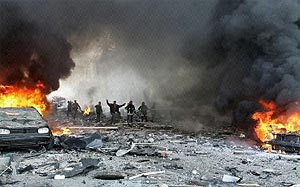 Washington sharply stepped up its involvement in Lebanese affairs after outrage over the assassination of former premier Rafiq Hariri in a 2005 car bombing that forced the Syrians to end a nearly three-decade military presence.
Damascus has denied any involvement in the killing.
The US gave strong backing to Prime Minister Fuad Siniora when he took power at the head of an anti-Syrian government in the aftermath of Hariri's death and sharply increased its military aid.
US military assistance has totalled more than US$410 million since 2006 and includes aircraft, tanks, artillery and training.
But to what degree aid would continue under any new government led by a Hezbollah ally remains unclear.
Under the administration of George W. Bush, Washington led a boycott of Damascus and Tehran, Hezbollah's main foreign backer.
But under President Barack Obama, that boycott has eased and Feltman visited Damascus last month for talks which he described as "constructive". - AFP


Are you sure you want to delete this comment?
This action cannot be undone.